
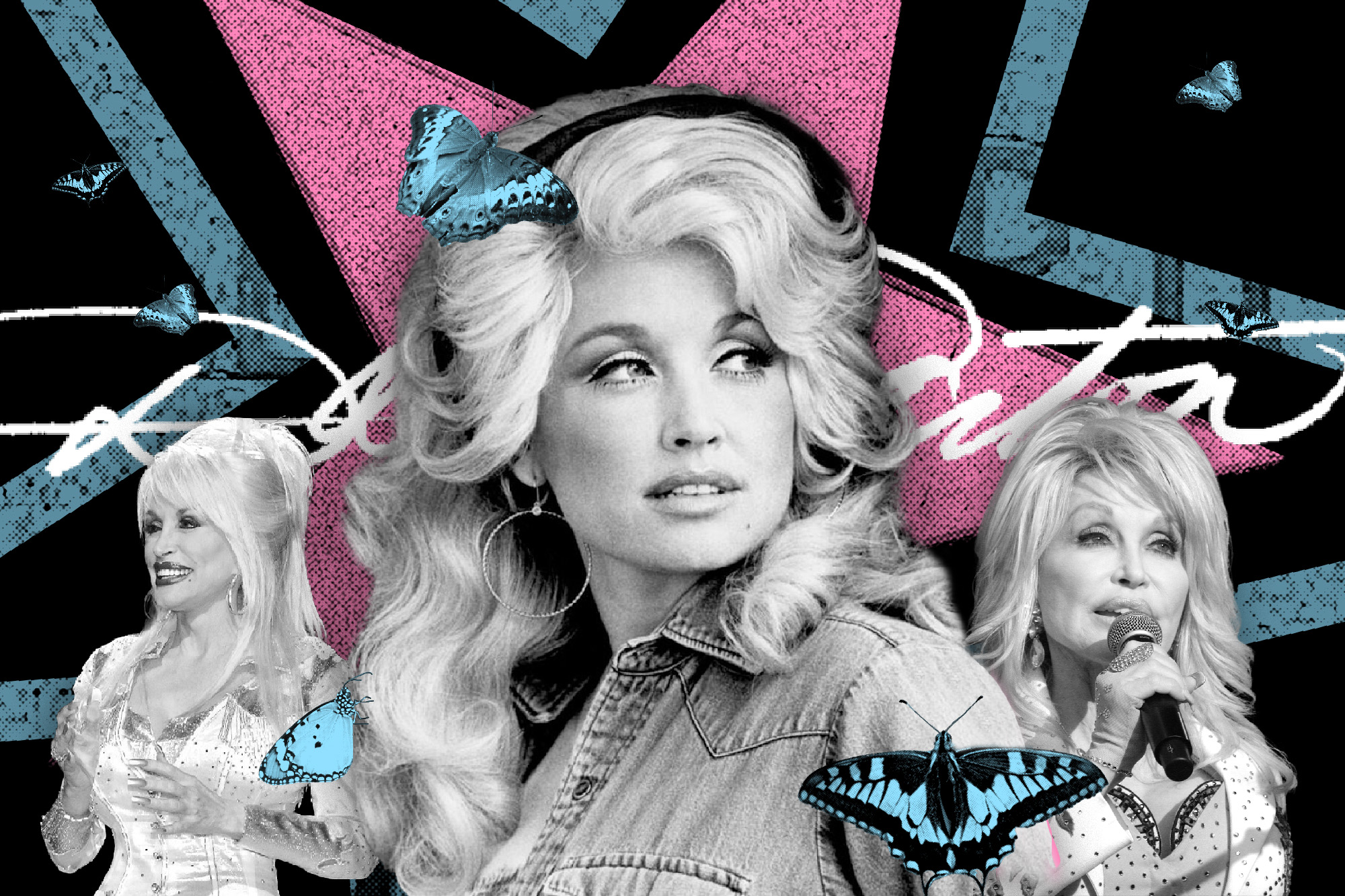

Americans don’t agree on much these days. Dolly Parton was the rare exception.
Country bumpkins and city drag queens. God-fearing Christians and queer people. Conservatives and progressives. Younger fans who discovered her decades after her rise to fame and generations who grew up alongside her. Parton’s reach was seemingly boundless, her audience a study in contradiction. Yet, she possessed the unique magic to welcome people on opposite ends of the cultural spectrum into the same space — not by erasing their differences, but by giving them something more fundamental to share.
In the days following her passing, Parton’s universal resonance snapped into focus in a vivid moment of collective feeling. The nation’s most visible American flags were solemnly lowered to half-mast. The Empire State Building illuminated its tower lights in a pink sparkle at exactly 9:25 p.m. Even the King’s Guard paid homage with a rendition of “9 to 5” outside Buckingham Palace.
Parton left behind a treasure trove of lessons in masterful songcraft, business acumen and a professional career that can be described in no way other than seismic. But what we best stand to learn from the way she lived is far more enduring: how to coexist with one another without losing sight of our shared humanity.
Despite spending the bulk of her life in the spotlight, Dolly Parton maintained an unusual air of mystery around her personal politics. Throughout her six-decade career, she famously avoided disclosing how she voted, insisting that she didn’t “do politics” and creatively sidestepping invitations to declare a partisan allegiance.
When pressed on her views, she had a ready explanation: She had “too many fans on both sides of the fence.” Respect for her audience kept her from turning her music into alienation, once joking that voicing her opinions was only “going to piss off half the people.” This approach was both shrewd business and genuine audience connection: By refusing to let her art be sorted into red or blue boxes, Parton preserved a shared cultural space where everyone could see themselves.
To be clear, Dolly Parton’s nonpartisanship was not synonymous with neutrality. She had convictions, many of which she championed both publicly and fiscally. The difference was that she rarely approached them as ideological battles, instead peeling back the partisan framing and being guided by the lives underneath it.
Nowhere was that distinction clearer than in Parton’s relationship with the LGBTQ+ community. She spoke plainly about gay rights and inclusion as early as 1984, when the AIDS crisis was intensifying anti-gay stigma and outspoken allyship could have cost her a portion of her audience.
Over the decades, her support remained anchored in the same simple conviction: “We are who we are, and we should be allowed to be who we are.” In Parton’s eyes, acceptance was not a party line to toe, but a basic matter of…
Read More: Dolly Parton transcended politics by putting humanity first
