
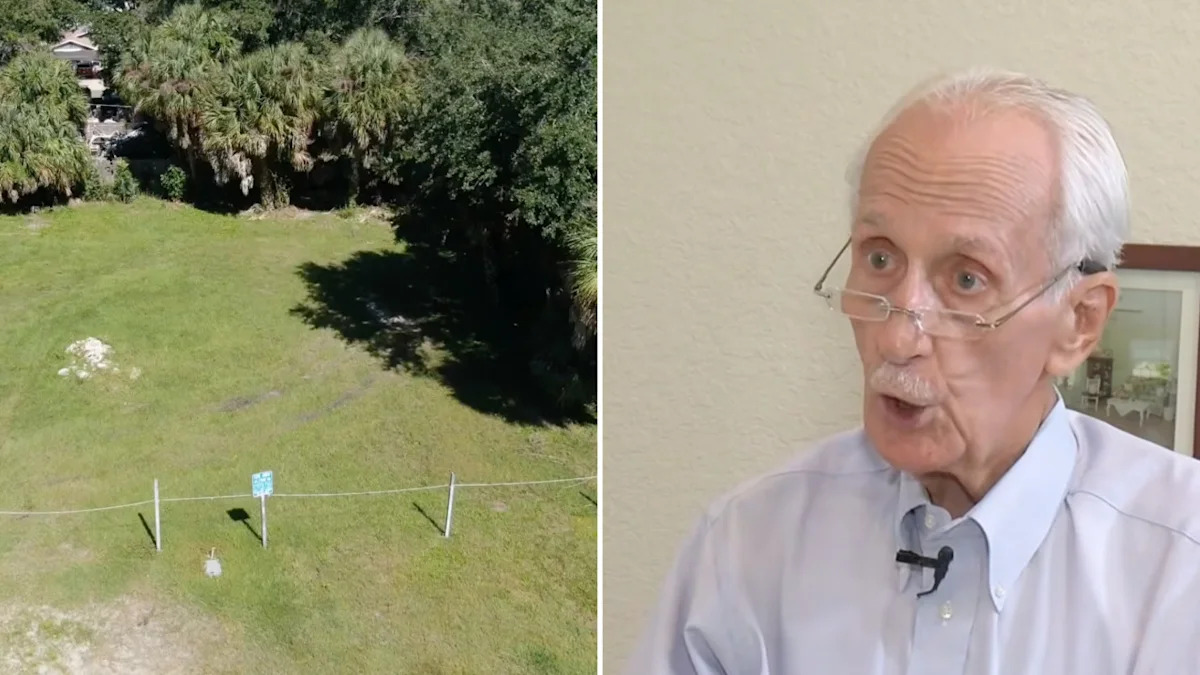


For the past 27 years, Thomas Tafelski has owned vacant lots in Pinellas County, near Tampa, Florida. He knows they have value, but he has been waiting for what he felt was the perfect opportunity to develop them and build rental properties.
So when he got a call from a real estate agent recently, telling him that someone had hired her to sell the land, it caught him off guard.
Must Read
“I have not put them on the market, have not offered them for sale, and they are not for sale,” Tafelski told WFLA News Channel 8 On Your Side.
The agent cancelled the sale.
Weeks later, he was caught even more off guard when he received a call from someone who claimed to be the buyer of the lots — and who forwarded paperwork that the deal was set to close just three days later.
That sale, too, was cancelled.
A growing problem
Tafelski was nearly the victim of a growing epidemic across the U.S.
Last year, Americans lost over $275 million to real estate fraud, a 58% increase over 2024. Some 12,368 complaints were filed in 2025 alone.
Meanwhile, a study conducted by the American Land Title Association (ALTA) in September 2026 found that 59% of title companies had experienced at least one seller impersonation fraud attempt in 2025. That was a considerable jump from the 28% who had experienced it in the group’s 2024 study.
Seniors are the most frequent victims of the crime. And several states, including Arizona, Maryland and Alabama have beefed up laws to protect landowners, requiring owner identity in the event of a sale and, in some cases, making it a felony to attempt the fraud.
Read More: Vanguard reveals what’s coming for U.S. stocks — and it’s raising alarm bells for older investors
Protecting yourself
Title scams like the one that was attempted on Tafelski come in many forms, but there are some ways to identify them, says the FBI.
Crooks often try to use unusual communication methods with buyers, communicating only via email, text or VoIP numbers and avoiding in-person meetings. If you’re purchasing a property and the seller is refusing to meet, you should do some further investigation.
Sellers of lands claimed by title fraud want to move things along quickly, too — since the longer the process goes on, the greater the odds of them getting caught. If you feel pressured or they’re offering the property below market value to expedite the sale, that’s a red flag.
Read More: FL man says crooks tried to sell his vacant lots twice — one deal was just
