

Deb Perelman has seen a lot of change online.
The food blogger’s popular site Smitten Kitchen turns 20 years old this summer.
“I’ve always had the philosophy that I would just meet people where they were,” Perelman said, which is why she established a presence on social media platforms from Twitter to Instagram to TikTok — but always took readers back to the recipes and stories on her website.
Now, she faces a new challenge: AI summaries.

Perelman said she’s seen “a summary or a chunk of my own recipe in the AI blurb that you have in the top of search results.”
“It’s honestly shocking to me that somebody can publish my work … without my permission,” said Perelman, who is now pursuing AI-limiting protections for her site.
Google recently reimagined the search box for the first time in 25 years, with “AI Mode,” a conversational back-and-forth that’s similar to using ChatGPT or other AI chatbots. This Google function has surpassed a billion monthly users.

Beyond that, Google is also prioritizing extensive AI summaries over links to websites — the result being that people increasingly don’t need to leave Google’s main page to get an answer.
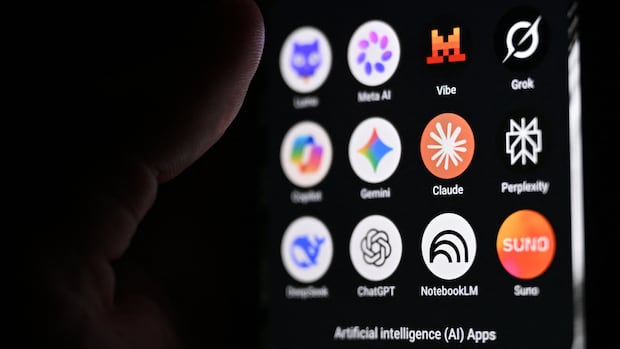
Similarly, you can rely on Claude, ChatGPT or other LLM chatbots to provide answers, recommend products or take on more complex tasks, like creating an itinerary for a trip.
It’s convenient, but it means big challenges for site creators who rely on human traffic. The web is being fundamentally reoriented to accommodate the bots that scrape websites for the information we seek.
Websites for machines as well as humans
Human web traffic is declining. Data from Cloudflare, a U.S. company that provides a range of internet services for websites and apps, found declines in human traffic across retail, software, IT and finance websites. Some hardest hit categories declined by up to 40 per cent between June 2025 and April 2026.
“The biggest impact is … machines going to read your content,” said Hamzah Khadim, co-founder of Toronto-based internet marketing service Logik Digital.
Khadim argues that as search has moved “from keywords to conversations,” the main goal for any website is not turning up in a list of links but being part of an AI’s answer.
Logik Digital has long specialized in SEO (search engine optimization), so that websites turn up in search results, but it’s now also focused on GEO (generative engine optimization). That means adding specific information that both indicates a site’s credibility and answers the questions a user is likely to ask AI.
Sometimes, that means adding a lot of text to a website — for example, in its “About Us” section.
“People aren’t gonna necessarily read all of that, but AI definitely will,” Khadim said. “And it’ll help establish trust.”

Read More: The web is being redesigned for AI. What does that mean for human readers?
