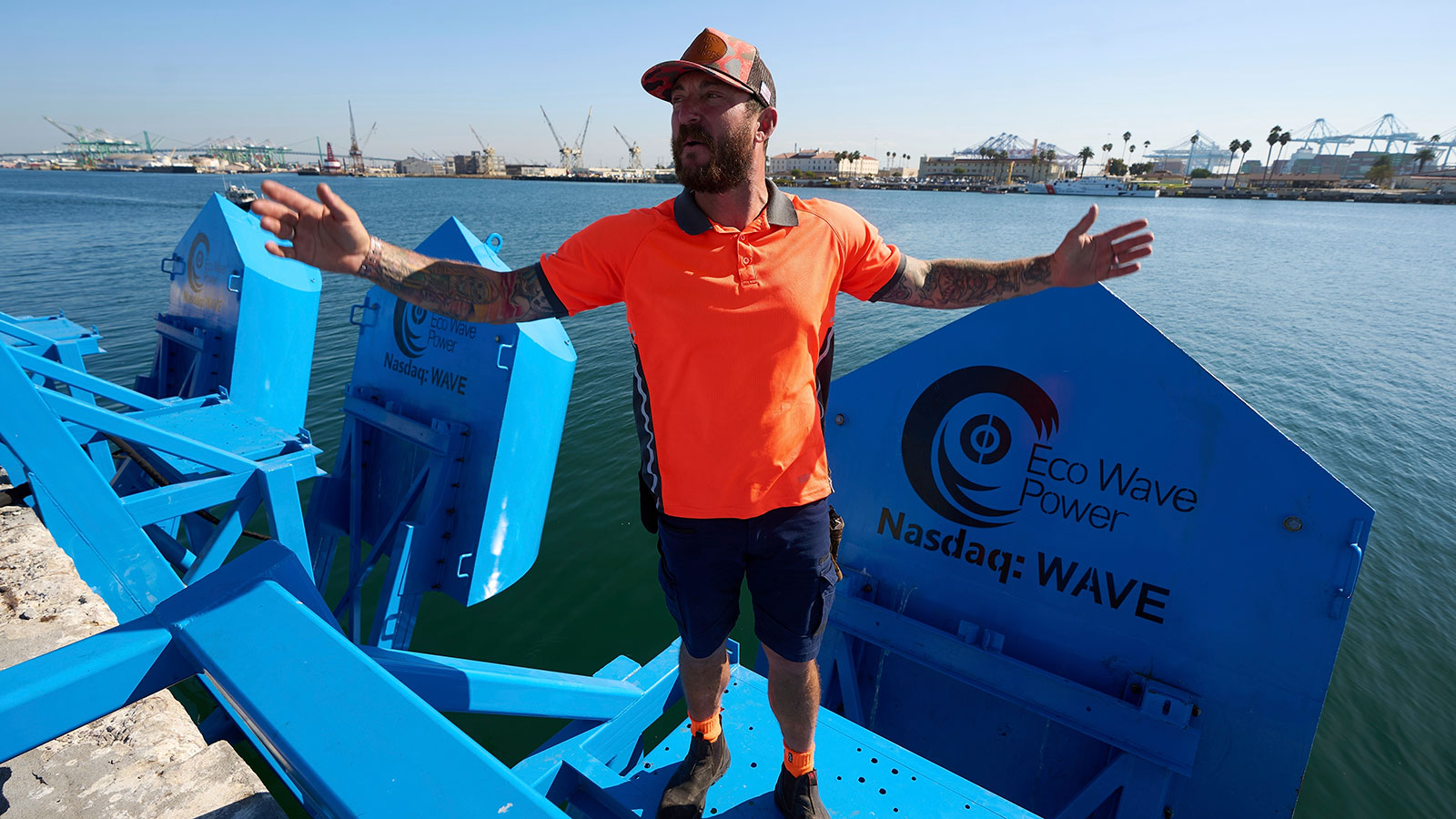
Share Facebook Twitter LinkedIn Pinterest Email by SueEllen Campbell, Yale Climate Connections October 27, 2026 </p> <h1>Can we harness the oceans’ energy?</h1> <p class="byline">by SueEllen Campbell, Yale Climate Connections <br />October 27, 2026</p> <p class="has-drop-cap">Earth’s oceans hold a tremendous amount of energy, both in the waves that traverse vast distances and then break against shores, and in the tides that move massive volumes of water in two directions twice every day of every year. Surely we can harness some of that energy for human use!</p> <p>So far, though, we have managed this feat only on small scales and mostly for short periods of time. </p> <h4 class="wp-block-heading">This list of articles and resources will give you a sense of the state of the field</h4> <ul class="wp-block-list"> <li>These two older stories from Canary Media do an excellent job of outlining the overall situation. Each focuses on a single project while also describing both the seemingly great potential of ocean energy and the many barriers to harnessing that energy. <ul class="wp-block-list"> <li>“<a rel="nofollow" href="https://www.canarymedia.com/articles/ocean-energy/is-shore-based-wave-power-the-key-to-unlocking-affordable-clean-energy-from-the-sea">Can shore-based wave power unlock clean, affordable ocean energy?</a>” Julian Spector, Canary Media, 2022.</li> <li>“<a rel="nofollow" href="https://www.canarymedia.com/articles/ocean-energy/after-years-of-costly-failures-is-tidal-energy-finally-catching-on">After years of costly failures, is tidal energy finally catching on?</a>” Maria Gallucci, Canary Media, 2023</li> </ul> </li> </ul> <ul class="wp-block-list"> <li><a rel="nofollow" href="https://marinerenewables.ca/facts/">Marine Renewables 101</a>, Marine Renewables Canada. If you wonder how wave and tidal energy projects work, start with this excellent overview and educational site. It is centered on, but not limited to, Canada and includes many useful links.</li> </ul> <ul class="wp-block-list"> <li>Oregon State University and the Oregon Sea Grant offer <a rel="nofollow" href="https://seagrant.oregonstate.edu/ocean-renewable-energy">a shorter overview</a> focused on a new experimental wave energy site off the coast near Newport. Providing a quick look at both the potential and the barriers to harness wave energy, Oregon Public Broadcasting has covered this site, its successes in getting permits, and its difficulties with delayed equipment with articles <a rel="nofollow" href="https://www.opb.org/article/2026/08/26/wave-energy-testing-site-opens-off-oregon-a-green-energy-milestone-in-the-trump-administration/">here</a>, <a rel="nofollow" href="https://www.opb.org/article/2026/08/31/oregon-state-university-wave-energy-testing-facility-ready-to-begin-operations/">here</a>, and <a rel="nofollow" href="https://www.opb.org/article/2025/09/30/bpa-wave-energy-oregon-coast-university-test-site/">here</a>,</li> </ul> <ul class="wp-block-list"> <li>The other notable wave site in the US was a recently ended experimental installation at the port of Los Angeles. Here’s an early story about that project: “<a rel="nofollow" href="https://www.canarymedia.com/articles/ocean-energy/eco-wave-power-port-la-tech">Will this startup be the first to successfully scale up ocean power</a>?” Julian Spector, Canary Media. (Here’s <a rel="nofollow" href="https://www.cbsnews.com/losangeles/news/eco-wave-energy-project-port-of-los-angeles/">another</a> from CBS and <a rel="nofollow" href="https://apnews.com/article/eco-wave-los-angeles-renewable-electricity-7679b1ef04048250c4a66c148c82b809">one</a> from AP.) By attaching the generating equipment to existing onshore infrastructure, this design from Eco Wave Power avoids many of the problems encountered in more open ocean waters. Having finished its test period, the site is no longer active, and the <a rel="nofollow" href="https://www.nasdaq.com/press-release/eco-wave-power-successfully-completes-wave-energy-pilot-shell-port-los-angeles">final project completion report</a> has been submitted.</li> </ul> <ul class="wp-block-list"> <li>A third interesting example is in Scotland, the Shetland Tidal Array. Here is a <a rel="nofollow" href="https://marine.gov.scot/sma/assessment/case-study-nova-innovation-shetland-tidal-array">case study</a> from the government of Scotland. This project has included <a rel="nofollow" href="https://marine.gov.scot/sites/default/files/monitoring_report_2025.pdf">monitoring</a> potential problems for birds and marine life in the area, finding almost none (though apparently this area normally hosts few such lives): “This report further contributes to the growing evidence base that the risk of collisions between marine wildlife and tidal turbines is very low (probably close to zero).” <a rel="nofollow" href="https://tethys.pnnl.gov/project-sites/nova-innovation-shetland-tidal-array.">Here</a> is another report about this environmental monitoring.</li> </ul> <ul class="wp-block-list"> <li>It seems there is still little data on the subject of damage to marine…</li> </ul> <p> Read More: Can we harness the oceans’ energy? » Yale Climate ConnectionsClimate connections Energy harness Oceans Yale