

The high court’s very big year
Paul Gigot and John Yoo break down the Supreme Court’s consequential term, which ended with major decisions on birthright citizenship and executive power. Yoo argues the court’s conservative majority is focused on containing the administrative state and restoring constitutional originalism, including the Bill of Rights and federalism, despite criticism from the left.
NEWYou can now listen to Fox News articles!
A Hawaii Supreme Court justice used a ruling overturning a decades-old criminal conviction to deliver a blistering rebuke of Chief Justice John Roberts’ Supreme Court, accusing the nation’s highest court of weakening constitutional rights, damaging democracy and advancing a political agenda.
Justice Todd Eddins authored the 91-page majority opinion Wednesday in State v. Granillo , a case involving a man convicted in 1990 of kidnapping and sexually assaulting a woman on Maui. The court ordered a new trial after concluding that hair and fiber evidence presented by an FBI expert relied on forensic science that has since been discredited.
But in roughly eight pages of the opinion, Eddins argued Hawaii’s courts should not look to the Roberts Court when interpreting the state constitution, using the case to deliver an unusually sharp critique of the nation’s highest court.
LAWYER WHO BEAT HAWAII GUN LAW CALLS STATE’S RELIANCE ON BLACK CODE ‘DISGRACEFUL’
“When six justices walk away from those they are supposed to protect, state constitutions hold the line,” Eddins wrote, referring to the court’s six conservative justices. “That is not defiance. That is the design.”
Eddins argued that Hawaii’s Constitution provides stronger protections than the federal Constitution as currently interpreted by the U.S. Supreme Court, and said the Court has abandoned landmark civil rights principles.

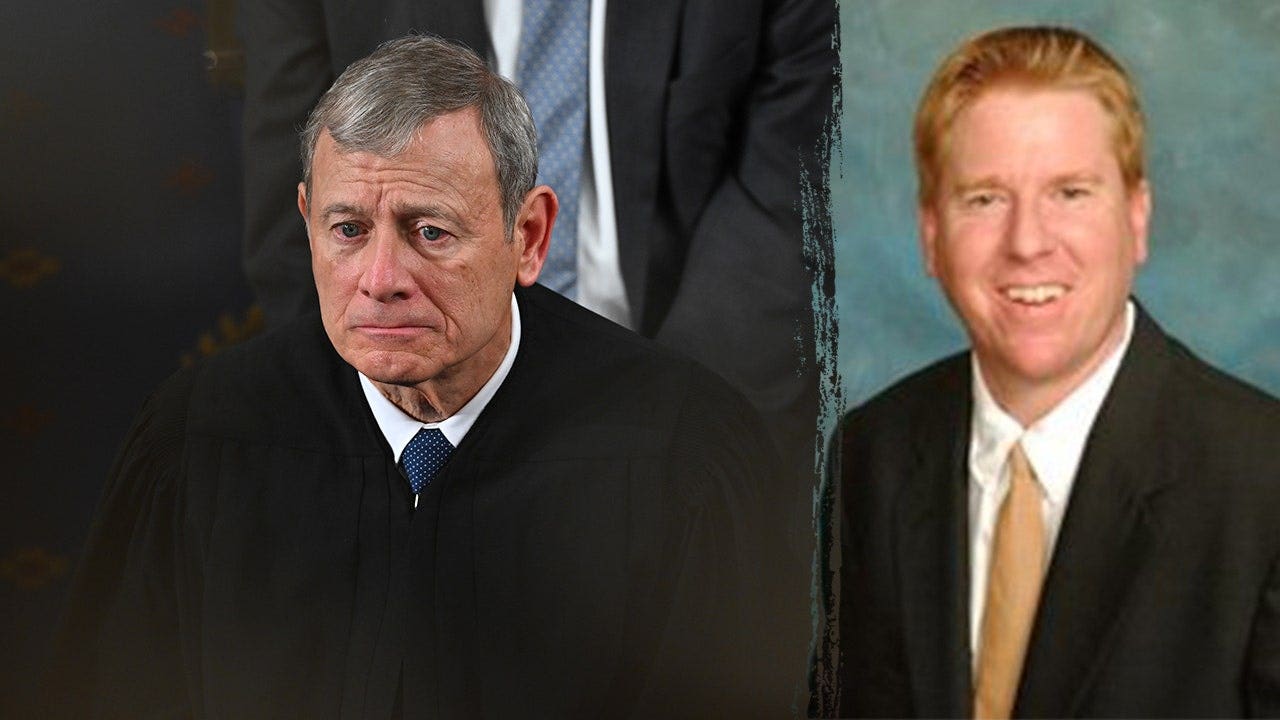
Hawaii Supreme Court Justice issued a scathing review of the Supreme Court’s most recent rulings, arguing that the High Court has weakened constitutional protections for citizens. (Graeme Sloan/Bloomberg via Getty Images/ Ballotpedia)
“The Court that now defines federal due process does not honor the work of 1954,” Eddins wrote. “It revives the work of 1857. The work of 1896.”
Eddins was referring to Brown v. Board of Education, ruled in 1954, which ended racial segregation in public schools, as well as Dred Scott v. Sandford, the infamous 1857 decision denying citizenship to Black Americans and Plessy v. Ferguson, the 1896 ruling that upheld racial segregation.
Eddins argued that the Roberts Court no longer reflects the constitutional principles established in Brown v. Board of Education, but instead, he argued the Court’s originalist approach relies on the same type of constitutional interpretation in the discredited Dred Scott and Plessy decisions.
“Today’s hubristic originalists use the same method to control modern life,” Eddins wrote.
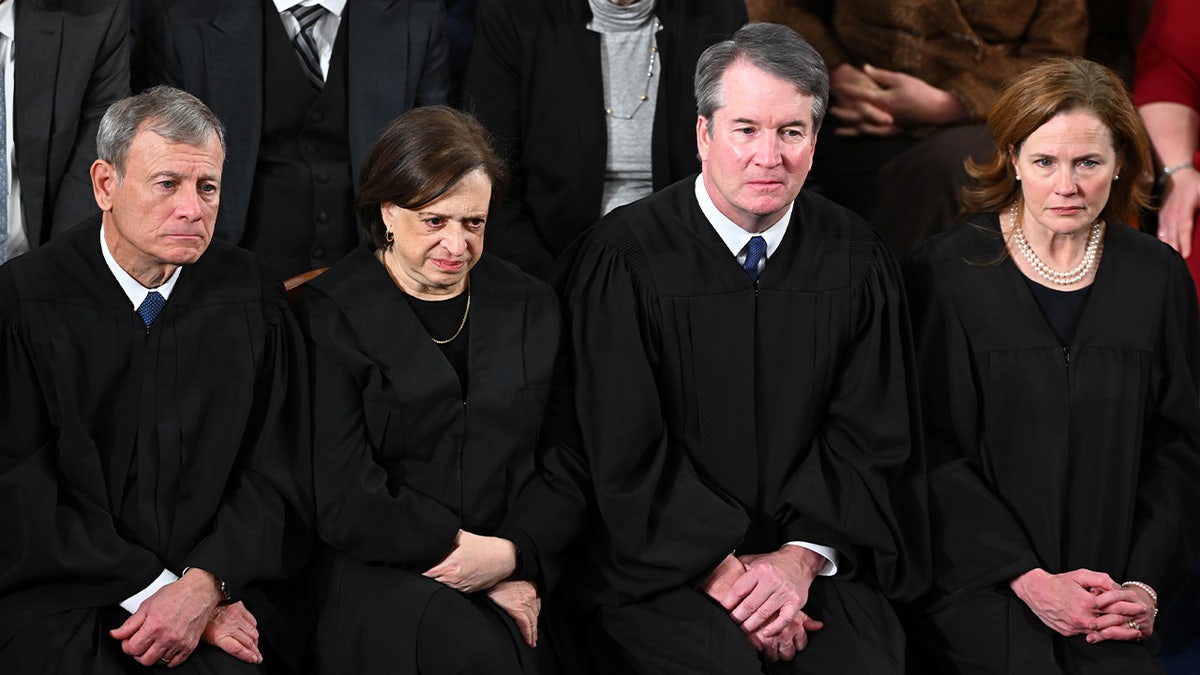
John Roberts, chief justice of the US Supreme Court, from left, Elena Kagan, associate…
Read More: Hawaii Supreme Court justice accuses Roberts Court of harming democracy
