

Self-driving used to be a movie set piece. Now robotaxis run paid routes in San Francisco, mining trucks haul ore from GPS-mapped pits without drivers, and agricultural equipment works fields with no one in the cab.
For all that momentum, the engineering and operational realities behind putting a self-driving stack on public roads stay largely invisible.
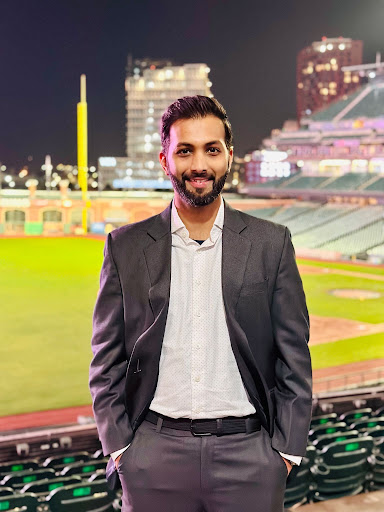
Akshat Gattani has spent most of his career inside that hidden layer. First at a major robotaxi operator, and now as a technical program management leader at a Sunnyvale-based company powering physical AI across automotive, defense, trucking, mining, construction, and agriculture.
He’s one of a small number of engineers who has worked the autonomy problem from both sides: building and scaling a driverless fleet at one of the field’s most ambitious operators, and then building the shared infrastructure the rest of the industry now runs on. That dual vantage has given him a clear view of what the autonomy industry actually needs to deliver on its promise.
From Diesel to Driverless
Gattani’s training is automotive engineering, top to bottom: a bachelor’s degree, then a master’s from a top rated university. His early professional work centered on reducing diesel emissions and navigating global regulatory requirements for commercial vehicle products.
The move to California was a deliberate escalation. Where most automotive engineers follow a conventional path through established OEM programs, Gattani relocated to join a company attempting something no legacy automaker had pulled off at scale: fully driverless commercial operations on public roads, with no safety driver behind the wheel.
His initial work focused on the integration layer. Getting autonomous software to function reliably on physical hardware is the step that determines whether any autonomy stack can translate from a simulated environment to an actual car. From there, he moved into fleet scaling, coordinating on vehicle manufacturing and overseeing the city-by-city expansion of driverless operations.
The fleet grew substantially during his time there, spanning operations across San Francisco, Los Angeles, Phoenix, Houston, and Dallas. Each new city introduced a distinct set of engineering and operational variables. Road geometry, traffic patterns, and local signaling conventions all differed in ways that forced the stack and operations teams to rebuild their original plans.
That’s when he realized the scaling work for this technology is as much a logistics problem as a software one.
The Safety First Mindset
The more instructive part of Gattani’s time at this robotaxi company, by his own accounting, isn’t the fleet he helped build. It’s the safety-first mindset he developed over three years of hands-on testing and deployment work.
The testing sequence is deliberately graduated. Closed-course testing with a safety driver comes first, setting a baseline performance threshold. Then comes limited public-road testing with a safety driver present,…
Read More: From Robotaxi Fleets to Simulation Labs: One Engineer’s Journey
