
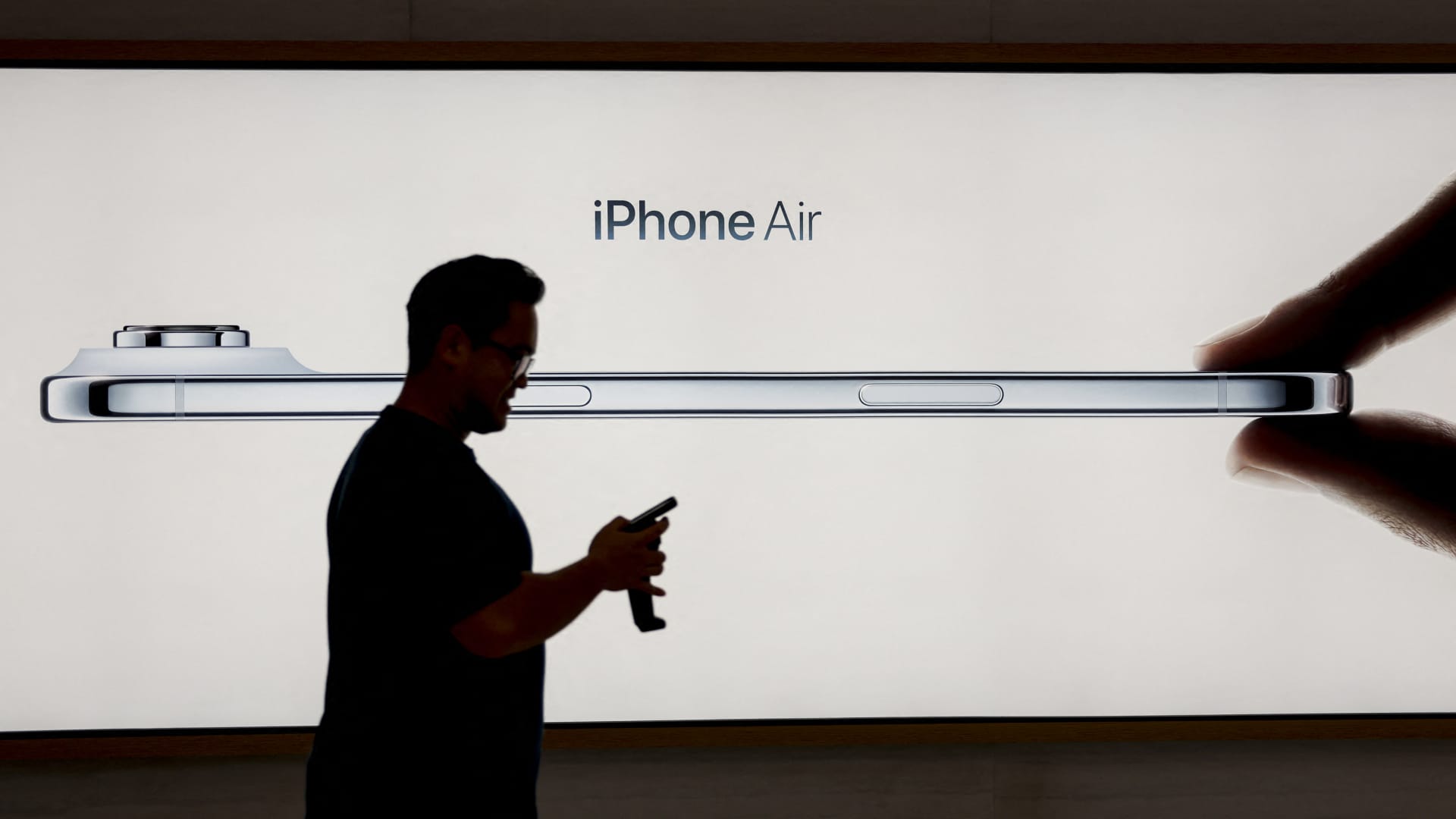


Apple is in talks with a small Silicon Valley company that says it can shrink powerful artificial intelligence models enough to run directly on an iPhone, the startup’s CEO told CNBC.
PrismML, a Khosla Ventures-backed spinout from the California Institute of Technology, publicly released compressed versions of Alibaba’s open-source Qwen model on Tuesday. The company said it reduced the model from roughly 54 GB to less than 4 GB, allowing all 27 billion of its parameters to run on an iPhone 15 or newer.
PrismML CEO Babak Hassibi told CNBC that Apple and other companies have been evaluating the startup’s models and measuring their speed, energy efficiency and performance on devices.
“They’re really evaluating our technology right now,” Hassibi said of Apple.
He characterized the discussions as very early and said it remains unclear where they will lead, but that “things are progressing nicely.”
Apple did not immediately respond to a request for comment.
The Information previously reported the PrismML breakthrough.
The release comes one day after Apple opened the public beta of iOS 27, giving iPhone owners their first broad access to the company’s long-delayed overhaul of Siri. Apple is trying to make Siri more competitive with assistants from OpenAI and Anthropic while keeping more personal information and AI processing on the device.
The company’s approach could address one of the central constraints facing Apple’s AI strategy. The most capable models typically require too much memory and processing power to run on a smartphone.
Apple can send complex requests to cloud-based models, but running more AI directly on the iPhone would reduce the delay associated with sending data to a remote server, lower cloud-computing costs and support the company’s privacy pitch. It would also allow certain features to work without an internet connection.

Carolina Milanesi, president and principal analyst at Creative Strategies, said smaller models could let Apple move more demanding features onto the iPhone, including computational photography, video generation and health or fitness tools that rely on sensitive personal data.
“The more you can do on device, the better it is,” she said, pointing to health and medication data that users would want to keep private.
PrismML said it shrinks AI models by drastically simplifying how their internal information is stored — reducing each value from 16 bits to just one or three possible values. That significantly cuts the memory required to store and operate the model.
Hassibi compared it to the chip industry’s move from eight-bit to four-bit computing, but takes it a step further.
The startup said the compressed models use between 10 and 15 times less memory, generate responses six to eight times faster and consume three to six times less energy than conventional versions running on existing hardware.
Hassibi did acknowledged there is a trade-off, however. PrismML’s models typically lose a few percentage points of overall…
Read More: Apple in talks with startup that shrinks AI models to run on an iPhone
