
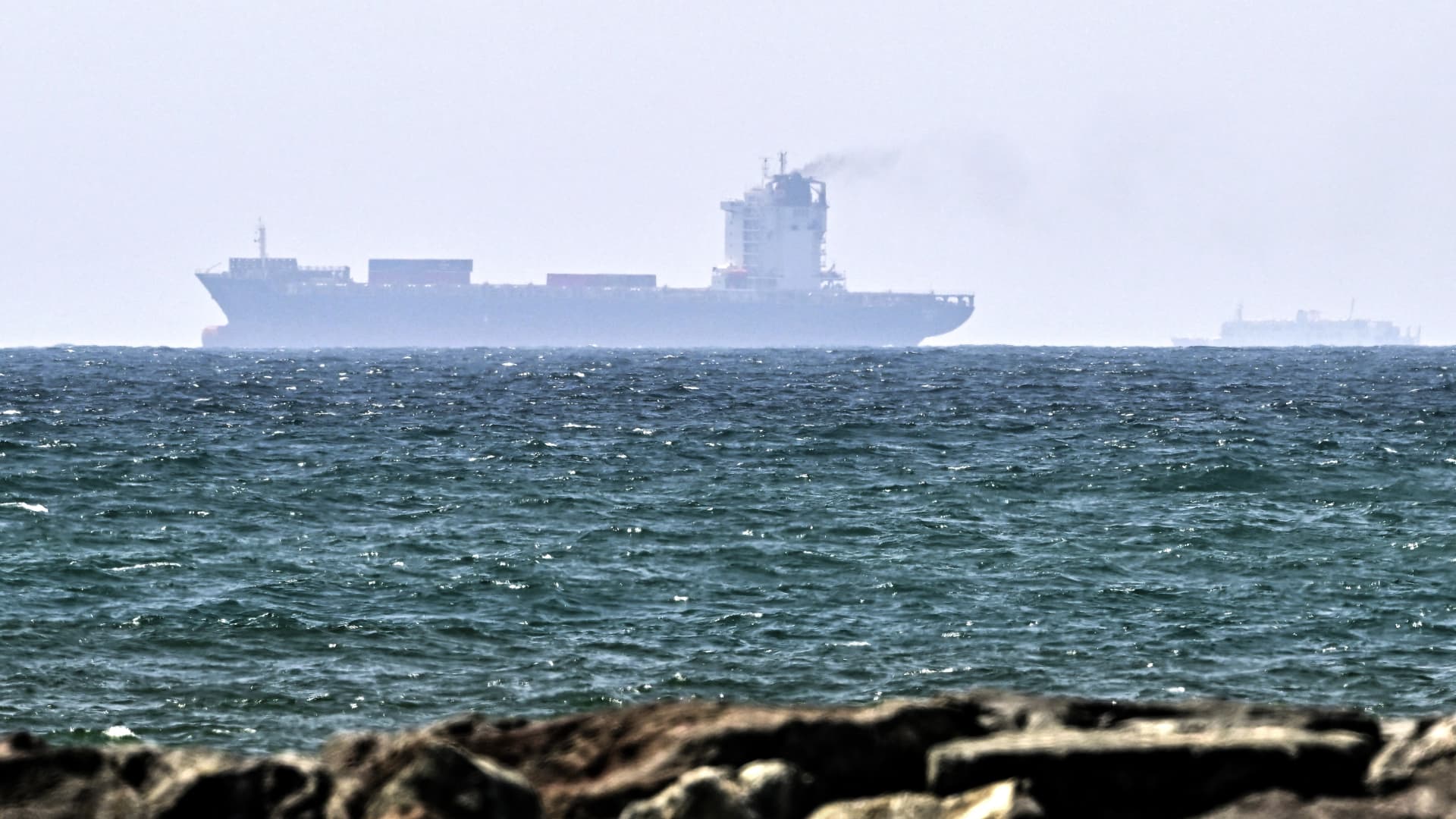

Vessels are seen off the coast of Sharjah in the United Arab Emirates on May 21, 2026.
– | Afp | Getty Images
Oil prices are on pace to post a loss this week as the U.S. and Iran signal progress in talks to end the war.
But the warring sides remain at loggerheads over Tehran’s enriched uranium stockpile and tolls on the strategically vital Strait of Hormuz.
International benchmark Brent crude futures traded more than 1% higher at $103.82 per barrel at 9:41 a.m. ET, while U.S. West Texas Intermediate futures advanced 0.67% to $97.
Brent is down nearly 5% this week while U.S. crude oil has lost more than 7%. Prices have tumbled after President Donald Trump said Monday that he called off imminent strikes on Iran to allow for more negotiations.
U.S. Secretary of State Marco Rubio on Thursday said there were “good signs” that an agreement to end the conflict is in sight, but warned any such deal would be “unfeasible” if Iran pursues measures to permanently control shipping through the Strait of Hormuz.
“Markets are still searching for signs of progress in a potential deal between the US and Iran. While there are signs of optimism, uncertainty reigns,” strategists at ING said in a research note published Friday.
“This is not the first time a deal seemed close, only for negotiations to break down. So, there’s a large segment of the market that will be more sceptical about the positive signals we are seeing,” they added.
Worries over oil supplies continue to linger with the International Energy Agency warning that as travel demand grows during the summer season, oil markets could enter a “red zone” soon as global stocks deplete.
The most important solution to the energy shock caused by the Iran war would be the Strait of Hormuz’s full and unconditional reopening, IEA Executive Director Fatih Birol said, adding that developing Asian and African countries will feel the “biggest pain of this crisis.”
Typically, roughly 20% of the world’s oil and liquefied natural gas passes through the Strait of Hormuz, but shipping traffic has virtually halted since U.S. and Israeli-led strikes against Iran started on Feb. 28.
“Energy executives warned that full normalization of Middle East oil supply may not occur until 2027 due to the scale of disruptions caused by the conflict,” according to a recent note by MUFG.
Read More: Oil resumes rally as Iran wants to keep uranium within the country
