
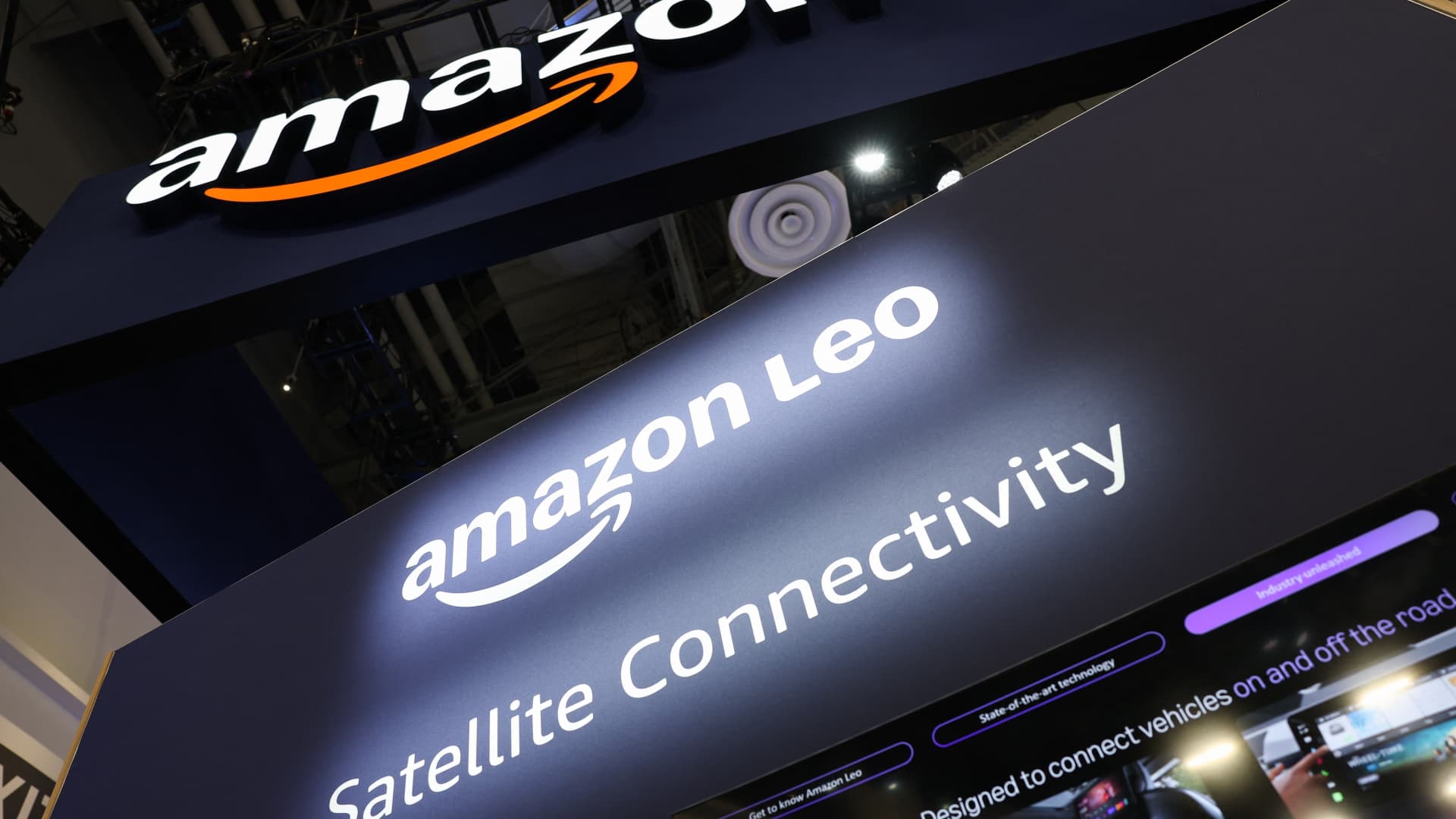

Amazon is making a big move to advance its ambitions in outer space — one that is pricey and pits it against a formidable incumbent. It could also end up a huge winner for the e-commerce and cloud giant. The Seattle-based company said this month it plans to acquire satellite operator Globalstar for $90 per share in a cash-and-stock deal worth about $11.6 billion. The deal, expected to close in 2027, will bolster Amazon’s budding internet-from-space service called Amazon Leo, which is slated to begin commercial broadband service in mid-2026. It also helps Leo’s standing against the dominant player in the satellite internet space, SpaceX, led by Elon Musk. The move reinforces Amazon’s commitment to the expensive and extensive task of building out a satellite internet service — a pursuit that, for years, has given some investors pause as they questioned the price tag and the time to reap the rewards. It used to be called Project Kuiper and originated in 2019 when Amazon founder Jeff Bezos was still CEO. Leo has the potential to “be a huge business out of nowhere,” Jim Cramer said in reaction to the Globalstar deal. “It’s a sudden pillar. This will be something that we’re going to be talking about.” He added, “It flips from being something that [makes you say] I’m tired of hearing the losses, to I think it’s going to be big gains here.” Globalstar will be the second-largest acquisition in Amazon’s history, behind Whole Foods, for $13.7 billion in 2017 . On its face, spending almost $12 billion on a company projected to bring in less than $300 million in revenue this year seems like an expensive purchase. Whole Foods booked $16 billion in sales in its fiscal 2017. Plus, the acquisition comes at a time when Amazon is already spending heavily on AI-related buildouts, which will likely result in negative free cash flow in 2026. This comes after Amazon’s free cash flow fell 71% in 2025 to $11.2 billion. The strategic rationale is there, however. In defending the Globalstar deal, Morgan Stanley said its size is small relative to Amazon’s large capex, and analysts argued the tie-up has “applications to AMZN’s broader business down the road, such as providing connectivity for warehouse automation, drones, and more.” Indeed, Leo’s importance to Amazon goes far beyond its own eventual revenue stream — valuable as that may become. For a company projected to do roughly $800 billion in revenue this year, it takes a lot to move the needle. It is Leo’s potential to also strengthen Amazon’s retail and cloud businesses that justifies its prior commitment to invest at least $10 billion in the project . Now, it is what justifies buying Globalstar. AMZN 1Y mountain Amazon’s stock performance over the past 12 months. A closer look at Globalstar Globalstar operates low Earth orbit (LEO) satellites connecting more than 120 countries, and it holds wireless spectrum licenses across the globe. Notably, Globalstar is also Apple’s technology partner for the iPhone…
Read More: Amazon’s bet on satellites is expensive. Why it just might work
