
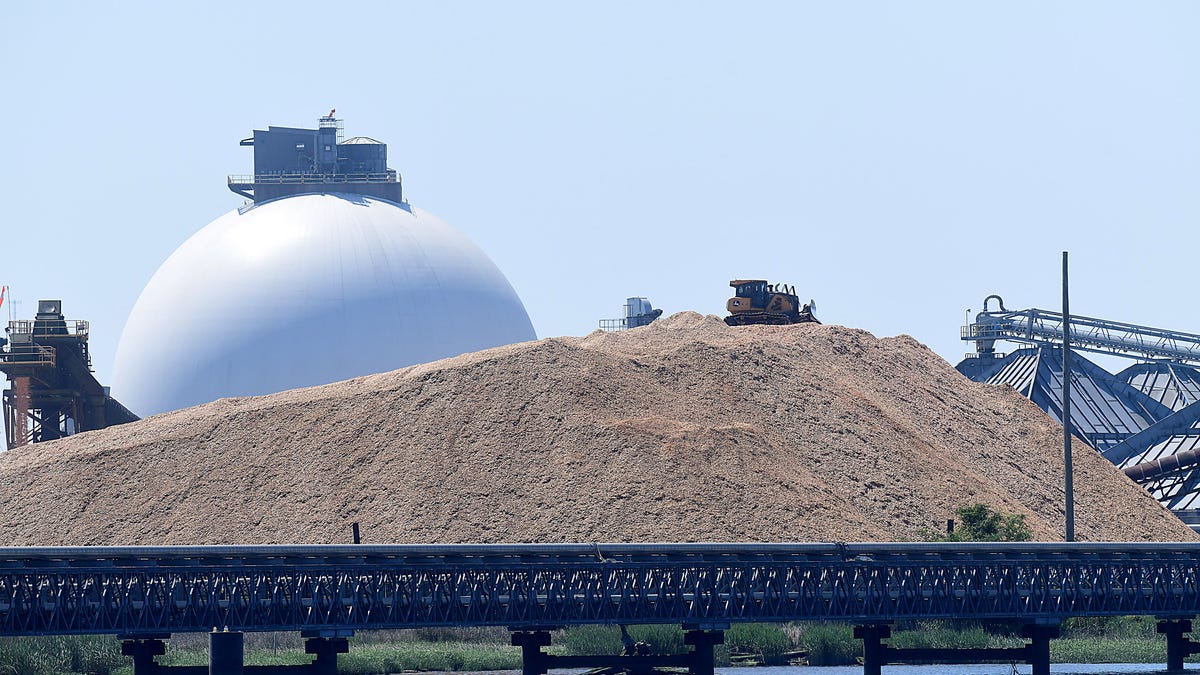

Environmentalists have long criticized the idea of turning NC trees into wood pellets and shipping them abroad as ‘clean’ energy. Thursday they took their concerns to the water
A mix of environmentalists, community activists and students slowly boarded the Henrietta in downtown Wilmington on a warm and sunny late April morning.
But the group wasn’t cruising the Cape Fear River to learn about Wilmington’s maritime history, view the river’s wildlife, or even just to enjoy the spring sunshine.
They were there to learn about the impacts of the wood pellet industry − and specifically Enviva − on North Carolina’s ecosystems and communities.
Enviva, which supplies European and Asian utilities with wood pellets as an alternative to burning dirty coal, has long been a target for environmentalists. They have repeatedly questioned the alleged sustainability value of chopping down trees in the United States, processing them and then shipping the pellets thousands of miles to burn as a “clean” fuel source for power plants. Enviva also has faced environmental justice questions over its logging practices and emissions from pellet production, since many of the company’s operations are located in low-income and minority communities.
Environmentalists also blame European countries for encouraging the industry, fueling its growth by “greenwashing” its own energy credentials by incentivizing the use of biomass − like wood pellets − as a clean, renewable fuel source for power instead of dirtier fossil fuels like coal, oil or natural gas. According to a website that tracks power generation of Britain’s National Grid, about 12% of the United Kingdom’s power was produced from burning biomass on April 23, 2026.
Eastern North Carolina with its extensive forests and Wilmington thanks to its deepwater port are key cogs in this global trade.


Talking wood pellets on the Cape Fear River in Wilmington, NC
Community advocates and students gathered Thursday, April 23, to talk about the environmental and economic impacts of N.C.’s wood pellet industry.
Questionable environmental, economic benefits
Officials on the annual cruise, organized by the Rachel Carson Council, a Washington, D.C.-based environmental advocacy group, took aim at the wood pellet business from economic, environmental, and community justice angles, knocking it as a business that does little to help reduce greenhouse emissions or the communities where it sets up shop.
Enviva, which didn’t respond when reached out to for comment about the event, has repeatedly stated in the past that it embraces sustainable logging practices and provides jobs in areas where other economic opportunities are often limited.
In 2023, prior to a 2024 bankruptcy that saw the company downsize somewhat, Enviva said it supported more than 1,800 jobs in mostly rural North Carolina at its four wood pellet production plants and Port of Wilmington facility and has invested more than $675 million in the state.
But officials on Thursday’s…
Read More: Activists talk about wood pellet industry in Wilmington, NC
