

Heating aid and data center costs led the household energy news from Nov. 6 through Nov. 12, 2026. New England’s governors pressed Congress for more winter assistance, a thread that ran through last week’s roundup of missed energy news. A Cornell study also put a figure on how much of the grid buildout for data centers has landed on households.
New England Governors Seek $3 Billion More in Heating Aid
The governors of all six New England states asked congressional appropriations leaders on Nov. 9 for an additional $3 billion in Low Income Home Energy Assistance Program (LIHEAP) funding, which would bring the program to $7 billion. Their bipartisan letter cites National Energy Assistance Directors Association projections that heating oil prices will rise about 50% this winter. The association estimates the increase would cost low-income households across the Northeast nearly $1.1 billion more for heating oil alone.
The Energy Information Administration’s (EIA) November outlook, released Nov. 10, forecasts residential heating oil at $5.96 per gallon in the fourth quarter of 2026, up from $3.68 a year earlier. In October, the agency projected that households heating with oil, most of them in the Northeast, would spend about 21% more this winter.
Data Centers Paid 38% of Grid Costs Tied to Their Growth
Data centers covered about 38% of the energy infrastructure costs linked to their growth in 2025, or $3.12 billion of an estimated $8.25 billion, according to Cornell University research published Nov. 9 in Nature Energy. Researchers Cheng Feng and Fengqi You estimate the remainder fell largely on residents of the four regional grids they studied from 2020 through 2025, which include northern Virginia and the Dallas-Fort Worth area.
Rural households took a heavier hit. The share of rural families spending more than 6% of income on energy grew 76% more than the share among urban residents. The team also modeled a remedy and found that if data centers cut power use during 22 peak demand hours a year, grid strain would ease and less new infrastructure would be needed. Companies planning new campuses already face large-load tariffs in nearly half the states.
Plug-In Solar Laws Now Cover 10 States
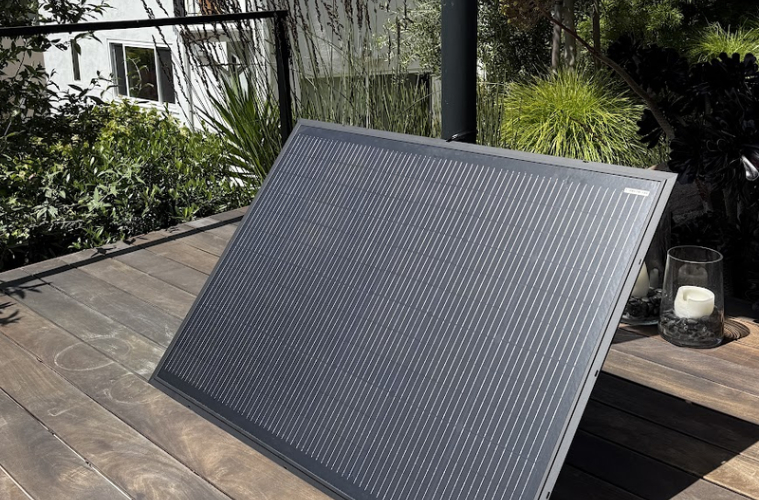
Small balcony and backyard solar systems that plug into a standard outlet are gaining legal footing in the U.S. A consumer guide from Solar United Neighbors and Bright Saver, two nonprofits that advocate for wider solar access, counts 10 states that had passed plug-in solar laws as of October. Virginia’s law takes effect Jan. 1, 2027, and New Jersey’s follows on March 1.
The groups put typical system costs at $400 to $2,000 and estimate a payback of about five years for a system bought today. In Virginia, Maryland, New Jersey and Colorado, systems up to 391 watts can be installed without changes to a building’s wiring. The groups also report that no all-in-one plug-in kit has yet earned whole-system certification from a nationally recognized…
Read More: Heating Aid Push, Generator Recall Lead Weekly Energy Wrap
