
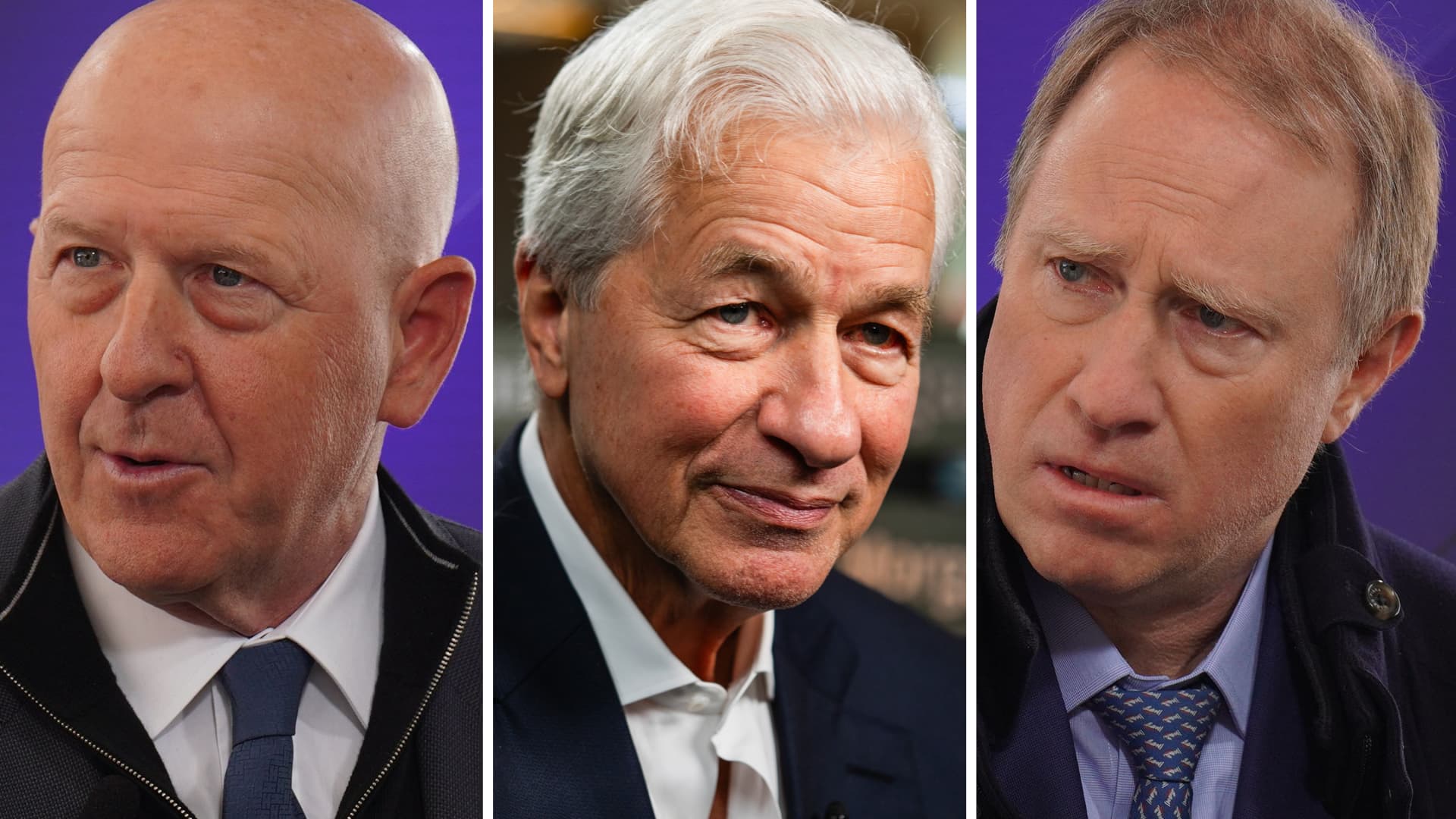

David Solomon, CEO of Goldman Sachs (L), Jamie Dimon, CEO of JP Morgan (C), and Ted Pick, CEO of Morgan Stanley.
CNBC | Getty Images | CNBC
Fueled by the global boom in artificial intelligence stocks, relaxed capital rules and greater lending to hedge funds, big Wall Street banks have already had a banner year for equities trading — even with one quarter left to go.
The five biggest investment banks have generated about $67 billion in equities revenue through Sept. 30, according to company filings. That is $7 billion more than what the group made during all of 2025, which itself was a record haul.
But it’s Wall Street’s Big Three that have captured the largest slice of what is shaping up to be the industry’s most lucrative arena: Goldman Sachs, JPMorgan Chase and Morgan Stanley have made a combined $52 billion in stock trading revenue so far this year, nearly 80% of the total.
“When it comes to the AI mega trade, the Big Three consider each other their main competitors, and that’s pretty much it,” Mike Mayo, Wells Fargo banking analyst, told CNBC. “They’ve been best positioned to take advantage of this market.”
Wall Street banks are experiencing an epic run of blockbuster profits as the total value of the stock market balloons and trading activity from institutional and retail investors rises across stocks, exchange-traded funds and derivatives. Helping drive this activity are the loans that the banks, through their prime brokerages, are extending to hedge funds so that they can amplify their bets.
Prime brokerage — the business of providing hedge funds with margin loans, securities lending and other trading services — has become a key battleground and source of growth. The Big Three’s prime brokers are central to the larger equities story because they serve the largest funds across markets and products.
Demand for leverage to make bets on AI hardware, hyperscalers and chip suppliers has reached new heights, bank executives said last week.
At Goldman Sachs, equities financing activities jumped 96% in the third quarter to a record $3.37 billion. JPMorgan and Morgan Stanley don’t break out that figure, but said they saw a similar dynamic.
“I like your ‘insatiable demand for capital’ point. That feels about right,” JPMorgan CFO Jeremy Barnum said on the bank’s third-quarter conference call, responding to analyst questions about financing demands.
“In this moment where AI is such an overwhelming theme … there is capital being tapped through all kinds of different mechanisms,” Barnum said.
That demand has helped transform equity desks at the Big Three from cyclical, transactional businesses into more durable, high-margin lending engines, Wall Street executives say.
The performance gap between Wall Street’s giants and rivals including Bank of America and Citigroup highlights a widening divide in capital markets.
“For clients, the value isn’t just a price on one trade, it’s coverage and continuity,” Rachid Alaoui, JPMorgan global head of equities,…
Read More: Goldman Sachs, JPMorgan, Morgan Stanley dominate AI stock boom
