


This story was originally published by Wisconsin Watch, and was produced in partnership with the University of Wisconsin-Madison’s Investigative Journalism class taught in the School of Journalism and Mass Communication.
Robert Semanko told police he thought he couldn’t be scammed.
Then last October the 31-year-old father of three from central Wisconsin got a call from a scammer posing as the Chippewa County Sheriff’s Office. Semanko was told he missed jury duty, resulting in two citations, and owed an additional $2,000 fine. Over three hours the scammer tricked Semanko into inserting $7,000 into a crypto ATM.
Crypto ATM scams have become more prevalent in Wisconsin and throughout the U.S. in recent years, leading lawmakers to pass legislation. The scams have caused headaches for local law enforcement agencies and oftentimes pain, embarrassment and irreversible financial damage to victims.
Sen. Jesse James, R-Thorp, who as a Cadott police officer responded to Semanko’s case, co-authored recently approved legislation that places significant regulations on crypto ATMs statewide.
But unlike a handful of other states, including Minnesota and Indiana, Wisconsin opted not to ban crypto ATMs completely as lobbyists pressed regulation-averse Republican lawmakers for looser restrictions.
As the first law in Wisconsin to place consumer protections on crypto ATMs, Act 226 restricts daily transactions to $1,000, requires receipts after each transaction, mandates consumer identification and offers refunds to victims.
Now, incidents as severe as Semanko’s are far less likely to occur, according to lawmakers, law enforcement officials and Wisconsin’s Department of Financial Institutions.
“People need to be educated on this more,” James said. “I think with the new law, it’s gonna definitely help because people will be more well versed on how this is coming about.”
Crypto ATMs offer potential for scams
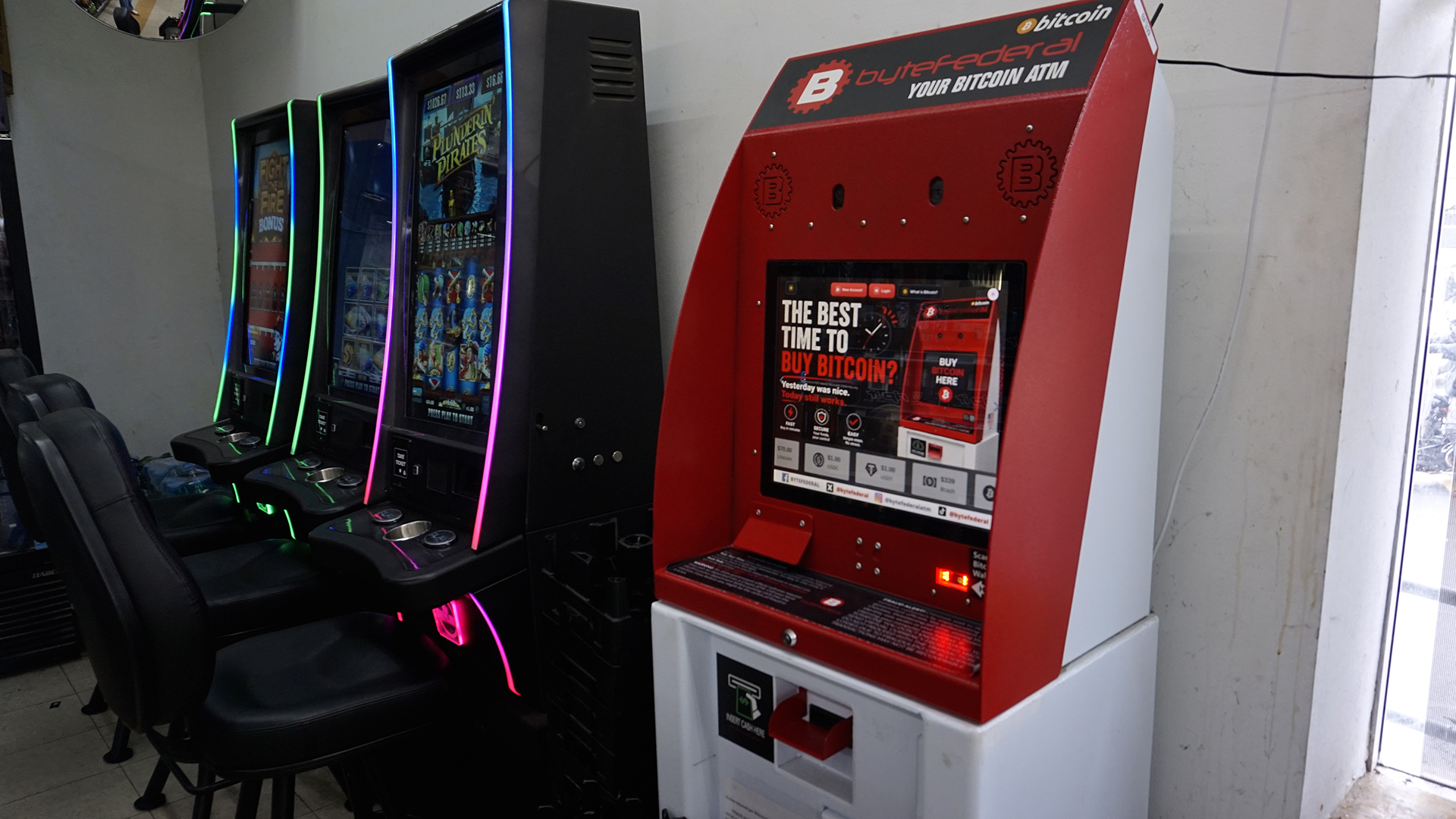
Cryptocurrency kiosks, also known as bitcoin ATMs or crypto ATMs, have sprouted throughout the United States in recent years. With at least 28,000 locations in the U.S., and around 700 in Wisconsin, these machines convert cash into a digital crypto currency, stored in a digital wallet similar to a bank account, with valuations depending on the market value of the cryptocurrency.
They are most commonly located at convenience stores, gas stations and grocery stores.
A CNN investigation found crypto ATMs charge 20-30% in transaction fees, far more than other forms of crypto purchasing. Because cash is the primary medium for crypto ATM deposits, transactions are often untraceable, which means lost money is often unrecoverable, making the machines an alluring instrument for scammers.
In a written statement, Coinflip, a major crypto ATM operator, said the company takes consumer protection seriously.
“We take proactive steps to mitigate fraudulent activity on our platform, including 24/7…
Read More: How much is Wisconsin’s crypto ATM law limiting scams?
