
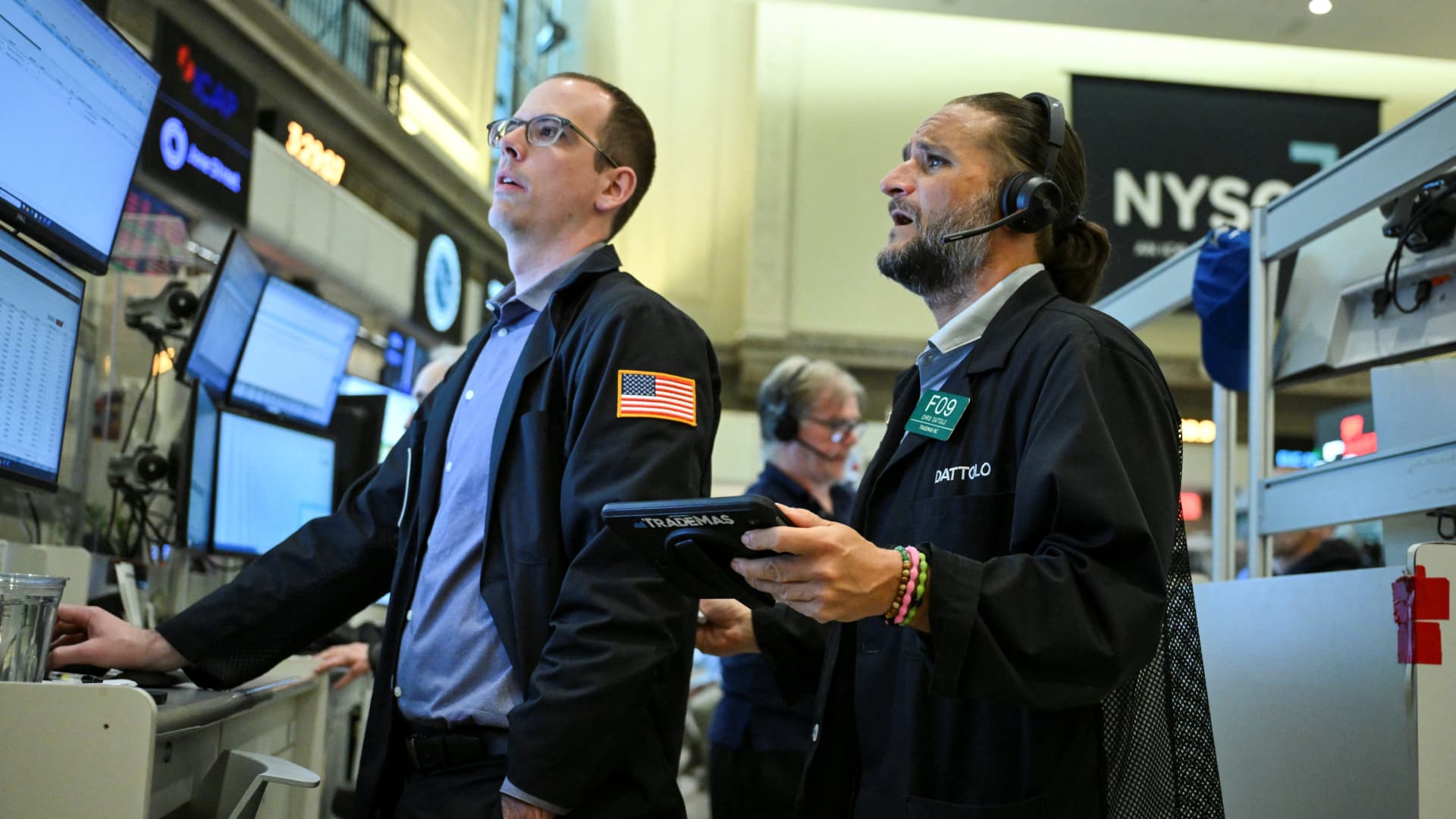

Traders work on the floor of the New York Stock Exchange (NYSE) in New York on July 23, 2026.
Angela Weiss | AFP | Getty Images
It has been a volatile year for global markets, rewarding some trades while punishing others.
CNBC asked six investors about the biggest risks they see and how they are positioning portfolios in response. Despite differing views on the biggest threat to markets, the investors repeatedly returned to the same response: diversify beyond this year’s biggest winners.
Fading U.S. exceptionalism
Chris Rush, investment manager at IBOSS, told CNBC the biggest risk investors were taking was being “too concentrated in the winners of the past and missing other opportunities around the world.”
“It is easy to focus on the short-term noise,” he said. “But with U.S. equities already making up such a large proportion of global portfolios, we think concentration is a bigger risk. U.S. exceptionalism has also started to fade from the levels seen before 2025, while rising debt levels among the Magnificent Seven add to the risks of continuing to chase the same companies.”

Real estate investment trusts, which Rush said “have been out of favor for years but now look increasingly attractive” from a valuation perspective, were one asset his team are using to broaden portfolios, alongside U.K. equities, and stocks listed in Asia and emerging markets.
“Investors have understandably been focused on the AI winners in Korea and Taiwan, but China has performed particularly well during the most recent pullback and we think it remains well positioned,” he said.
‘Don’t die trying to be a hero’
Ben Kumar, head of strategy for wealth, investment and public policy at British asset management firm 7IM, told CNBC the big challenge for investors this year “hasn’t been managing overall volatility, it’s been managing specific volatility.”
“The winners and losers have kept chopping and changing,” he explained. “Overall, the wins have been bigger than the losses … but being too exposed to any one theme, sector or style has been very tricky.”
Kumar noted that energy stocks have been the best and worst performers twice this year, as have IT stocks.
“Everything has worked at some points, nothing has worked at all points,” he said. “Diversification has helped hugely — across sectors and regions. And if, like us, you’re prepared not to go all in on winners (and risk being a loser), it’s been a pretty good year.”
“You don’t need to be a hero in this market — just let it work for you, and keep your exposures broad,” he added. “Don’t die trying to be a hero.”
Complacency warning
London-based Ben Seager-Scott, chief investment officer at Forvis Mazars, told CNBC “two powerful forces” — the Iran war and strong U.S. corporate earnings — were pulling markets in opposite directions, and that markets risked becoming complacent around events in the Middle East, inflationary pressure and shifts in the AI trade.
“In terms of our portfolios, it has been more about finessing…
Read More: Stock market volatility: How investors are diversifying
