
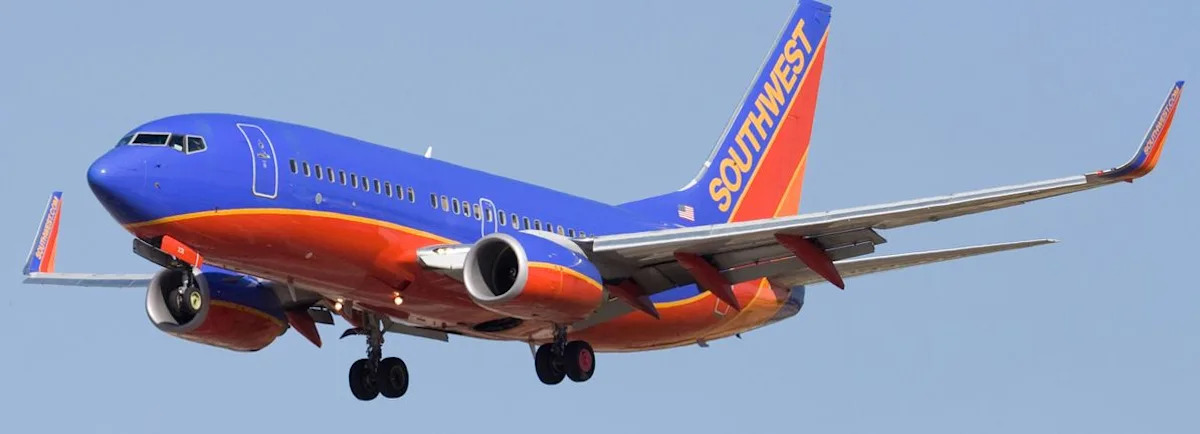

Earlier in August 2026, Southwest Airlines Co. reported second-quarter adjusted earnings of US$0.94 per share that exceeded estimates, underpinned by strong passenger and record managed business revenues, and entered a new five-year US$2.00 billion revolving credit facility with an accordion feature up to US$3.00 billion.
The airline also issued upbeat guidance for third-quarter and full-year 2026 while adding experienced travel and technology leaders Jason Liberty and Varun Krishna to its board, highlighting both financial flexibility and a push to strengthen commercial and digital capabilities.
Next, we will examine how Southwest’s stronger-than-expected earnings and reinforced liquidity position could influence its longer-term investment narrative.
Invest in the nuclear renaissance through our list of 92 elite nuclear energy infrastructure plays powering the global AI revolution.
Southwest Airlines Investment Narrative Recap
To own Southwest today, you need to believe that its commercial upgrades and operational efficiencies can offset macro uncertainty, competition, and fuel cost volatility. The earnings beat and new revolving credit facility reinforce liquidity and near term flexibility, but do not remove key risks around booking softness and aircraft supply, which still look like the most important near term swing factors for the story.
The new US$2.00 billion revolving credit facility, expandable to US$3.00 billion, is especially relevant here. It underpins Southwest’s ability to keep investing in product changes like premium seating, basic economy, and distribution partnerships while managing through potential demand swings and cost pressure. That additional liquidity support may matter if macro or fuel headwinds intensify at the same time as the airline is rolling out these revenue initiatives.
Yet behind this stronger liquidity, the exposure to fuel price swings and shifting demand patterns is something investors should be very aware of…
Read the full narrative on Southwest Airlines (it’s free!)
Southwest Airlines’ narrative projects $35.7 billion revenue and $2.4 billion earnings by 2029. This requires 5.9% yearly revenue growth and about a $1.6 billion earnings increase from $837.0 million today.
Uncover how Southwest Airlines’ forecasts yield a $51.79 fair value, a 28% upside to its current price.
Exploring Other Perspectives

Some of the lowest estimate analysts were assuming Southwest would reach about US$34.8 billion in revenue and US$2.3 billion in earnings by 2029, yet they still saw material risk that rising labor and fuel costs could cap the benefit of today’s earnings beat and new credit line, reminding you that opinions differ widely and both bullish and bearish views may shift as fresh data comes in.
Read More: Is Southwest (LUV) Quietly Redefining Its Investment Story With Earnings
