
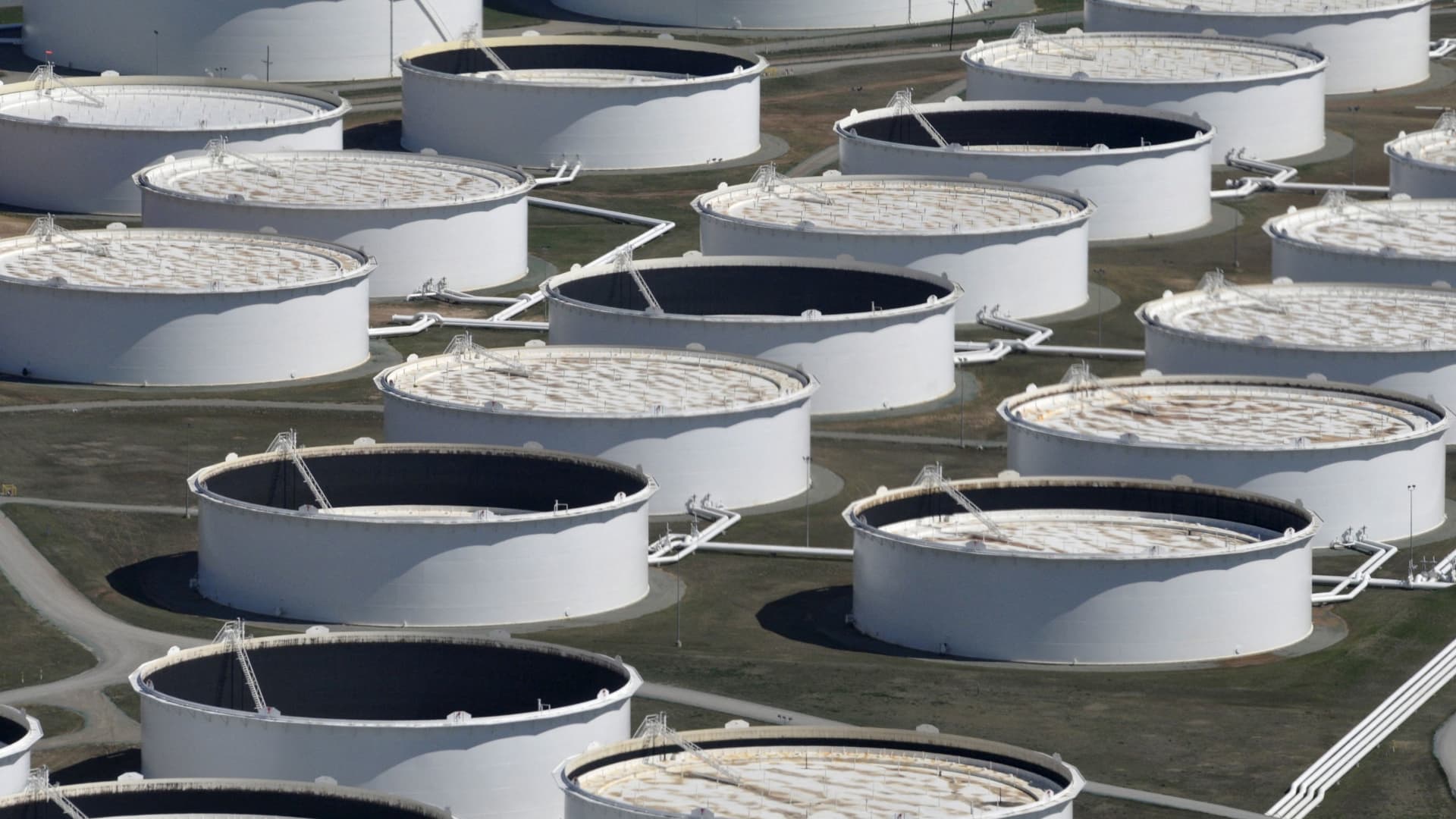


Global oil inventories are falling at a record pace to compensate for the big supply disruption in the Middle East and they will approach critical levels if the Strait of Hormuz does not reopen.
Higher prices for oil and fuel are likely ahead of peak demand this summer as a consequence, the International Energy Agency warned this week in its monthly update.
“Rapidly shrinking buffers amid continued disruptions, may herald future price spikes ahead,” the IEA said.
The oil market has not felt the full impact of the supply loss thanks to commercial inventories held by the industry, strategic reserves controlled by governments and tankers in transit, Exxon Mobil CEO Darren Woods said on the oil major’s first-quarter earnings call.
These stocks mitigated the impact of the disruption in March and April, Woods said. But commercial inventories will eventually fall to levels where they can longer serve as a supply source, the CEO said.
“We anticipate as that happens and the strait remains closed, that we will continue to see increased prices in the marketplace,” Woods said.
Stockpiles near record lows
Inventories were near a decade high at just over 8 billion barrels at the end of February, Swiss bank UBS estimated in a Tuesday report. By end of April, stockpiles fell to 7.8 billion barrels, UBS analysts said.
Inventories will approach record lows of 7.6 billion barrels by end of May if demand remains the same month over month, the UBS analysts said. Inventories falling to that level would stress the supply chain, JPMorgan analysts said in an April 30 note.
Billions of barrels in inventory may sound like a lot but the reality is that only about 800 million barrels are available without straining the system, the JPMorgan analysts said. The rest is needed to keep pipelines and tanks filled at minimum levels so the supply chain operates efficiently, they said.

“Like blood pressure in the human body, the issue is circulation,” said Natasha Kaneva, JPMorgan’s head of global commodities strategy. “The system does not fail because oil disappears, it fails because the circulation network no longer has enough working volume.”
Oil inventories would fall to a critically low level of 6.8 billion barrels by September if Hormuz is still closed at that time, JPMorgan forecast. Product inventories would hit critical levels sooner in July or August, according to a forecast from Rapidan Energy.
The global economy would “seize up, with critical transportation infrastructure unable to source fuel at any price,” Rapidan analysts said in May 7 note.
But inventories are very unlikely to reach these critically low levels, the analysts said. Instead, oil and product prices will spike to curtail demand which will cause “a severe economic contraction.”
“That’s likely to happen before 3Q26,” the Rapidan analysts said.
Read More: Global oil stockpiles could hit record lows if Hormuz Strait stays closed
