


Warren Buffett, the 94-year-old investing legend and chief executive of Berkshire Hathaway, has announced plans to step down at the end of this year.
His departure will mark the end of an era for value investing, an investment approach built on buying quality companies at reasonable prices and holding them for the long term.
Buffett’s approach transformed Berkshire Hathaway from a small textile business in the 1960s into a giant conglomerate now worth more than US$1.1 trillion (A$1.7 trillion).
He built his fortune backing US industry in energy and insurance and American brands, including big stakes in household names such as Coca-Cola, American Express and Apple.
At Berkshire’s annual meeting at the weekend, held in an arena with thousands of devoted investors, Buffett named Greg Abel as his successor.
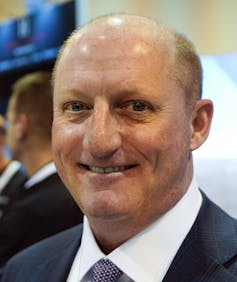
Nati Harnik/AP
Abel, 62, is currently chairman and chief executive of Berkshire Hathaway Energy, as well as vice chairman of Berkshire Hathaway’s vast non-insurance operations.
He’s known for his disciplined, no-nonsense management style. The company’s board has now voted unanimously to approve the move.
This changing of the guard comes at a pivotal moment. Donald Trump’s return to the US presidency has already delivered significant economic policy shifts.
Meanwhile, questions about US economic dominance grow louder against China’s continued rise.
The ‘Oracle of Omaha’
Few names command as much respect in the world of finance as Warren Buffett. Born in Omaha, Nebraska, in 1930, Buffett displayed an early genius for numbers and investing. He bought his first stock at age 11.
His investment philosophy – buying undervalued companies with strong fundamentals – would later earn him the nickname the “Oracle of Omaha” for his uncanny ability to predict market trends and identify winning investments years before others did.
Value investing
Buffett drew his investment approach from the value investment principles of British-born US economist Benjamin Graham.
He preferred businesses with lasting advantages and a clear value proposition. Some of his key investments included insurance company GEICO, railroad company BNSF, and more recently Chinese electric vehicle maker BYD.
He avoided speculative bubbles (such as the dotcom bubble of the late 1990s and, more recently, cryptocurrencies) and preached long-term patience to investors. As he famously wrote in a 1988 letter to shareholders:
In fact, when we own portions of outstanding businesses with outstanding managements, our favorite holding period is forever.
Buffett’s guidance helped Berkshire navigate many economic booms and recessions. Over his six decades at the helm, the company delivered impressive compounded annual returns of almost 20% – virtually double those…
Read More: As Warren Buffett prepares to retire, does his investing philosophy have a
