
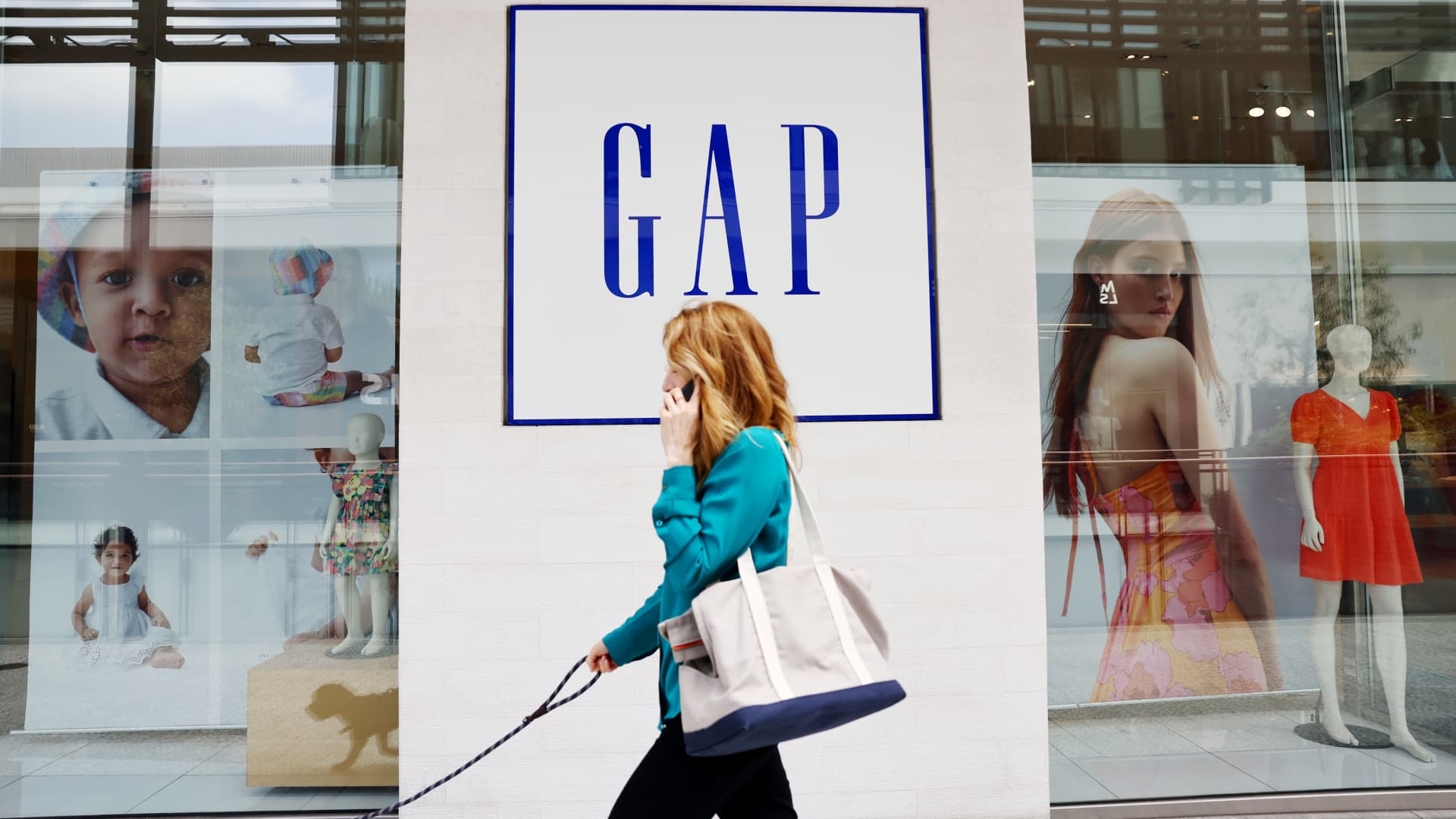

The Gap logo is displayed at a Gap store in Los Angeles, April 25, 2023.
Mario Tama | Getty Images
Retail’s biggest winners during first-quarter earnings aren’t thriving because consumers are suddenly spending more on discretionary goods — it’s because they’re executing well and cash-strapped shoppers are choosing them over competitors.
If there’s one takeaway from results posted by the largest U.S. retailers over the last few weeks, it’s that shoppers are still spending — but being far more selective about where.
Feeling the brunt of sticky inflation, high interest rates and an economy that feels tougher than it may actually be, consumers are prioritizing purchases that have the right combination of value, convenience and fun.
Companies like Abercrombie & Fitch, TJX Companies and Gap impressed Wall Street with their results, while others like Kohl’s, American Eagle and Target disappointed.
Take Gap and Foot Locker — two unlikely winners that posted results on Thursday. Both retailers are in the midst of ambitious turnaround plans and are performing better than expected because of new strategies they’ve implemented.
Gap posted positive comparable sales for all four of its brands — Athleta, Old Navy, Banana Republic and its namesake banner — for the first time in “many years,” beating Wall Street’s expectations across the board, the company said.
For years, Gap had been losing market share to buzzy competitors. But under new CEO Richard Dickson, the marketing guru credited with reviving the Barbie franchise, the apparel chain has focused on financial rigor, brand storytelling and product development. In under a year, Gap’s sales and profits have meaningfully improved, and its brands are beginning to be part of the cultural conversation again.
A few weeks ago, actor Anne Hathaway went to a Bulgari party wearing a white Gap shirt dress that had been designed by the company’s new creative director, Zac Posen. Critically, Gap dropped the $158 dress to consumers, and it sold out within hours. This combination of marketing and exclusive product drops is what Gap had long been lacking, and what competitors had already been doing.
Foot Locker had declined over the last couple of years, but with the right combination of new strategies and a little bit of luck, its turnaround is showing signs of life.
Under CEO Mary Dillon, Foot Locker has worked to change its stores, where it does more than 80% of its sales. It has tried to create not only a better shopping experience for consumers but also a better place for its critical brand partners.
Instead of two walls of shoes with competing brands mixed together, Foot Locker is changing its fleet so the brands have their own unique displays. Its new “store of the future” concept at a New Jersey mall that brings that strategy to life has become its best performing store in North America in just a few weeks, Dillon told CNBC, adding that brands are thrilled with the new design.
The shift couldn’t have…
Read More: Strong Gap and Foot Locker earnings don’t spell a consumer comeback
