
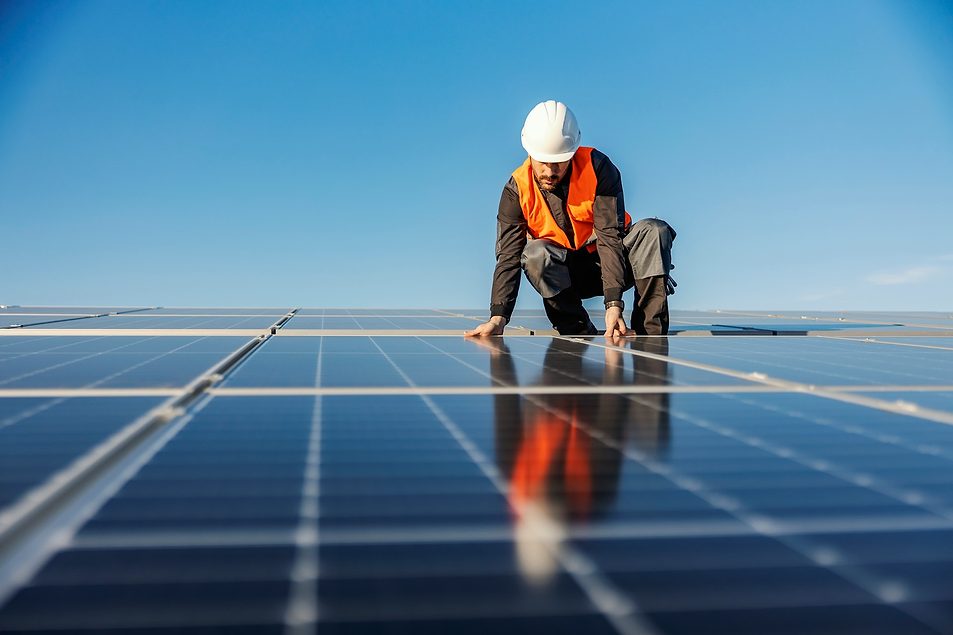

SolarEdge Technologies has introduced a new power optimizer for commercial and industrial (C&I) solar installations that could reduce equipment requirements while retaining individual panel monitoring and electrical safety features.
Announced November 16, 2026, the U.S.-manufactured Duo Power Optimizer uses a two-to-one configuration, allowing one optimizer to connect to two solar modules. Compared with conventional systems that require one optimizer per panel, the design reduces the number of optimization devices needed by up to 50%.
The product is manufactured in Florida and is available for orders in the United States, with initial shipments scheduled for January 2027. SolarEdge is also presenting the technology at RE+ 2026 in Las Vegas, November 17–19.
For commercial solar developers and installers, the central consideration is whether reducing hardware and wiring complexity can lower project costs without limiting energy production, maintenance access or system reliability.
Dual-Module Design Targets Installation Efficiency
SolarEdge’s Duo differs from conventional module-level optimizers by incorporating two independent maximum power point trackers (MPPTs) into a single device. Each tracker manages a separate solar panel, allowing the connected modules to operate independently despite differences in shading, orientation or performance.
This arrangement may be particularly useful for commercial rooftop installations with panels positioned at different angles. Rather than requiring separate optimizers for each module, installers can connect two panels to one device while retaining module-level performance monitoring.
The optimizer’s wiring configuration is also intended to simplify installation. One of its two input pairs includes an extended cable designed to reach an adjacent module, potentially eliminating some field-installed jumper connections and reducing excess wiring.
SolarEdge reports that installer Solar One experienced fewer wiring connections and reduced installation work when using the configuration. However, the company has not released independently verified data quantifying installation labor savings across multiple project types.
The potential economic benefits will depend on project size, rooftop layout, equipment pricing and labor requirements. Fewer optimizers could reduce the number of components installers must mount and connect, but the overall effect on installed system costs remains to be demonstrated at scale.
The technology also retains the ability to identify differences in individual panel output. This can help operators evaluate underperforming modules without relying solely on system-wide production data, supporting maintenance and troubleshooting activities over the operating life of an installation.
Electrical Safety and Domestic Manufacturing Shape Market Position
Alongside its hardware reduction strategy, SolarEdge has incorporated additional electrical monitoring capabilities into the…
Read More: SolarEdge Duo Cuts Optimizer Count for Commercial Solar
