
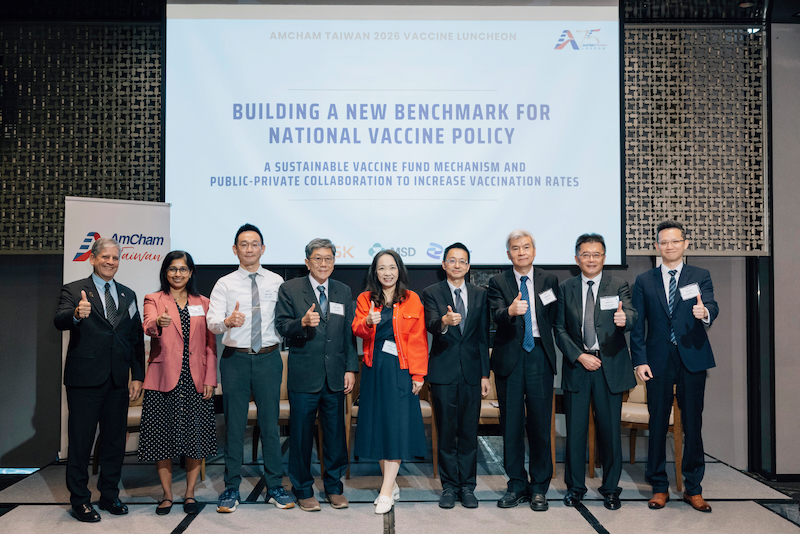

Public-private collaboration sets a new standard for life-course vaccination policy in Taiwan.
Vaccination policy is no longer solely a means of preventing illness: It has become foundational to extending healthy life expectancy, easing the burden on the healthcare system, and strengthening national health resilience.
Life-course vaccination as essential infrastructure for healthy aging
On August 26, 2026, the American Chamber of Commerce in Taiwan (AmCham) held its annual luncheon on vaccination policy, which brought together key stakeholders across Taiwan’s healthcare landscape to discuss the national vaccine fund, vaccination policy, vaccine value assessment, and the delivery of vaccination services, as well as how to establish a more comprehensive life-course vaccination policy.
Guest speaker Dr. Ching-tai Huang of Chang Gung Memorial Hospital noted that, in a super-aged society, policy should address both extending life expectancy and reducing the number of years people spend in poor health because of aging-related illness or disability. He also stressed that life-course vaccination is essential to helping reduce healthcare expenditure and social costs while preserving workforce productivity and overall health resilience.
However, adult vaccination rates in Taiwan continue to lag well behind those of children. Limited health awareness and a tendency to underestimate the risk of infection, barriers to convenient access, and the lack of integration among vaccine information and records, reminder systems, and clinical workflows have all contributed to the disparity between demographics. Vaccination should be routinely incorporated into chronic disease visits, adult health examinations, hospital discharge services, and care for high-risk groups.
Financial sustainability for a more forward-looking vaccination policy
At the same event, Taiwan Centers for Disease Control (CDC) Director General Lo Yi-chun said that vaccination policy must strike a balance among public health needs, population risk, affordability, and supply stability. Introducing a new vaccine often requires several years of planning, from accumulating scientific evidence and obtaining expert recommendations to securing a budget and completing procurement. He said the vaccine fund must therefore retain enough flexibility to respond to disease outbreaks and demographic changes, as well as receive more predictable and sustained financial support.
Director General Lo said the government will also continue to improve demand forecasting, procurement, and inventory management. Vaccination rates and health outcomes should be used to assess the effectiveness of public spending, he said, and ensure that every dollar invested delivers tangible public health benefits.
The full value of vaccines in protecting health and social resilience
Taiwan Immunization Vision and Strategy (TIVS) President Lee Ping-ing cautioned that cost-effectiveness analyses…
Read More: From Investing in Prevention to Building Health Resilience
