
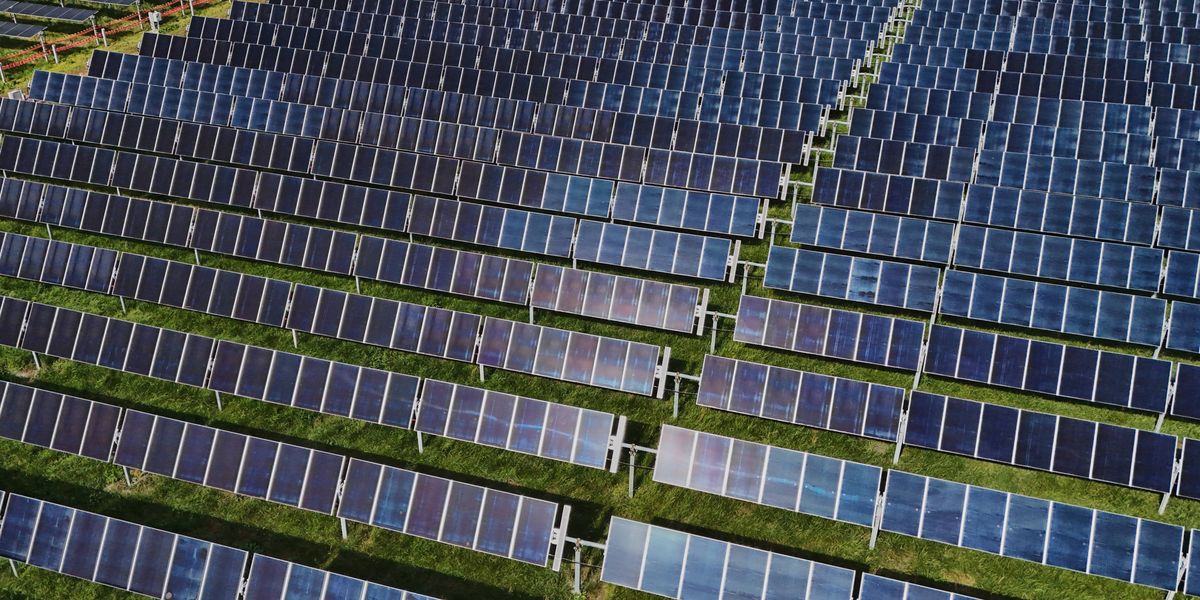

NEW YORK (AP) — As scientists calculated that Earth is getting sicker, global leaders on Monday kicked off a week of talks about how to fix it and fast, pointing to hope from a renewable energy boom.
A different boom, in artificial intelligence and the power-and-water-hungry data centers behind it, could both worsen and solve some of these issues, a paradox world and business leaders will struggle with this week.
Every year as top government officials attend the United Nations General Assembly and business executives flock to New York Climate Week sessions, global warming generates lots of talk but little action.
This time two new forces — the rise of AI and data centers, as well as higher fossil fuel prices from wars in Iran and Ukraine — should change the discussion, experts and activists said. That’s on top of climate-driven disasters recently reaching new levels of destruction in Asia.
“Patient Earth is not well,” said Johan Rockström, director of the Potsdam Institute for Climate Impact Research in Germany. “We are not only putting the stability, the resilience, and the life support systems on Earth at risk, we are very close to pushing ourselves across thresholds that can lead to irreversible, unmanageable outcomes.”
A new report released Monday by the institute’s Planetary Boundaries Science Lab found that the world has breached seven of nine science-determined planetary boundaries for a healthy globe.
United Kingdom Secretary of State Edward Miliband said that transitioning to cleaner and renewable energy is now a “national security imperative.”
The climate breakdown “must be an issue for foreign ministers and prime ministers. As well as energy and climate ministers. The security community, not just the activist community. The generals, not just the green campaigners,” he said.
Rising prices drive concerns
Climate change is “driving up food prices and wider inflation” and fossil fuel dependence is hitting billions of people around the world at the fuel pump, said U.N. climate chief Simon Stiell on Monday.
Rising prices have sparked protests in Asia and Africa, which were hit first and hardest by energy shortages due to the Iran war. In the U.S., consumer confidence is plunging and gas prices have reached record highs.
The Iran war energy shock has cost U.S. consumers more than $100 billion in higher fuel prices, Stiell said.
There are two parallel climate stories playing out at the moment, explained Mohamed Adow, director of Power Shift Africa. The first story is extremely hopeful, with renewable energy booming, technology improving and the economics of clean energy making more and more sense. The second story is terrifying, with climate impacts accelerating faster than political and financial systems can respond, Adow said.
“New York needs to bring those two stories together,” he said.
AI and data centers take the limelight
The environmental footprint of AI and data centers is “very much a hot topic,” said Helen…
Read More: Climate Week talks balance hope for clean energy against uncertainty over
