
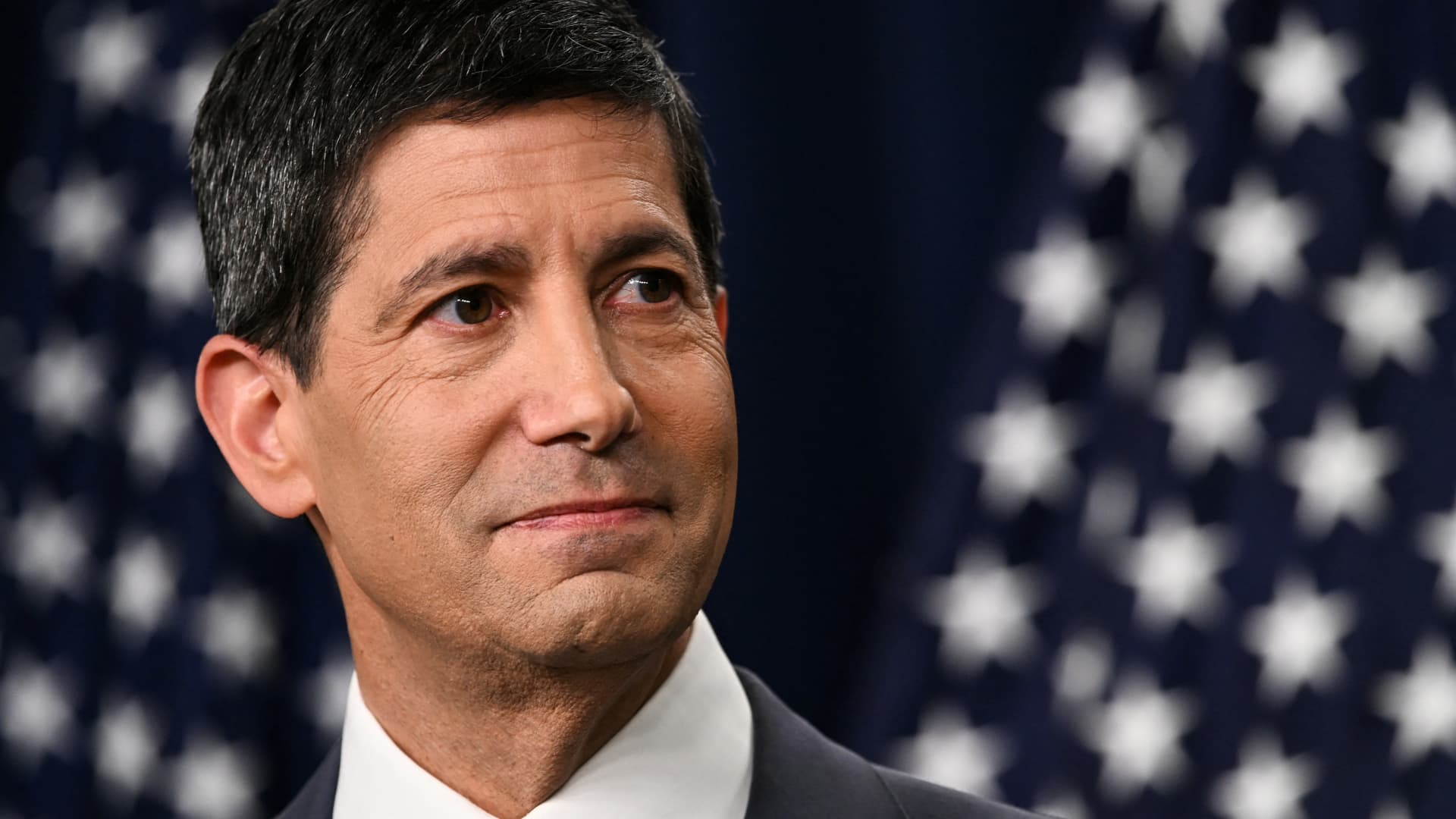

Chair of the Federal Reserve Kevin Warsh speaks during a news conference at the William McChesney Martin Jr. Federal Reserve Board Building in Washington, DC, on July 29, 2026.
Brendan Smialowski | Afp | Getty Images
Add the possibility of fewer meetings into the mix of how Federal Reserve Chairman Kevin Warsh wants to reduce the central bank’s footprint on financial markets, a move that some experts say could introduce both volatility and opportunity for investors.
Since taking office in May, Warsh has implemented several measures that reverse decades of Fed culture in which policymakers have been aggressively transparent — some say overly so — about where they think monetary policy is headed.
Thus far, he has curtailed so-called forward guidance, or how the Fed signals its future rate moves, dramatically shortened the post-meeting statement and provided cryptic and often evasive answers when questioned about his views during the two news conferences he’s held so far.
Now comes the possibility, discussed in what one Fed source described as mostly hypothetical terms, of reducing the long-held schedule of eight meetings each year for the rate-setting Federal Open Market Committee.
Such a move would further curtail the communications output from the Warsh Fed — and lead to some uncertain outcomes for the stock and bond markets.
“Certainly, it’s going to increase volatility,” said George Catrambone, head of fixed income for the Americas at DWS Group. “Having less transparency forces market participants to hedge or have a wider dispersion of outcomes.”
‘Nothing magical’ about schedule
The Fed has used various meeting strategies over the decades.
Until the early 1980s, it met nearly monthly before changing to eight a year under former Chairman Paul Volcker. Moreover, the Fed is free at any time to call meeting, though the market implications could be substantial given that such a move would be considered an emergency.
Minneapolis Fed President Neel Kashkari told CNBC on Wednesday that he is fine with re-examining the meeting schedule.
“I don’t think there’s any magic number about eight or 10 or six. You know, we always have the ability to call emergency meetings if things happen, but that’s a big event,” he said. “When the FOMC calls an emergency meeting, it really sends a signal that we’re concerned about something. And so, you know, I think I’m open-minded. I don’t have a strong view.”
Philadelphia Fed President Anna Paulson on Tuesday expressed similar sentiments, telling CNBC, “it’s healthy to have a good discussion about that.” Other Fed experts take a similar tack that having a fewer meetings a year might not be a big deal to markets.
“There’s nothing magical about eight meetings,” said Bill English, the Fed’s former head of monetary affairs during Warsh’s first stint there and now a Yale professor. “There are costs associated with having a lot of meetings, but on the other hand, you don’t want to have so few meetings that you end up not acting…
Read More: As Warsh and the Fed contemplate fewer meetings, markets brace for
