
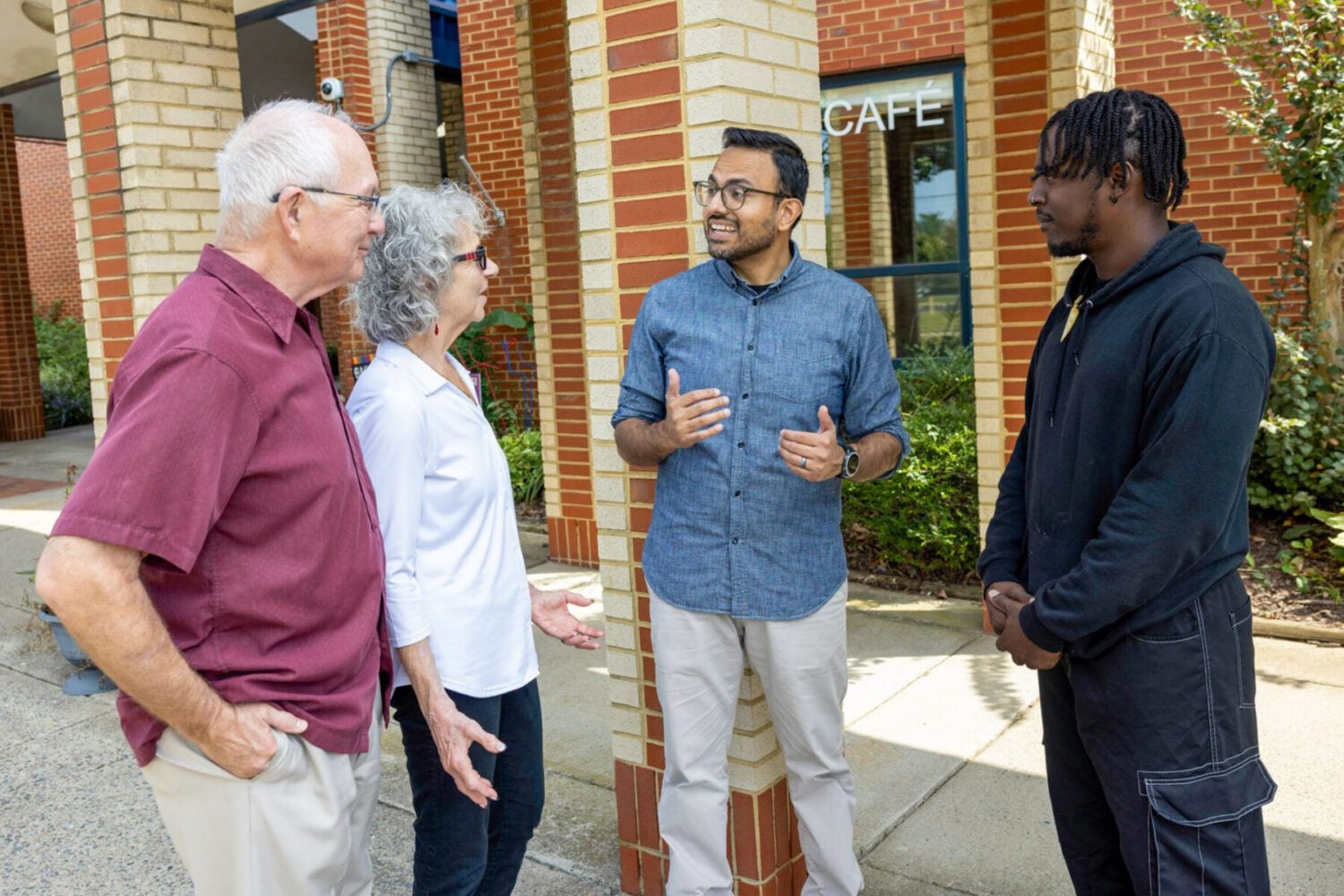

I sat down with Salaam Bhatti to talk about redistricting, campaign finance, and a government operating outside the interests of its donor class. What stood out to me most was his sincerity and the kindness in his politics. He presented a connection between empathy and a functional democracy. But beyond that tone, what emerged in our conversation was a candidate deeply focused on structural reform and the mechanics of how government actually works.
Bhatti offers a version of American politics rooted in kindness, but also one grounded in policy and lived experience. Here, I want to explore the core themes of my interview with Salaam: the importance of community, the fight against the donor class, and how structural reform might actually take shape.
I was initially drawn to Bhatti’s campaign because of its focus on kindness and love, something that feels largely absent from modern politics. When I asked what values he believes are missing most, his answer was immediate: “Love is not just saying hi, but actually caring like they’re your family… knowing if they’re struggling, if they have food in their bellies.”

That perspective is rooted in his background. A child of immigrants who grew up relying on programs like WIC and free school meals, Bhatti later worked as a public interest lawyer at the Virginia Poverty Law Center, where he helped expand access to those same systems. He points to that work as a turning point, particularly his role in helping expand SNAP benefits to more than 25,000 families in Virginia through legislation that ultimately received bipartisan support.
Rather than relying solely on advocacy groups, Bhatti describes bringing corporate stakeholders into the process to align political incentives. “When the elected official saw the money was in there too… then the dominoes fell,” he said, describing how the bill ultimately passed unanimously. It’s an approach that reflects both an understanding of the system and a willingness to work within it to produce results.
That experience shapes how he talks about government today. For Bhatti, the issue isn’t just expanding programs, but fixing how they function. He points to overlapping eligibility requirements across systems like SNAP, WIC, and TANF as inefficient and often counterproductive.
In earlier work as a public benefits attorney, he said this: “The idea is if you have money you need to pay for food, which is super messed up, to tell people, ‘Why don’t you get further into poverty before we bail you out.’” He now argues for a more streamlined approach, potentially through some form of guaranteed income, to better serve people navigating poverty.
Campaign finance is another central focus. Bhatti repeatedly returns to the idea that elected officials are often constrained by the demands of…
Read More: “We Are the Ones We’ve Been Waiting For”: Bhatti’s Vision for a Different
