
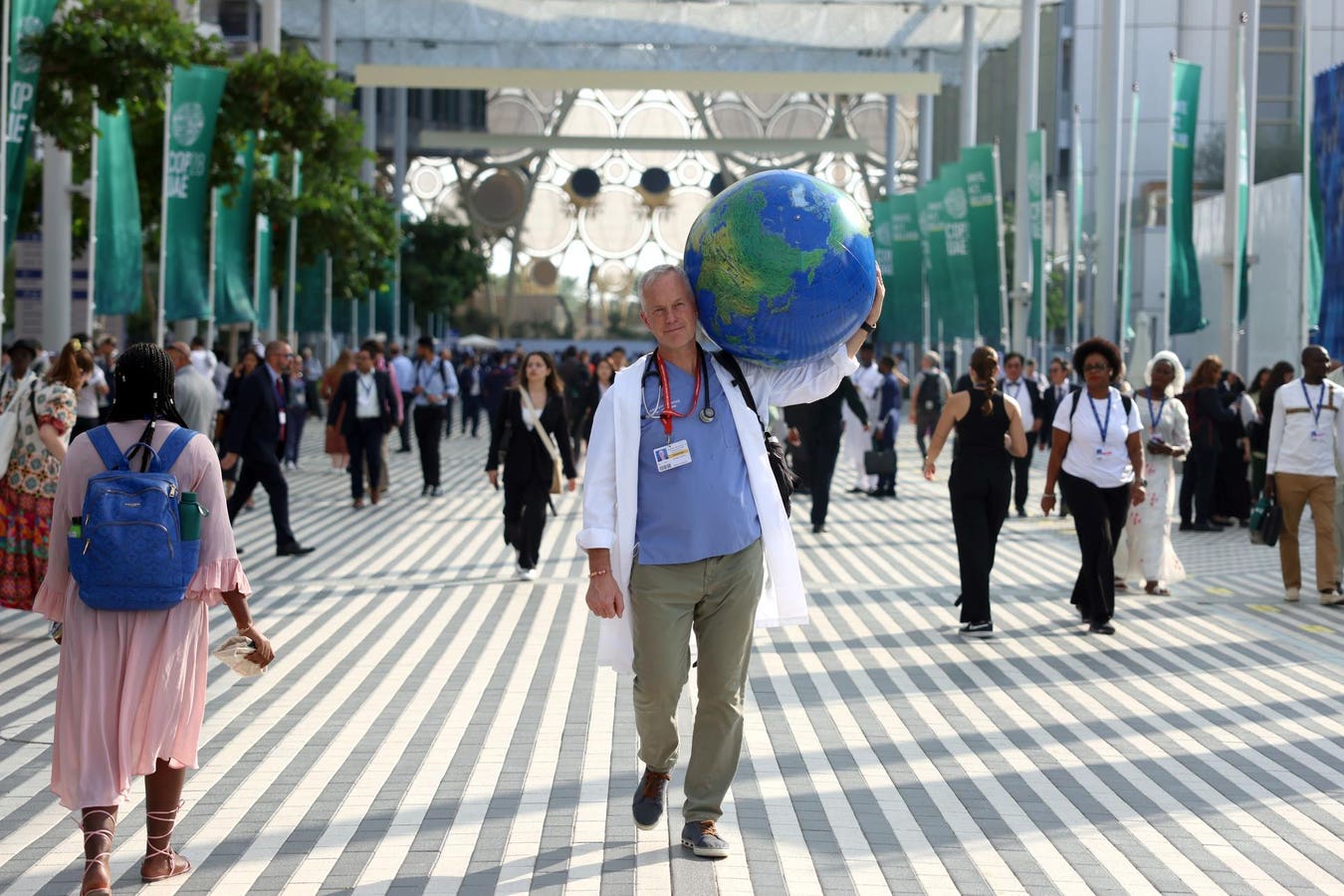


DUBAI, UNITED ARAB EMIRATES – DECEMBER 3: In this handout image suppled by COP28, Joseph Vipond from the Canadian Association of Physicians for the Environment at the Blue Zone during the UN Climate Change Conference COP28 at Expo City Dubai on December 3, 2023 in Dubai, United Arab Emirates. The COP28, which is running from November 30 through December 12, is bringing together stakeholders, including international heads of state and other leaders, scientists, environmentalists, indigenous peoples representatives, activists and others to discuss and agree on the implementation of global measures towards mitigating the effects of climate change. (Photo by Walaa Alshaer /COP28 via Getty Images)
COP28 via Getty Images
Every $1 invested in climate health solutions could yield up to $68 in benefits for low and middle-income countries, according to a new analysis.
The report by the World Resources Institute, supported by the Rockefeller Foundation, claims investing in early warning systems and disease surveillance could help communities become more resilient to the impacts of climate change.
The study also calculates for every $1 invested by low and middle-income countries in these services can yield $4 to $68 in economic benefits, depending on local conditions and implementation.
It argues such investments could enable earlier, more targeted-action, which reduce illness and death, lowering emergency response costs and easing long-term strain on health systems.
The study says climate change is emerging as one of the defining public health challenges of this era, with floods and extreme weather events accelerating the spread of infectious diseases and disrupting healthcare systems.
This includes malaria, dengue, cholera, diarrhoea and heatstroke, which disproportionately affect more vulnerable populations.
It says without stronger action, low and middle-income countries could face nearly 16 million deaths and more than $20 trillion in economic losses by 2050 from climate-related health impacts.
But the report adds less than half of health ministries currently integrate climate data into national health surveillance systems, according to a forthcoming survey by the World Health Organization.
Carter Brandon, a senior fellow at the World Resources Institute, said the health impacts of climate change are increasing, but many of these impacts are treatable if resources are available, in an interview.
Brandon added there are still barriers between climate and health institutions in many countries around the world, with fewer than half of health ministry’s talking to their respective climate agencies.
He told me it is not just about improving patient-facing services, rather it is about improving upstream activities like disease tracking, early warning systems and making health facilities themselves more physically prepared for climate change.
“We have seen clinics far too often get flooded or their power cut, becoming unable to serve patients because the…
Read More: Investing In Climate Health Could Generate High Returns, Study Finds
