
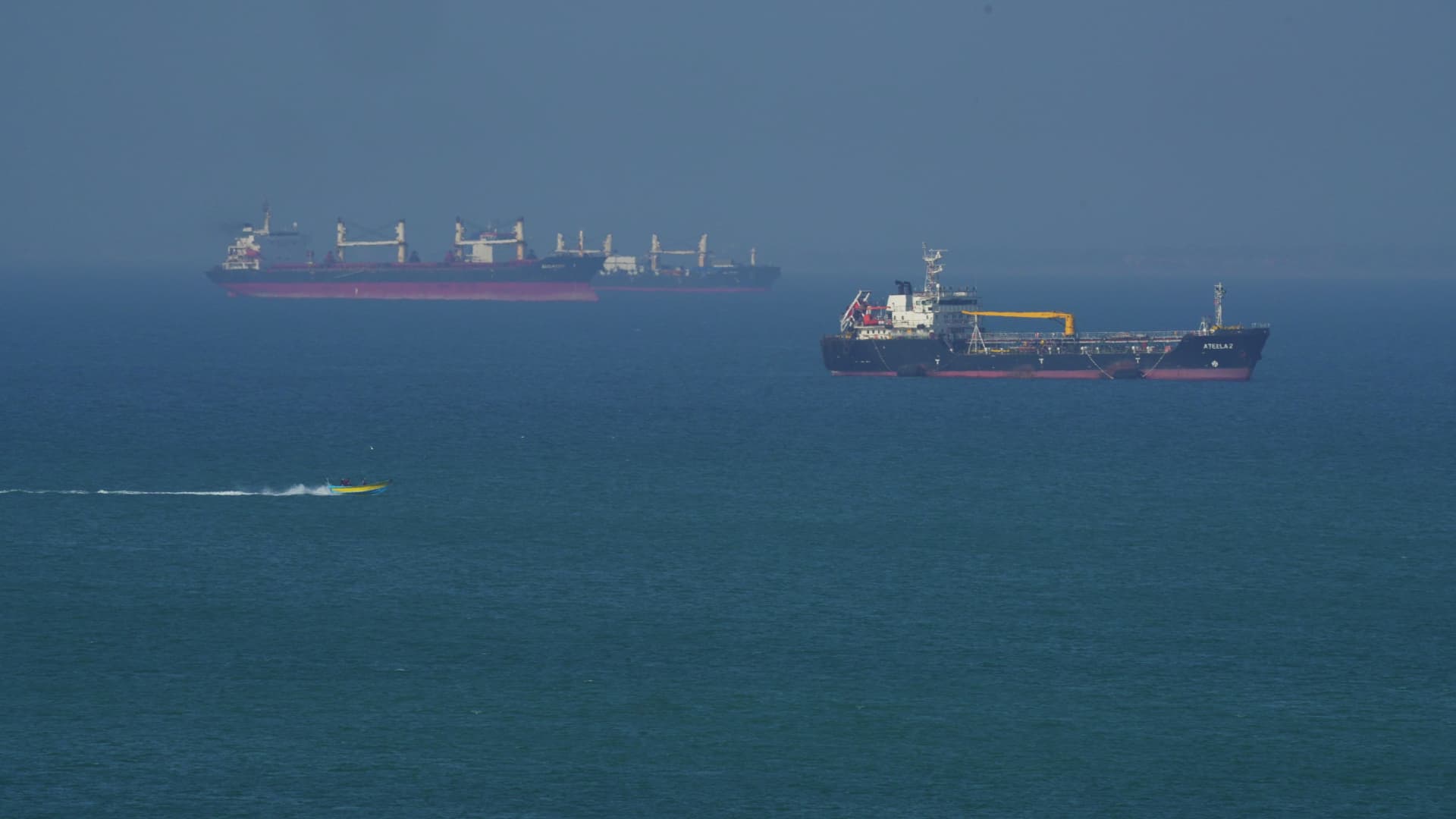

The Ateela 2 Oil Tanker boat navigates the sea on April 28, 2026 on Qeshm Island, Iran in the Strait of Hormuz.
Asghar Besharati | Getty Images
Oil prices rose Monday as the U.S. military launched an operation to restore freedom of navigation through the Strait of Hormuz.
International benchmark Brent crude futures rose more than 2% to $110.64 per barrel by 10:15 a.m. ET, while U.S. West Texas Intermediate futures were little changed at $102.24 per barrel.
President Donald Trump on Sunday said the U.S. would guide civilian ships through the strait. The oepration, dubbed Project Freedom, is supported by guided-missile destroyers, more than 100 aircraft and unmanned platforms, U.S. Central Command said Monday.
But U.S. officials told Axios that there are no plans for full-fledged naval escorts right now. Instead, the U.S. Navy will advise ships on how to avoid mines and stands ready to intervene if vessels are attacked, according to the Axios report. A U.S. official told Axios that the military has been authorized to strike immediate threats to ships crossing the strait.
Two U.S. flagged merchant vessels successfully transited the strait, CENTCOM said Monday. The U.S. military denied Iranian media reports that the Revolutionary Guard hit a U.S. warship with two missiles.
“No U.S. Navy ships have been struck,” CENTCOM said in a social media post. “U.S. forces are supporting Project Freedom and enforcing the naval blockade on Iranian ports.”
The operation comes after at least two commercial ships were attacked in or near the strait over the weekend. A tanker was a hit by projectiles north of Fujairah in the United Arab Emirates and a bulk carrier was attacked by several small craft off the coast of Iran, according to incident reports from the United Kingdom Maritime Trade Operations Centre.

Brent oil
The United Arab Emirates on Monday said Iranian drones targeted a vessel affiliated with its state oil company ADNOC. It condemned Iran’s attacks on commercial ships as “acts of piracy.”
Traders will also be assessing OPEC+ agreeing to an oil output increase of 188,000 barrels per day, in the cartel’s first meeting since the exit of its key member, the United Arab Emirates.
Gaurav Ganguly, head of international economics at Moody’s Analytics, warned of the impact of a prolonged Mideast conflict on global economy on CNBC’s “Squawk Box Asia,” as oil prices stay elevated.
“It doesn’t take much from this point for the global economy to sink into recession,” Ganguly said. “We estimate something like $125 for Brent over a sustained period of time will push the global economy into some sort of recession.”

Read More: Oil rises as U.S. launches to open Strait of Hormuz
