
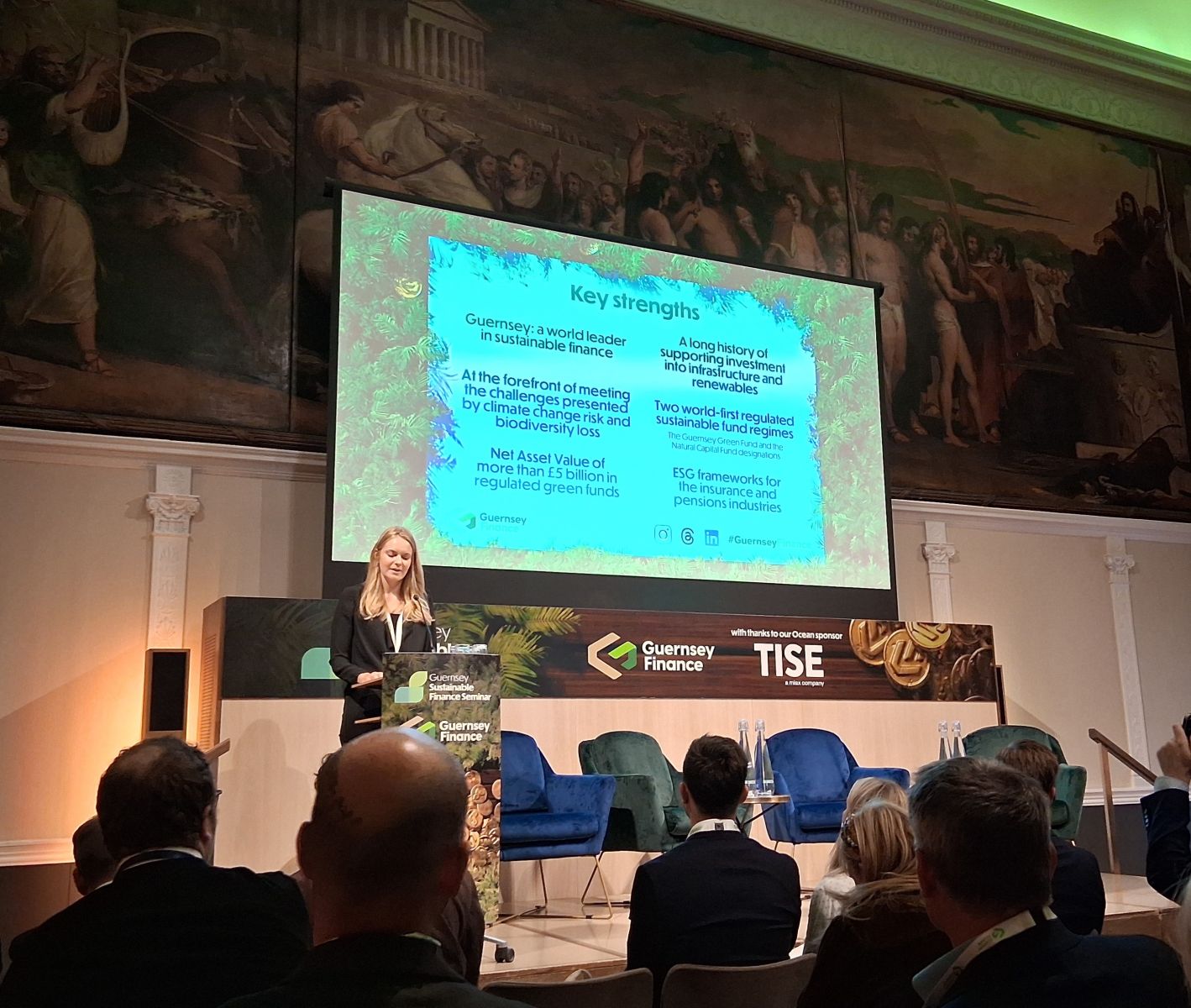

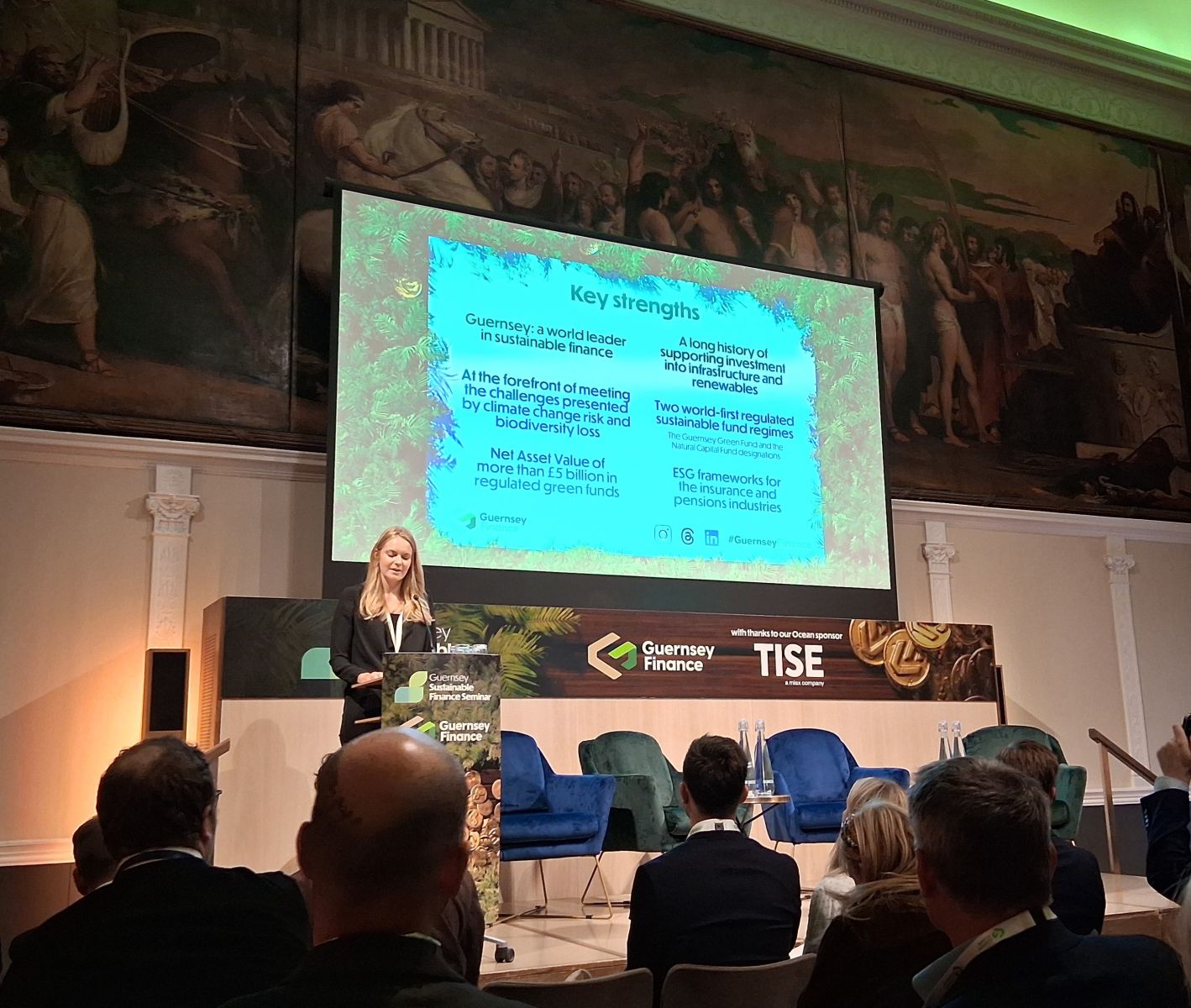
The seminar highlighted new ways that finance is being used to help tackle climate change.
“Blended finance” was the centrepiece of how panelists at a
recent Guernsey Finance seminar addressed how to tackle climate
change.
Last week, experts gathered at the Guernsey Sustainable Finance
Seminar to examine blended finance mechanisms, drawing attention
to how, for example, Guernsey’s specialist insurance sector
adapts its risk financing mechanisms.
Justin Sykes, managing director at Guernsey-headquartered impact
investor Innovest Advisory,
highlighted the importance of blended finance and its
contribution to the climate transition.
“Many transactions cannot occur without the financial engineering
that brings in different forms of capital to de-risk private
investor appetites. Blended finance is what allows us to move
from proof-of-concept to scalable solutions,” Sykes said in a
panel debate at the seminar.
According to a definition from the London School of Economics
(source: LSE, Grantham Research Institute on Climate Change and
the Environment, 30 November 2022), blended finance is “the
strategic use of public sources of capital to attract private
investment in developing countries. It entails blending public
capital such as Official Development Assistance (ODA) or funding
by development financiers with private capital.” Public
funds are usually offered on more attractive terms than the
prevailing market conditions, and are used to de-risk investment
projects to mobilise additional private capital.
The seminar”s panel, which examined insurance and investment in
climate adaptation and disaster response, stressed that climate
finance is shifting from ad hoc responses to
pre-arranged, scalable mechanisms. Blended finance can combine
government funding, grants, guarantees, insurance/reinsurance and
commercial capital can de-risk projects in fragile markets across
the world and crowd in mainstream investment.
“It’s about case studies. Once we have these structures in place
and once proven, they can be replicated,” Sykes said. “An NGO
focusing on climate resilient housing in emerging markets, for
example, and operating in the Philippines – the most
disaster-prone country – is helping finance households to
improve their homes to be climate and disaster resilient. They
have so far helped 1,500 homes but financial institutions are
unwilling to do more financing due to the credit risk,” he
continued. “An insurance product can help to de-risk this and
raise finance from impact investors who previously would not do
it. It’s an example of where an insurance instrument can help
unlock larger levels of capital to support climate mitigation and
adaptation.”
“Another example is in the green bonds space,” Sykes said. “We
are…
Read More: Tackling Climate Transition With Blended Finance – Guernsey Seminar
