
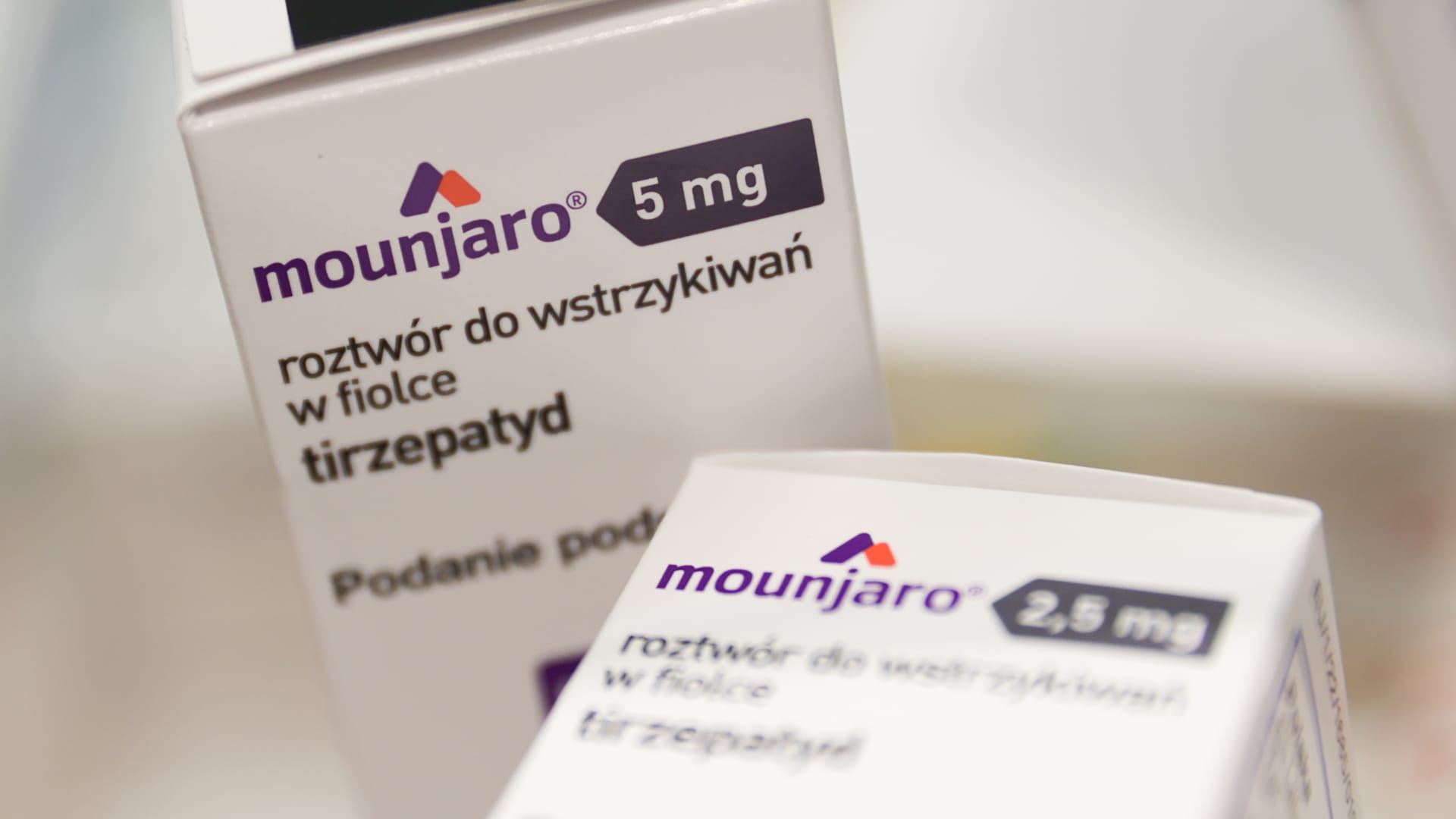

Mounjaro manufactured by Eli Lilly and Company packaging is seen in this illustration photo taken in a pharmacy in Krakow, Poland on April 9, 2024.
Nurphoto | Nurphoto | Getty Images
Eli Lilly on Thursday said its blockbuster diabetes drug Mounjaro showed heart health benefits in a late-stage trial directly comparing it to the company’s older diabetes treatment, Trulicity.
Mounjaro met the study’s main goal of showing that it wasn’t any worse than Trulicity at treating people with Type 2 diabetes and established cardiovascular disease. Eli Lilly said it believes the new data bolsters the case for Mounjaro to be prescribers’ first choice for patients with Type 2 diabetes, who are twice as likely to have heart disease or stroke as those without the disease.
The results come as Trulicity – also a top-selling drug for Eli Lilly – faces a patent expiration in 2027, which could further boost Mounjaro’s position in the diabetes market.
Mounjaro met the main goal of the nearly five-year study, reducing the risk of cardiovascular death, heart attack or stroke by 8% when compared to Trulicity in adults with Type 2 diabetes and cardiovascular disease. But the results did not meet some analysts’ benchmarks for being considered superior to Trulicity.
Still, the company said Mounjaro showed additional, “more comprehensive” benefits over Trulicity in the trial, including a 16% lower rate of death from any cause and greater kidney protection. It was the longest and largest trial to date on tirzepatide, the active ingredient in Mounjaro, enrolling more than 13,000 people.

Some clinicians said the results, particularly the lowered risk of cardiovascular events, aren’t surprising, as they assumed Mounjaro would be able to offer cardiovascular benefits.
But the difference in the rate of death from any cause between Mounjaro and Trulicity is “really quite profound” and “definitely something clinically meaningful to us as clinicians,” said Dr. David Broome, clinical assistant professor at the department of internal medicine’s metabolism, endocrinology and diabetes division at the University of Michigan.
He said the data helped quantify the difference between Mounjaro and Trulicity, which will further help providers and patients determine the best treatment to move forward with in their shared decision-making. Broome said those prescribing decisions between patients and providers will ultimately depend on several factors, such as their insurance coverage, the side effects of a given drug and how well the patient tolerates them.
Dr. Howard Weintraub, clinical director of the Center for the Prevention of Cardiovascular Disease at NYU Langone Heart, called Mounjaro a “winner” in the trial, with the only downside coming from it having slightly more side effects than Trulicity. But he said the results may not motivate more people to start Mounjaro, and that the drug’s higher list price may deter insurers from covering it if it isn’t substantially better than…
Read More: Eli Lilly’s Mounjaro shows similar heart health benefits as Trulicity
