
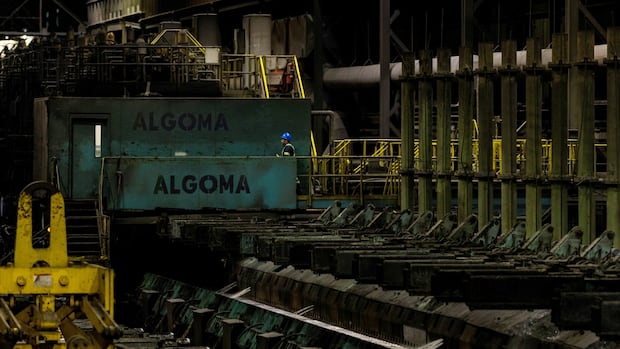

With U.S. President Donald Trump’s tariffs on steel and aluminum now doubled, Canadian steel businesses and industry leaders — already wounded by the initial tax — haved mixed reactions about the hike.
Calling the impact of the initial 25 per cent tariffs “devastating,” after it resulted in job losses and a drop in shipments to the U.S., one steel industry leader says a 50 per cent tariff will lead to a “dramatic acceleration” of those trends.
“At a 50 per cent tariff, we basically consider the U.S. market closed — completely closed, door slammed shut, if you will — to Canadian steel,” said Catherine Cobden, CEO of the Canadian Steel Producers Association.
“We can’t ship at 50 per cent. Perhaps we can stockpile for a few days, but obviously we can’t keep producing if one of our major markets is shuttered.”

U.S. President Donald Trump has signed a proclamation to officially increase steel and aluminum tariffs to 50 per cent, up from the previously announced 25 per cent tariffs. Despite another round of talks between Canadian officials and their U.S. counterparts, Canada is not exempt from the tariff hike.
Trevor Borland, the president and owner of Pacific Bolt Manufacturing in Langley, B.C., says his company imports raw steel from U.S. states like California and Ohio to manufacture its fastener products.
With the cost of that material subject to Trump’s tariffs, and the raw steel industry largely concentrated in central Canada, the company has pivoted to buying steel from Quebec mills. But trucking heavy materials across the country makes Pacific Bolt’s operation all the more expensive.

“The challenge is, from a cost point of view, how do we stay competitive with that extra cost in transportation?” Borland said. The U.S. used to make up five to 10 per cent of its overall sales, but Trump’s tariffs have “vaporized” that income.
The company had nailed down a plan to manage the original 25 per cent tariffs, but Borland worries that the hike to 50 per cent — announced on Friday and imposed on Wednesday just after midnight — could paralyze his suppliers and customers.
“Most companies just don’t have that type of cash laying around, to pay these type of tariffs,” he said. With the bar changing so frequently, “it makes it almost impossible to do any type of strategic planning when you have no idea what the future is gonna bring you.”
Other companies say they have the wiggle room to withstand the double tariffs.
Parag Shah, the president of steel cabinetry manufacturer NewAge…
Read More: Doubled tariffs raise concerns Canadian steel could be shut out of U.S.,
