

Oil and gas companies in the United States are bracing for the possibility that President Trump will thrust their businesses into disarray and will drive up prices at the pump by imposing 25 percent tariffs on goods from Canada and Mexico.
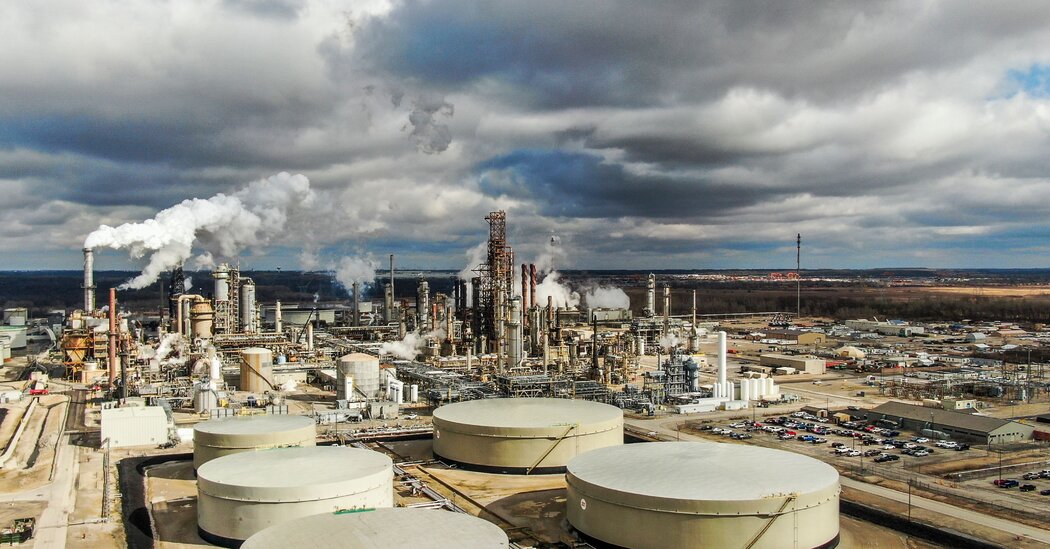
The United States is the world’s largest oil producer, but the country’s refineries are designed to turn a mix of different types of oil into fuels like gasoline and diesel. Roughly 60 percent of the crude oil that the United States imports comes from Canada, and about 7 percent comes from Mexico. Many refineries are set up to use those particular imports and cannot easily switch to oil from other places.
Analysts are not sure just how Mr. Trump’s tariffs might ripple through the oil market — and who would bear the added expenses. The costs may not be significant if the tariffs are in place only temporarily, or if the administration makes it easy for refiners to obtain waivers to keep buying Canadian or Mexican crude without paying extra.
Mr. Trump has said that the tariffs would take effect on Saturday. He has indicated at various points that oil might be subject to less severe penalties. On Friday, in response to a question about oil imported from Canada, Mr. Trump said he probably would reduce the planned tariff to 10 percent for that commodity. He previously suggested that he might exempt oil from the tariffs entirely.
The oil and gas industry was one of the biggest supporters of Mr. Trump during the 2024 election, giving more than $75 million to his campaign, and the president has made helping the industry, such as by loosening regulations, a key policy priority. He also promised to reduce energy costs for consumers.
A White House spokesman did not directly address how placing tariffs on energy imports would align with Mr. Trump’s goal of reducing prices. “His promises focus on building on the achievements of his first term and reversing the setbacks of the previous four years,” the spokesman, Harrison W. Fields, said in a statement before Mr. Trump’s Friday remarks.
Among those likely to take a hit if Mr. Trump does not exempt fossil fuels are Canadian oil producers and U.S. refiners, particularly those in the Midwest that process a lot of Canadian oil and lack a ready substitute. American consumers in regions that depend on oil from Canada also could see slightly higher prices at the pump, particularly if fuel makers were to respond by cutting production. If Mr. Trump were to move forward with 25 percent tariffs on oil, gasoline prices in the Midwest could climb 15 to 20 cents a gallon, with more muted effects in other parts of the country, said Tom Kloza, global head of energy analysis at Oil Price Information Service.
The United States also buys natural gas, electricity and uranium — an element used to make fuel for nuclear power plants — from Canada.
“It’s going to be very, very messy” if Mr. Trump moves ahead with tariffs, Mr. Kloza said. “We haven’t dealt with something…
Read More: Trump Tariffs Could Hurt Oil Companies and Raise Gas Prices
