
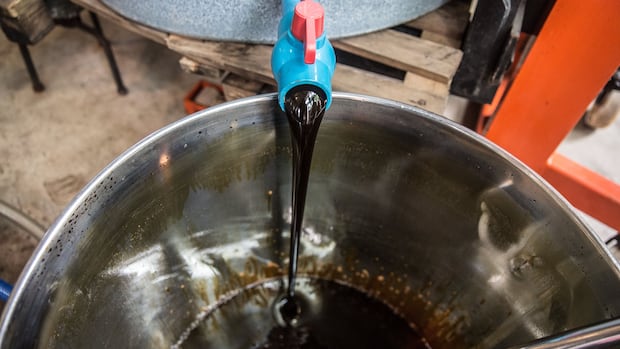

A U.S. ban on Canadian molasses imports has resurfaced allegations of sugar smuggling and an industry battle involving a company with a major refinery in Hamilton, Ont.
Spats over dairy, automobiles and booze have become ingrained in the ongoing trade dispute between Canada and the U.S. during President Donald Trump’s second term in office. But when the U.S. announced earlier this month that it would ban the import of molasses, it left some scratching their heads.
The ban is due to take effect Sept. 29 alongside bans on motorcycles, most alcoholic drinks and some dairy products.
It comes after months of American sugar producers lobbying their government to raise tariffs on foreign sugar products, saying they’re being undercut by cheaper products from other countries.
They’re also taking aim at Canadian refineries, who they claim are importing mixes of raw sugar, molasses and water but disguising them as pure molasses as a way to circumvent sugar tariffs and quotas.
‘Closing the spigot’
Sugaright, a division of Connecticut-based refiner CSC Sugar, said stopping the flow of watered-down molasses from Canada was a main topic of conversation at the International Sweetener Symposium, a major industry event held in Vail, Colo., this summer.
“Canadian ‘molasses’ containing substantial sugar is being viewed as a potential sugar-program circumvention problem, and not only does the U.S. sugar industry want the flow to stop, but now the federal government is fully engaged to ‘finish the job’ of closing the spigot completely,” reads an August blog post on Sugaright’s website.
The issue appears to stem from a case in the 1990s, when Michigan-based Heartland By-Products mixed molasses with sugar and water at an Ontario facility to import the mixture tariff-free. The company would then refine it a second time in the U.S. to remove the molasses, sell the purified sugar, and ship the molasses back to Canada to reuse in its next batch.
The scheme was legal and approved by the U.S. government, but pressure from the sugar industry and a series of court cases and legislative restrictions forced the company to shut down operations in the 2000s.
Sugar companies’ claims of disguised molasses still flowing unchecked from Canada appear to be contradicted by the U.S. Department of Agriculture (USDA) World Agricultural Supply and Demand Estimates report from August, which states that molasses imports for sugar extraction are “on a rapid decline” and are currently projected to be “zero” for next year.
Company says it was targeted
Don Hill, chair of Sucro Can Sourcing, says the latest round of accusations is specifically aimed at his company, which is headquartered in Florida but has its biggest refinery in Hamilton.
“They just don’t like the fact that we’re legitimately shipping that molasses over to the U.S. And they’ve chosen to link what we do to what Heartland did 20 years ago, just to create that negative aura — just to cast aspersions and to make it seem all dodgy,” Hill…
Read More: U.S. import ban on Canadian molasses highlights sticky sugar industry feud
