
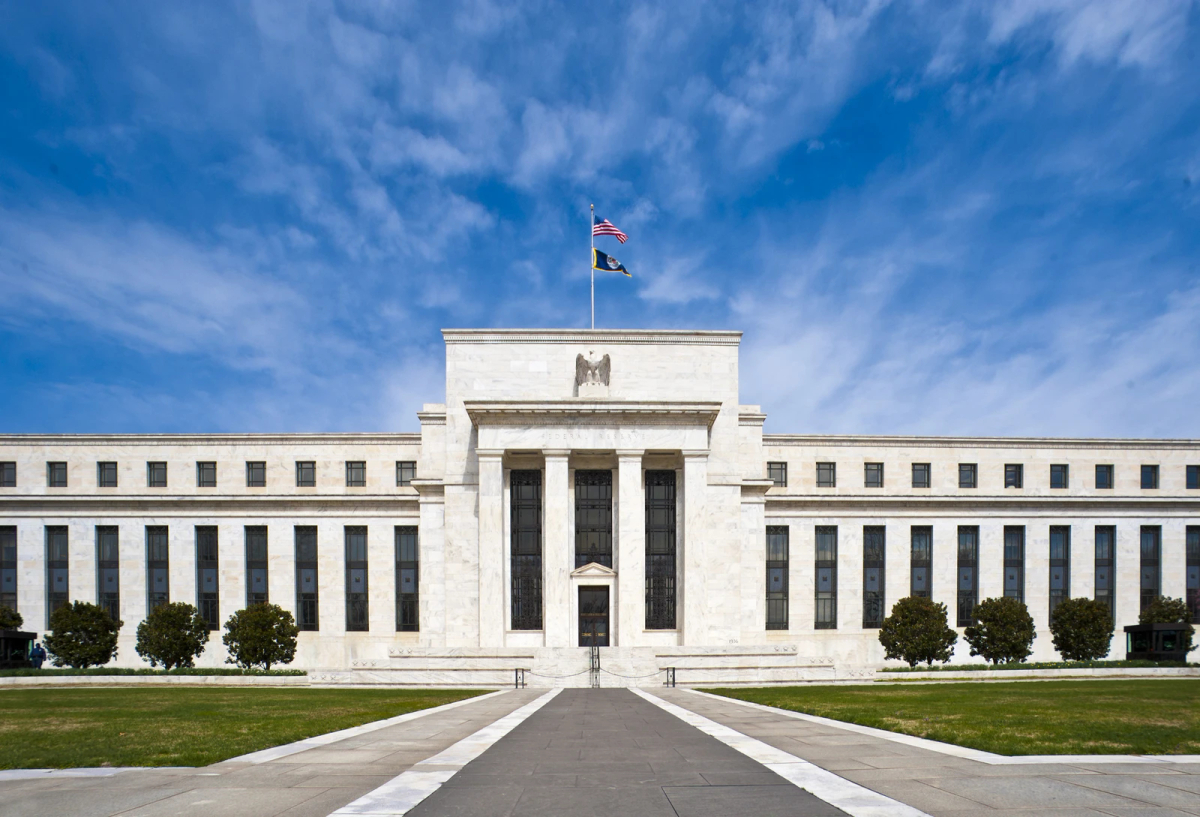

The U.S. Federal Reserve is set to convene its rate-setting meeting this week, with markets widely anticipating the start of a new tightening cycle. Challenging the conventional wisdom that treats rate hikes as an inherent negative for equities, several Wall Street firms have published reports in recent days arguing that with the artificial intelligence (AI) investment boom driving robust corporate earnings growth, stocks may not necessarily repeat the declines seen in past tightening cycles. The real determinant of whether the bull market can extend, they contend, lies in whether corporate earnings momentum remains intact.
According to the CME FedWatch Tool, as of last Friday, markets were pricing in an 87% probability that the Fed will raise rates at this week’s September meeting. By the December meeting, the probability of at least two rate hikes stands at 63.5%. The buildup in expectations stems primarily from sticky inflation readings in recent months, with the July annual rate at 3.4%—well above the Fed’s 2% target—convincing markets that the central bank must act to rein in persistently rising consumer prices.
Historical Precedent: Short-Term Pain, Long-Term Gain—Earnings Are What Matter
Historical data does show that rate hikes exert pressure on equities. LPL Financial calculates that since 1994, the S&P 500 has delivered negative average returns in the six months following the first rate hike of each tightening cycle. The 2022 experience was particularly searing: the Fed lifted the federal funds rate from near zero to above 5% within a matter of months, and the S&P 500 plunged 20% for the year.
Goldman Sachs, however, offers a different perspective in its latest report. Examining seven tightening cycles over the past several decades, the firm found that three months after the Fed begins hiking, the S&P 500 has delivered an average return of negative 2%, with only a 29% probability of positive returns. But extending the horizon to 12 months, the average return climbs to 9%, with every cycle except 2022 producing positive results.
Goldman points to 1997 as a relevant precedent. At that time, the Fed raised rates by just 25 basis points, and the S&P 500 promptly fell 10%. But once the market stopped pricing in further tightening, stocks bottomed and rebounded to new highs within three months. This illustrates that the medium-term impact of rate hikes on equities ultimately depends on whether monetary tightening begins to erode corporate earnings growth.
AI Earnings Momentum Provides Support; Corporate Fundamentals Far Stronger Than 2022
Whitney Stewart, client portfolio manager at Sterling Capital Management, notes that a key pillar of support for the current market comes from hyperscale cloud providers continuing to pour substantial capital into AI development, which in turn sustains robust corporate earnings growth. He points out that the market currently expects S&P 500 constituents to deliver double-digit earnings growth in…
Read More: Fed Rate Hike Imminent, Wall Street Says AI Earnings Momentum Could Sustain
