
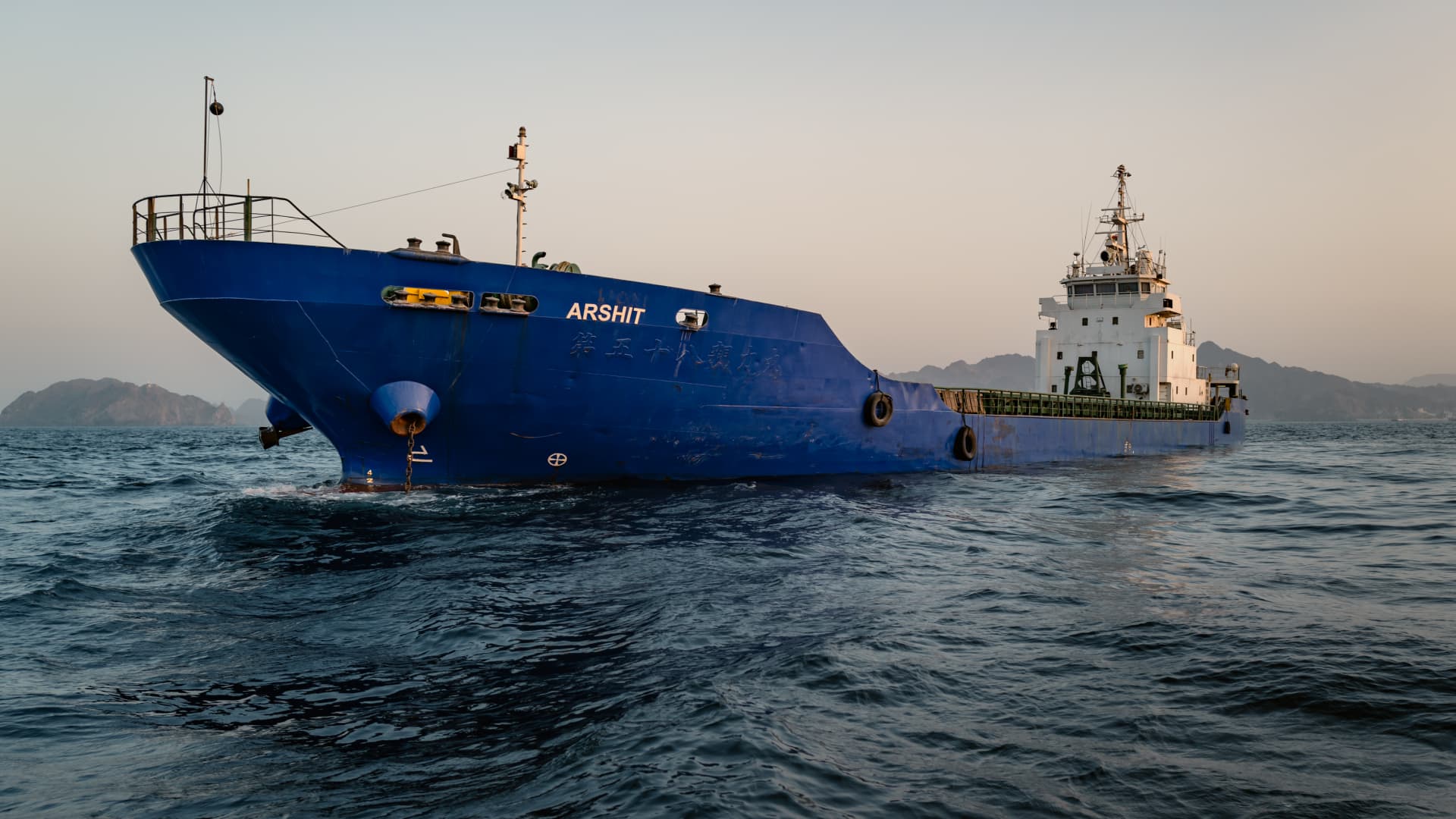


Oil prices rose Wednesday after President Donald Trump threatened again to bomb Iranian bridges and power plants and Secretary of State Marco Rubio said Tehran was not serious about reaching a deal to end the fighting.
Brent crude futures, the international benchmark, gained more than 3% to close at $94.07 per barrel. U.S. West Texas Intermediate crude advanced about 3% to settle at $86.83. Prices have surged more than 20% this month as fighting sharply escalates between the U.S. and Iran.
Speaking to reporters at a meeting of foreign ministers of the Association of Southeast Asian Nations in the Philippines on Wednesday, Rubio said Washington remains willing to negotiate an end to the war.
“The U.S. would love to reach a diplomatic settlement, we’d love to reach an agreement if it were possible with Iran,” Rubio said. But the Iranians “don’t seem to be serious” about making a deal, he said.
Tehran made commitments in the memorandum of understanding reached last month and “within two weeks violated it,” Rubio said. U.S. forces will continue to defend transit through Hormuz, Rubio said.
“We’re going to continue to protect shipping, we think other countries should join us in that endeavor,” he said. “The president has many options available to him if they continue to insist on not being cooperative.”
Iran’s Houthi allies in Yemen, meanwhile, have declared an embargo against ships that deliver or load cargo at ports in Saudi Arabia. The embargo threatens Saudi oil exports that have been rerouted to the Red Sea to compensate for the loss of supplies through Hormuz.
Trump threatens bridges, plants
Trump threatened Wednesday to bomb bridges and power plants in Iran if Tehran targets ships in Hormuz.
“From this point forward, any time the Islamic Republic of Iran shoots at a ship in the Strait of Hormuz, whether it be by Missile, Rocket, Drone, or any other device or weapon, the United States will bomb and destroy ONE BRIDGE OR POWER PLANT, including those located next to, or in, the Capital City of Tehran,” Trump said in a Truth Social post.
The U.S. military, meanwhile, carried out its 11th consecutive night of strikes against Iran. The attacks targeted Iranian military operations centers, maritime capabilities, aircraft hangars, drone storage facilities and military logistics infrastructure, U.S. Central Command said.
Oil prices in the $90 to $100 per barrel range are supported by tightening fundamentals as exports through Hormuz slow and are at risk in the Red Sea, said Ryan McKay with TD Securities in a note to clients.
“This latest escalation and throttling of flows by Iran has in turn sped up that repricing and has again opened the door to fatter right-tail scenarios the longer it goes on,” McKay said.
Read More: Oil prices rise as Rubio says Iran ‘not serious’ about peace talks
