
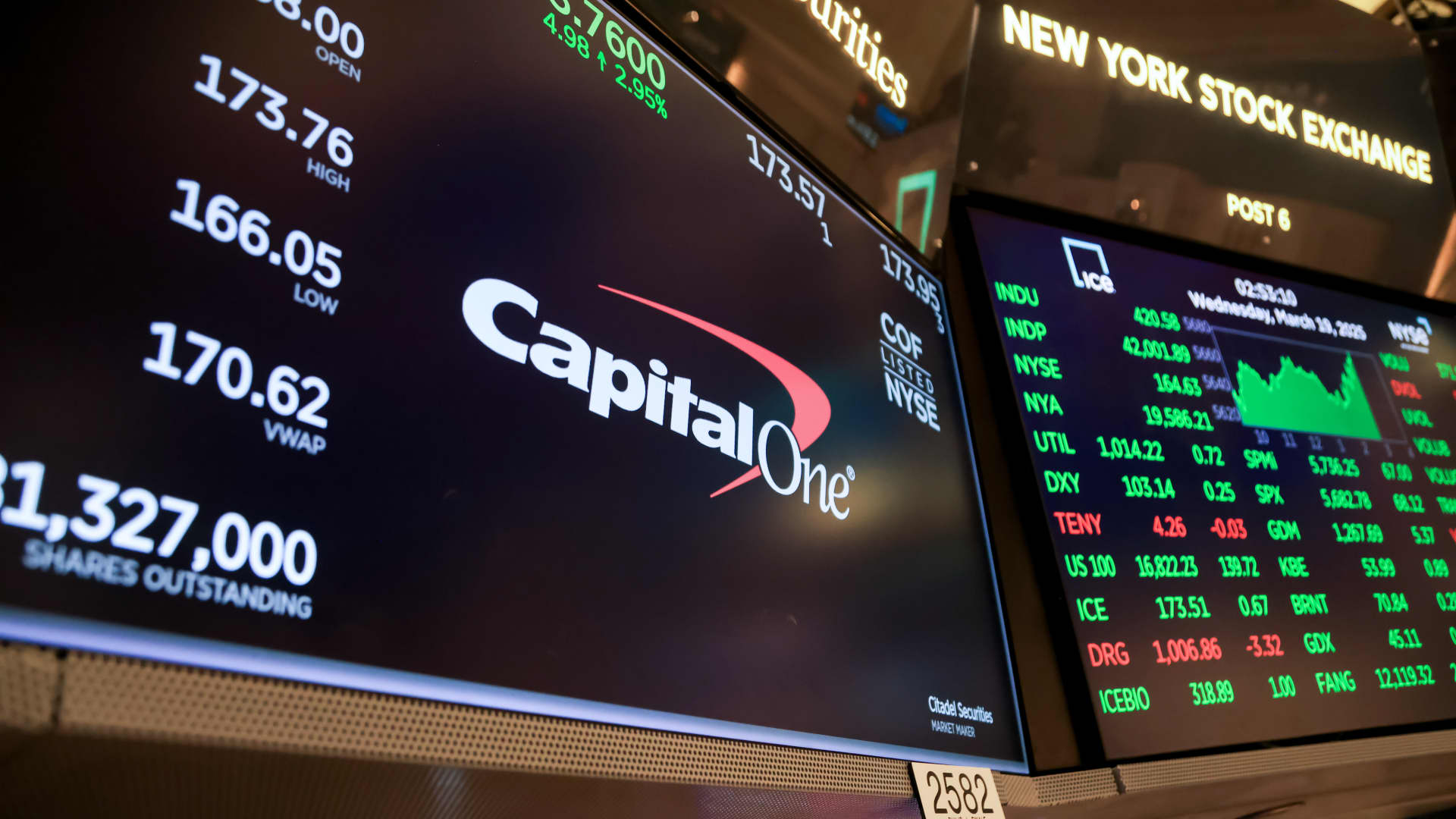

Capital One poured more than $35 billion into acquiring credit card rival Discover. After a couple of lackluster quarters and a slumping stock price, CEO Richard Fairbank must now prove to investors that the deal is the game-changer that was promised. The perfect stage to do that is Tuesday evening when Club name Capital One reports second-quarter results. The first earnings beat in the past two quarters would be a good start, considering higher-then-expected expenses have contributed to the back-to-back profit misses. In all, Capital One has racked up $1.8 billion in integration expenses incurred since the Discover deal closed last May, according to a securities filing for Q1 ended on March 31. To improve investor sentiment following its Q2 release and prevent a repeat of past post-earnings stock drops, management must do more than just account for its spending — it needs to connect the dots. Capital One needs to clearly outline how these deal expenses can accelerate its broader transformation with Discover now under its belt. The Street is looking for Capital One to report EPS of $4.75 on revenue of $15.77 billion in the second quarter, according to LSEG. It’s tough to compare year-over-year results due to the complexity of the Discover integration. But those estimates would be sequential improvements over the first quarter of 2026 and Q4 of 2025. During last week’s July Monthly Meeting, Jim Cramer said , “Fairbank has to explain why he made the acquisition. He has to rationalize the business.” Jim believes the CEO will do exactly that this quarter, giving the Capital One shares a chance over time to revisit their all-time highs of around $259 on Jan. 6. Trading around 9 times forward earnings, Jim said that Capital One is the “cheapest major bank in the country.” A complicating factor near-term is the stock’s 20% rally since hitting a 52-week low of just over $174 on June 11. We don’t like it when stocks spike ahead of earnings because it raises the bar on what investors are willing to pay for earnings. In this case, the bar here is still pretty low — and despite its quick five-week pop, shares would still need to jump some 24% to reach those record highs again. So, maybe that recent climb won’t be as much of a factor as it normally can be. COF 1Y mountain Capital One YTD Share price aside, Capital One needs to keep its eye on the ball and provide more visibility toward hitting its stated Discover deal goals of over 15% earnings per share (EPS) accretion and $2.7 billion in annual total synergies by 2027. Synergies are just a fancy way to describe the kind of value a company expects to be added from the deal. They include not just cost savings from layoffs, but also new revenue opportunities made possible by combining the businesses. Capital One insists those targets remain on track. Capital One was happy to add Discover’s massive credit card base, but Discover’s payment network was something it did not have, which put it at the mercy…
Read More: Capital One bet big on Discover. Now it must prove the gamble was worth it
