
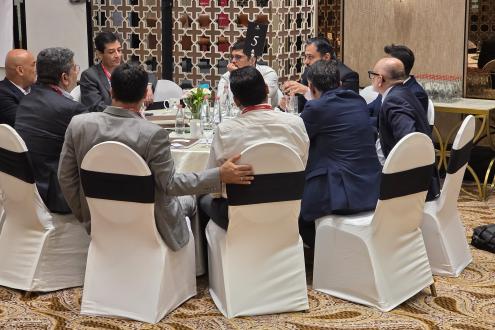

Hosted by Rohit Bhardwaj, Country Head – India, Director Private Clients at Henley & Partners, and Abhijit Bhave, the table explored “Scaling with Substance: Talent, Business Models and the Long-Term Sustainability of India’s Private Wealth Industry”. The discussion brought together senior participants from across private banking, wealth management, advisory, law, tax, family office services, investment management and global mobility advisory.
The conversation reflected an industry growing rapidly, but unevenly. India’s private wealth market is benefiting from rising client supply, greater capital accumulation, expanding family office activity and increased global investing interest. Yet participants questioned whether the operating model beneath that growth is sufficiently robust, as talent remains scarce, RM churn continues, margins are under pressure, regulation is likely to increase, and technology is reshaping both adviser productivity and client expectations.
The central question was not whether India’s private wealth industry can grow, but whether firms can scale with enough depth, discipline and institutional resilience. Participants suggested that long-term sustainability will depend on moving beyond RM-led portability, product-led revenue and short-term hiring cycles towards stronger platforms, better training, deeper propositions and clearer accountability.
Key Takeaways
- Talent scarcity is now a structural constraint: Participants said client supply is expanding faster than the supply of capable private bankers, creating salary inflation, RM churn and weak economics.
- Scale must be measured by depth, not headcount: The table challenged the idea that adding more RMs is the same as building scale. Product capability, research support, platform quality and specialist depth matter just as much.
- Technology can improve productivity, but judgement remains central: AI and digital tools can support portfolio reviews, client communication, research and RM preparation, but participants disagreed on how far the relationship model can ultimately be replaced.
- The RM model is becoming more institutional: Several participants argued that firms need to reduce dependency on individual RMs by building CIO-led platforms, specialist teams, discretionary capabilities and stronger house propositions.
- Training needs to move beyond periodic product briefings: Participants discussed formal institutes, accreditation, internal capability building, product champions, behavioural profiling, internships and lateral hiring from outside traditional wealth pools.
- Business model pressure is intensifying: Falling yields, higher RM compensation, regulatory scrutiny and competition from well-funded platforms are forcing firms to rethink distribution, advisory, discretionary and fee-based models.
- Professional standards may need to rise before regulation forces…
Read More: Scaling with Substance: Talent, Technology and the Sustainability of
