
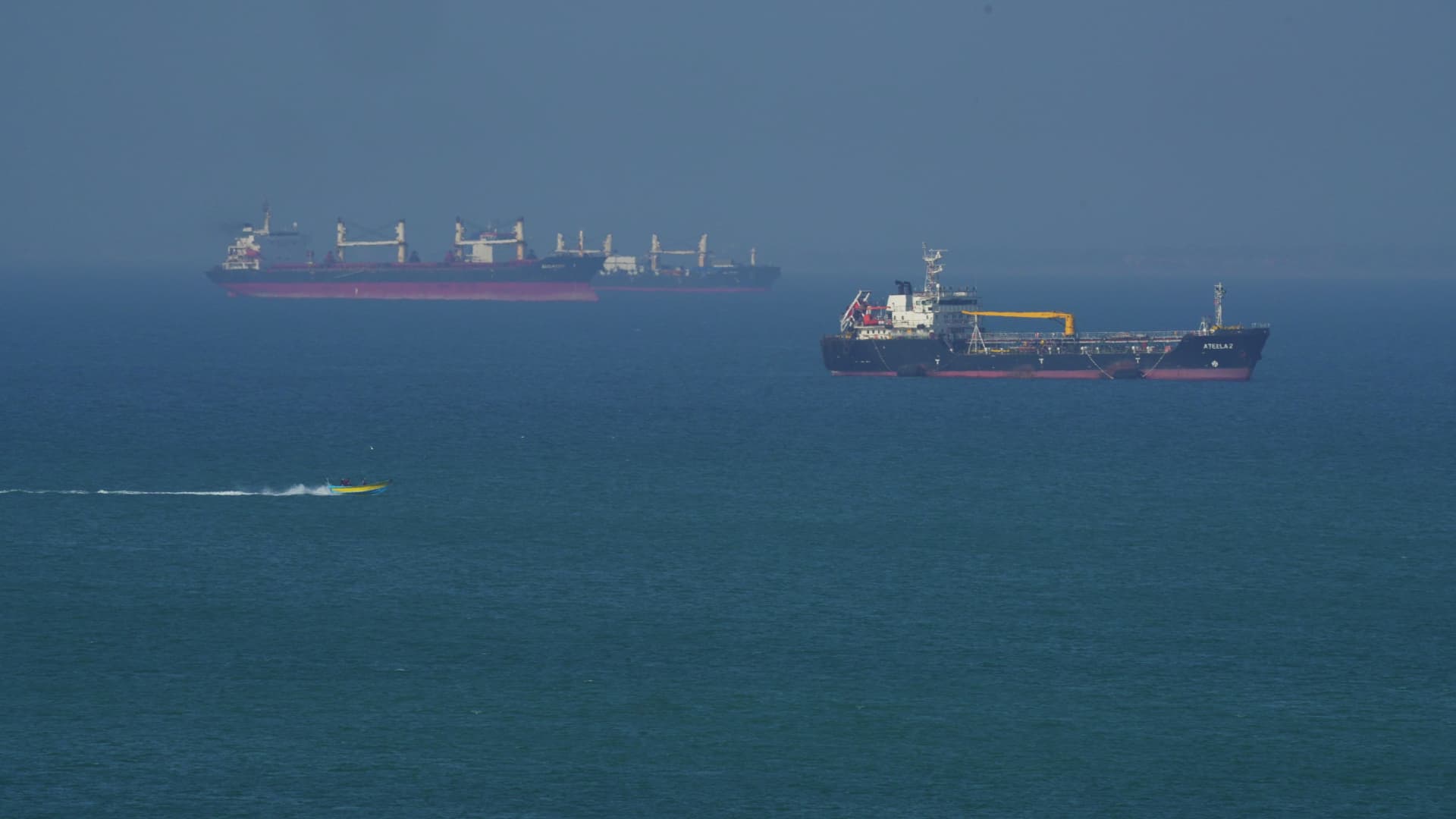


Oil prices tumbled nearly 6% Monday, after President Donald Trump said the U.S. has completed a deal with Iran to reopen the Strait of Hormuz.
U.S. crude oil futures dropped below $80 per barrel for the first time since March in early trading. Prices were last down around 5.9% at $79.90 per barrel by 10:41 a.m. ET. Brent futures, the international benchmark, traded about 5.5% lower to $82.57.
“The Deal with the Islamic Republic of Iran is now complete,” Trump said in a Truth Social post. Hormuz will open without a toll system and the U.S. will end its naval blockade of Iran, the president said.
“Ships of the World, start your engines,” Trump said. Let the oil flow!”
Trump, in a later post, said that the strait would open on Friday, the day the official peace agreement signing ceremony is set to be held in Switzerland.
“With the opening of the Strait upon the signing of the Deal on Friday, for purposes of mine removal, oil will flow on both ends again for the Region, and the World!” he said.
But discrepancies between the U.S. and Iranian understanding of the agreement have already emerged. Iranian state media has said Hormuz will be toll free for only 60 days. Iran and Oman will administer the strait after that period, according to Iran’s Tasnim news agency.
Vice President JD Vance, however, told CNBC that the U.S. expectation is that Hormuz will remain toll free over the long term.

U.S. crude prices this year
About 20% of the world’s oil supplies passed through the Hormuz strait before tanker traffic plunged in early March due to Iranian attacks. The disruption to Hormuz has triggered the biggest oil supply shock in history.
The global shipping trade group Bimco cautioned that statements from the U.S. and Iran regarding the deal are unclear and don’t provide sufficient information on timing and safe routes through Hormuz.
“Due to lack of details and a history of overly optimistic reassurances, we believe the security situation for the shipping industry remains volatile, and we still consider it very risky for ships to commence transits at this point,” said Jakob Larsen, the chief safety and security officer at Bimco.
The threat of mines in Hormuz remains a major concern, Larsen said. Secretary of State Marco Rubio told Congress earlier this month that Iran had mined large segments of Hormuz.
Read More: Crude oil today: Live updates
