


Mother Jones; Shawn Thew/Pool/CNP/ZUMA; Harry Hamburg/AP
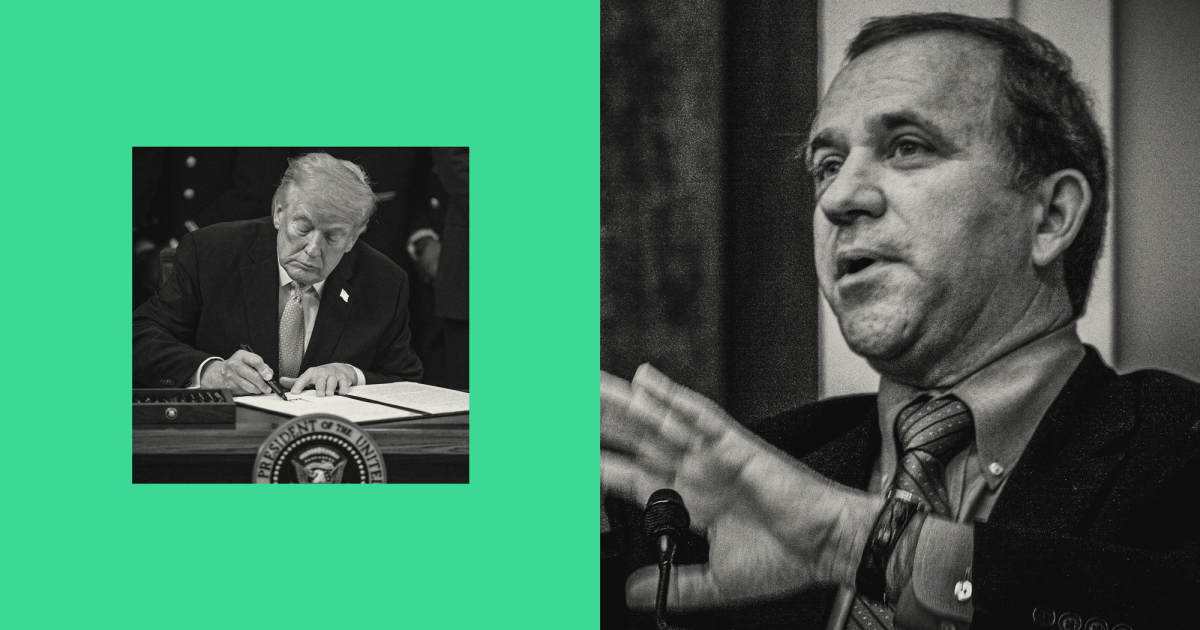
With Donald Trump’s pardon of former Indiana Rep. Steve Buyer over the weekend, he has now pardoned at least 11 former GOP politicians, almost all of them on charges of corruption or somehow violating the public trust.
Buyer served in Congress from 1993 to 2011, and after leaving office, he promptly went to work as a consultant and lobbyist for many of the companies that used to lobby him. In 2018, while golfing with an executive from T-Mobile, Buyer learned that the company was reviving its bid to take over Sprint, a fact that was not yet public. He promptly began buying hundreds of thousands of dollars worth of Sprint stock. In 2019, Buyer learned of another impending merger through his work and bought shares of Navigant—a move that would later earn him several hundred thousand dollars.
In 2022, Buyer was convicted of insider trading and sentenced to 22 months in prison, which he served. The Supreme Court declined to hear his appeal. In May, Trump posted letters written by Buyer’s former GOP colleagues, alleging that Buyer—who had made $354,000 from his two insider trading schemes—was a victim of the “deep state.”
“Like you, Mr. President, Steve has been the victim of lawfare conducted by the Biden Administration,” the Republican lawmakers insisted.
Trump’s official pardon of Buyer doesn’t list any specific reasons or rationale, other than the support of the other GOP politicos. Maybe it was Buyer’s penchant for golf—not only did he learn some of the insider info on the golf course, he was known in Congress for his love of the sport.
Regardless of the reasoning, Buyer’s crimes sound a lot like those committed by another onetime elected official who received clemency from Trump.
In December 2020, after losing re-election to Joe Biden, Trump pardoned former New York GOP Rep. Chris Collins, who had pleaded guilty to insider trading charges just a few weeks earlier. Collins admitted that, while attending a party at the White House in 2017, he received a phone call from the board of directors of a health care company warning that one of the company’s products had failed an important regulatory test. Collins promptly sold his shares, avoiding nearly half a million in losses he would have incurred if he had waited until the news broke publicly.
Congress is currently debating—and has been for years and years—provisions to restrict stock trading by sitting lawmakers. Current laws ban insider trading for everyone—not just members of Congress—but that definition doesn’t cover members of Congress buying and sell stocks that could be affected by legislation they vote on. One of the proposed reforms would ban members of Congress from trading individual stocks, but the most recent version, advanced…
Read More: You Will Be Shocked to Learn That Donald Trump Pardoned a Corrupt
