

Why Should Delaware Care?
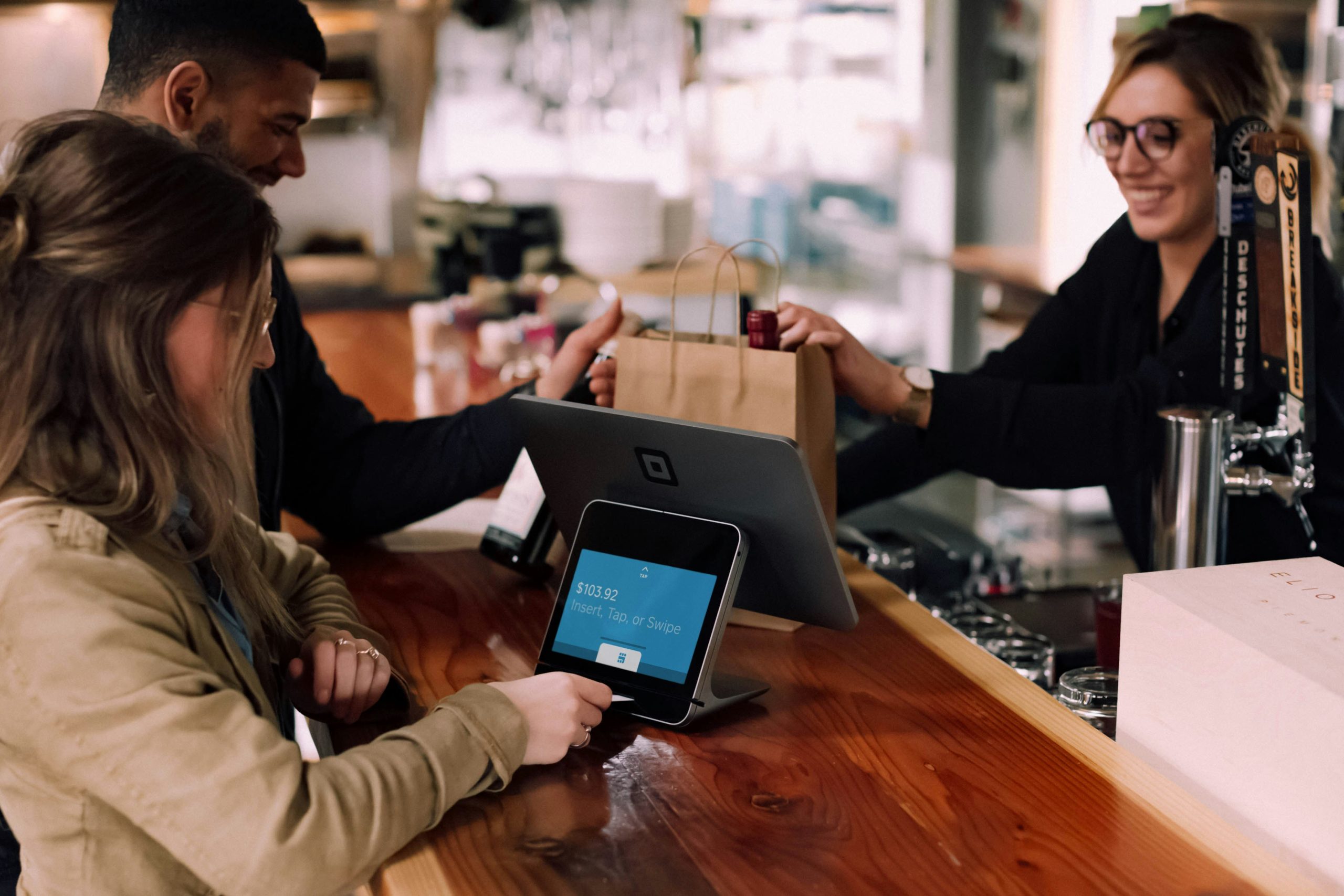
With credit cards now the dominant form of payment in the U.S., the fees that banks and payment networks charge for their usage is coming under greater scrutiny. A new debate on applying those fees on gratuities pits banks against their small business customers.
One of the most-heated battles at the statehouse this year has been waged by some of the nation’s largest banks and credit card networks against a bill that seeks to ban the application of service fees on tips.
It was a proposal that garnered little fanfare in the run up to the 2026 General Assembly, but a recent federal court win in Illinois on a similar measure convinced advocates to push forward in potentially making Delaware only the second state to enact such a law.
House Bill 315, sponsored by Rep. Kim Williams (D-Stanton), would prohibit the charging of those payment fees, known as “interchange fees” that range from 1% to more than 3% of a transaction total, on gratuities. Violations would result in a penalty of $1,000 per transaction and the refunding of wrongful fees.
In an unusual show of bipartisanship, more than half of the entire General Assembly has already co-signed on the bill, including all four Democratic and Republican leaders. That has clearly rattled the banking and credit industry that is a staple of Delaware’s economy.
In response, the powerful Electronic Payments Coalition – which represents banking giants, payment networks, credit unions and community banks – has spent more than six figures on a lobbying, advertising and marketing blitz to try to head off the issue before it could make it to Gov. Matt Meyer’s desk.
It already cleared its first hurdle in being released by the House Economic Development, Banking, Insurance and Commerce Committee last month, but it is still awaiting a vote on the House floor.
Should HB 315 be signed into law, the industry would almost assuredly sue to prevent it from being enforced, as it did in Illinois.
What’s a ‘swipe fee’?
In today’s increasingly cashless society, a constant hum of electronic transactions ping from merchants’ cash registers to processing software to payment networks to banks and back.
The four major payment networks – Visa, Mastercard, Discover and American Express – take a cut of every transaction, which is borne by the merchant, in order to process the payment. Depending on the credit card and purchase, those fees range from 1% to upward of 4%.
A card-issuing bank, such as Capital One or JPMorganChase, ultimately receives those funds to cover the cost of reward programs, fraud losses and risky lending, while the networks keep pennies on the dollar for facilitating the transaction. With several trillion credit card charges a year though, that has amounted to billions in revenue for the networks.
Meanwhile, in a climate of rising costs and increasing reliance on credit cards for everyday purchases, many small business owners are…
Read More: Credit, banking industry spends big to fight Delaware swipe fee ban
