
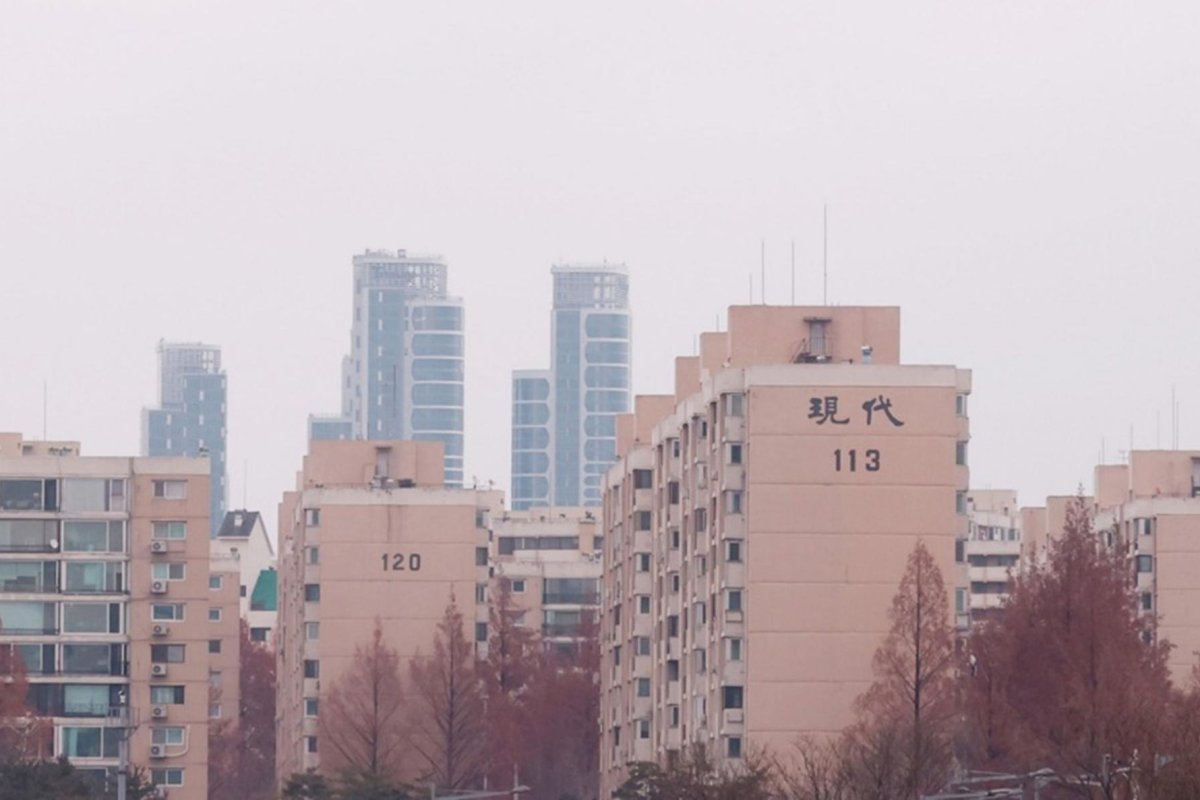

A view of the Shin Hyundai apartment complex in Gangnam Ward, Seoul, South Korea, 24 December 2025. A 152-square-meter unit of the block was sold for 8.5 billion won (5.86 million US dollar) on 11 December to become the most expensive apartment sold in South Korea, according to data from the land ministry. File. Photo by YONHAP / EPA
Feb. 18 (Asia Today) — South Korea’s push to curb speculation by multi-homeowners should be paired with a broader overhaul of the country’s real estate tax system, an Asia Today editorial said Tuesday.
The column opened with a comparison to the United States, describing a conversation with a Korean American in New Jersey living in a $1 million home. The writer said the person showed little interest in U.S. inheritance taxes, noting the U.S. tax threshold is widely understood to be about 30 billion won ($20.8 million).
The columnist argued South Korea’s inheritance and gift taxes become onerous as property values rise, saying a transfer of a 3 billion won ($2.1 million) property can result in taxes approaching half the value.
President Lee Jae-myung has said the government will proceed with ending a temporary deferral of heavier capital gains taxes on multi-homeowners, casting the policy as a choice between investors’ expectations and households squeezed by high housing costs, the editorial said.
The writer acknowledged concerns from parts of the real estate industry that fewer multi-homeowners could reduce rental supply, but argued that South Korea’s heavy concentration of wealth in non-financial assets such as real estate has long been a structural vulnerability.
The editorial called for reforms that move beyond short-term measures, urging lawmakers to simplify and unify taxes attached to real estate from acquisition to sale and inheritance. It also argued for exploring a shift toward higher holding taxes and sharply lower transaction taxes to reduce distortions while keeping revenue broadly stable.
The columnist said South Korea’s inheritance tax burden has expanded over time without fundamental reform, citing figures that the number of inheritance taxpayers rose from 1,661 in 2002 to 21,193 in 2024, while inheritance tax revenue grew from 0.29% to 2.14% of total tax revenue over the same period.
The editorial urged the government to pursue a durable, easy-to-understand framework built through social consensus, warning that stopgap policies can create new side effects.
Lee Kyung-wook Editorial Director
— Reported by Asia Today; translated by UPI
© Asia Today. Unauthorized reproduction or redistribution prohibited.
Original Korean report: https://www.asiatoday.co.kr/kn/view.php?key=20260218010005492
Read More: South Korea urged to overhaul real estate tax system
