
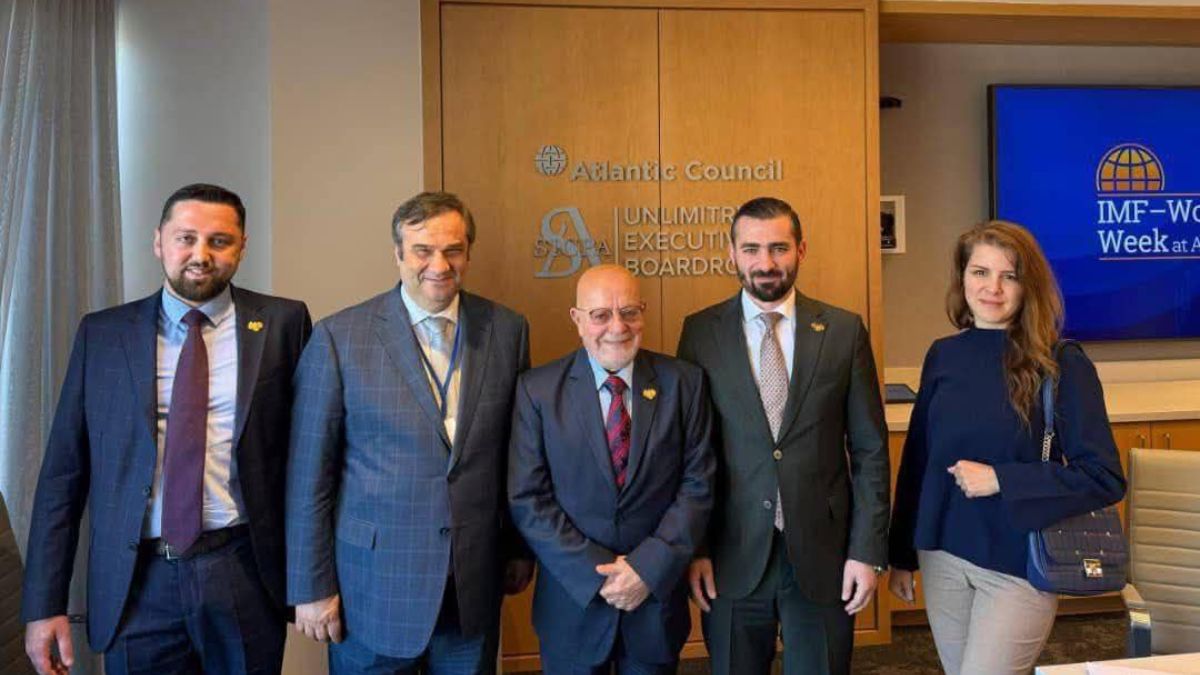

Central Bank of Syria Governor Abdulkader Husrieh said the coming phase will see broad economic opening, with more than 22 American companies, including Visa, Mastercard, and Halliburton, interested in entering the Syrian market and taking part in reconstruction, energy, and transport projects.
In an interview with Asharq TV aired on Sunday, November 9, Husrieh said Syria aims to build direct relationships with these companies “without agents or intermediaries,” alongside government plans to turn Syria into a regional hub for Islamic finance and to double the number of banks by 2030.
He stressed the importance of restoring confidence in the banking sector and safeguarding the stability of the national currency, while preparing to launch modern financing tools, including Islamic sukuk. He emphasized that the country’s gold reserve remains a pillar of monetary sovereignty rather than an investment vehicle.
Husrieh said Syria is entering a new era and the government has “ambitious plans,” adding that the Syrian president’s visit to Washington will “provide the necessary political climate” to propel these investments.
He added that relations with the United States will reflect on Syria’s economy and open doors to new economic and investment opportunities, moving away from reliance on aid to cover the budget deficit or pay for wheat.
Husrieh said relations with the United States will not come “at the expense of ties with other countries,” stressing that “Syria is open to all states.”
Developing Islamic banking
The governor said Syria is working to double the number of operating banks by 2030 and to make the country a “regional center for Islamic finance,” alongside the Gulf states and Malaysia.
This requires “advanced financing solutions, ensuring liquidity for the banking sector, and offering Islamic financing alternatives alongside traditional interest-based tools,” he said.
He noted that Syria’s economic scale and geographic position give it strategic weight, and underlined the need to “capitalize on this political opening by raising performance across the financial sector commensurate with the rapidly evolving relationship.”
Husrieh said the Central Bank is executing a comprehensive plan to develop the financial and banking sector based on three main roles:
- Providing investment to financial institutions. The Central Bank has issued executive instructions to license investment banks and has already begun talks with banks and investors seeking licenses to establish these new institutions.
- Reforming the banking sector and rehabilitating existing banks as a step toward licensing new ones, with a forward vision of reaching 30 operating banks by 2030.
- Approving a public policy paper to establish an Islamic Banking Center of Excellence to develop financing solutions for Islamic banks in infrastructure, small and medium enterprises, and housing, alongside tools that support monetary policy.
Read More: U.S. appetite to invest in Syria as Abdulkader Husrieh touts banking-sector
