
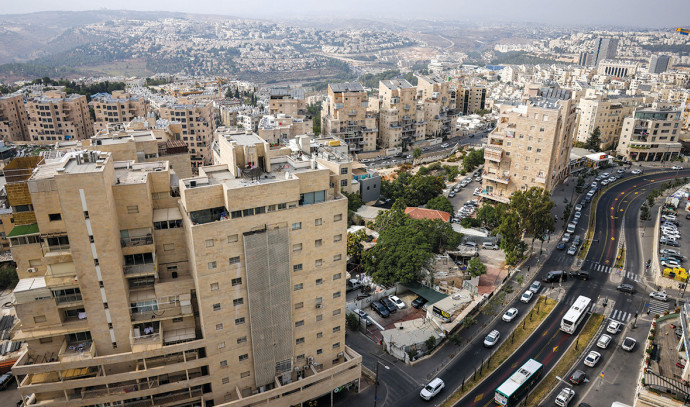

Romema stands as a notable neighborhood in northwest Jerusalem, situated just off the Tel Aviv-Jerusalem Highway at the main entrance to the city.
This area, occupying the highest hill in Jerusalem, is bordered by Kiryat Mattersdorf and Mekor Baruch. Its name, meaning “uplifted,” is inspired by Psalms 118:16: “The Lord’s right hand is lifted high (romema).”
Founded in 1921 on a hill outside the historical city of Lifta, Romema owes its inception to attorney Yom-Tov Hamon, an expert in Ottoman law and land ownership. Hamon facilitated the sale of land to Jews, resulting in the establishment of the neighborhood.
The initial plan envisioned 24 houses around a central square, with streets named after contemporary Hebrew publications: Hatzvi, Ariel, Ha’or, Torah Mitziyon, and Moriah. A water reservoir, constructed in 1931, added to the infrastructure.
The neighborhood’s architecture reflects its early affluence and diversity, showcasing residences like the three-story home of Haj Muhammad, a quarry owner and Muslim court judge; the elegant house of Jewish hotelier Yehiel Amdurski; and the residence of Rabbi Yehuda Fishman-Maimon. By 1948, Romema was a mosaic of Arab, Ashkenazi, and Sephardi Jewish residents.
However, the 1948 Arab-Israeli conflict led to significant upheaval. Christian Palestinians and Muslim Arabs from Romema and Lifta were displaced due to violence from Jewish paramilitary groups like the Irgun and clashes with Arab militia. The Israeli government’s Absentee Property Law prevented their return, a lingering point of contention for Palestinians with property claims.
After the establishment of the State of Israel, Romema evolved into a hub of light industry, housing garages, foundries, carpentry workshops, and factories for many decades. From 1950 to 1991, it was also home to the Jerusalem Biblical Zoo, which relocated after access to its original site on Mount Scopus was blocked in 1949.
In 2007, as businesses closed and developers purchased properties, a master plan was commissioned to revitalize Romema. Today, it serves as Jerusalem’s transportation hub, featuring the Jerusalem Central Bus Station, Chords Bridge, and a high-speed railway terminus.
Today, a large majority of Romema’s approximately 35,000 residents are haredi.
Landmarks
At the dawn of the 20th century, the land where Romema now stands was an exposed hill situated between two Arab villages: Lifta to the north and Sheikh Bader to the south.
This hill gained historical significance during World War I. On the morning of December 9, 1917, two kitchen sergeants from the British Pioneer Corps ascended the hill and met the Muslim mayor of Jerusalem. The mayor handed them a letter of surrender and the keys to the city, explaining that the Turks had fled Jerusalem the previous night.
This impromptu surrender…
Read More: Jerusalem real estate: A look at the Romema neighborhood
