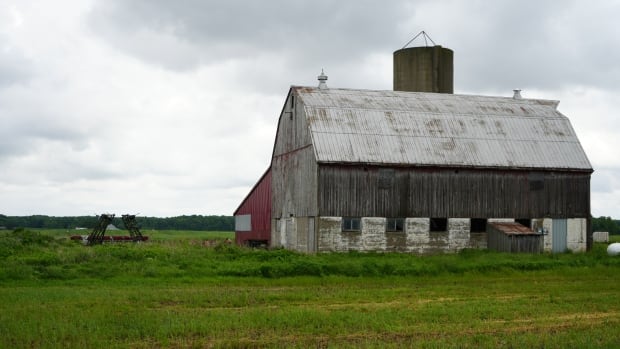

When asked if young, aspiring farmers ever inquired about buying his farm, Marcus Collinson just laughs.
“No young farmers are buying farms,” he said, adding it’s why he sold his four properties southwest of London, Ont., to an investor in May and June 2020.
The Toronto-based company that bought them is Bonnefield, Canada’s first and largest farm real estate investment corporation. It holds more than $1.4 billion in assets across seven provinces, representing 140,000 acres (nearly 56,656 hectares) of farmland, according to its website.

According to Ontario land registry records, Bonnefield shows up as the owner in 464 premises identification numbers (PIDs), from northern to southern Ontario. Each PID is linked to a specific parcel of land rather than a business or a person.
When it comes to farms, Bonnefield said, it owns 114 across Ontario, including the four London-area ones. Collinson sold his farms to Bonnefield in 2020 and leases them back from the company.
Collinson, 64, wouldn’t say why he sold to Bonnefield, but many farmers are confronted with tough decisions about their operations as the industry reaches a critical juncture.
As a whole, farmers skew older than the general population and the sector carried $146 billion worth of debt last year, according to Statistics Canada. That’s placing immense pressure on those who till the land to confront the practical implications of their choices and the emotional weight of preserving a way of life that has defined generations.
“It’s nice to own your own land. Of course it is,” Collinson said. “Everybody wants to own their own home. Every farmer wants his own farm. Not everybody can afford their own farm. That’s just the way it is.”
‘Extremely difficult’ for small farms to buy land
If that sounds familiar, it is.
Experts say the economic forces now reshaping agriculture are similar to ones that have transformed residential real estate over the last two decades, with investors — from pension plans to well-to-do urban families — fuelling speculation and driving up real estate prices.
“Any time you increase the amount of buyers and increase the demand, it’s definitely going to contribute to the increases in values,” said Ryan Parker, an agricultural real estate appraiser with London-based, Valco Consultants.

In the 11 counties Parker monitors in southwestern Ontario, farmland values have risen 60 per cent from 2020 to 2023, to an average of about $35,000 an acre — a price that puts land acquisition out of reach for many.
“It’s extremely difficult…
Read More: Investors reshaped Canadian home real estate. Something similar is