


The gap is widening between rival toy makers Hasbro and Mattel — thanks in part to a 30-year-old trading card game.
The toy giants have flip-flopped dominance in the space for decades, jockeying for the most coveted master licenses to put new fan favorites — Disney princesses and “Star Wars” characters among them — on store shelves. But as the industry recovers from a period of declining sales, Hasbro is the one winning over Wall Street.
For the fiscal year 2025, Hasbro reported revenue gains of 14%, reaching $4.7 billion, while Mattel saw its net sales drop 1% to $5.3 billion.
Though Mattel’s revenue is larger than Hasbro’s, its growth has been stagnating, according to Eric Handler, managing director and senior research analyst at Roth Capital Partners.
“[Mattel’s] revenue has been in a very tight range for five years now, and 2026, on an organic basis, is the same,” he told CNBC.
Mattel shares are down more than 20% in the last 12 months, trading at around $17. Meanwhile, Hasbro’s stock is up roughly 46% over the same period, with shares trading at around $100.
Of course, Hasbro’s journey post-pandemic has not been without its own headwinds. The company’s revenue took a hit when it divested its film and TV business, eOne. Also, its entertainment segment, which includes film and TV licenses, was deeply impacted by Hollywood’s dual labor strikes in 2023.
“Despite market volatility and a shifting consumer environment, we returned this company to growth in a meaningful way,” Hasbro CEO Chris Cocks told investors during an earnings call earlier this month.
Throughout these changes, one key piece of Hasbro’s business has been steadily growing — Wizards of the Coast.
A dash of Magic
The Hasbro division includes Dungeons & Dragons, Magic: The Gathering and the company’s portfolio of digital and video games.
In 2025, Wizards’ revenue grew 45% to $2.1 billion, fueled by sales of sets tied to Magic’s Universe Beyond and smaller, limited-edition Secret Lair packs — some that sell for close to $200.
While the segment accounts for less than half of the company’s revenue, it represents 88% of its adjusted profits.
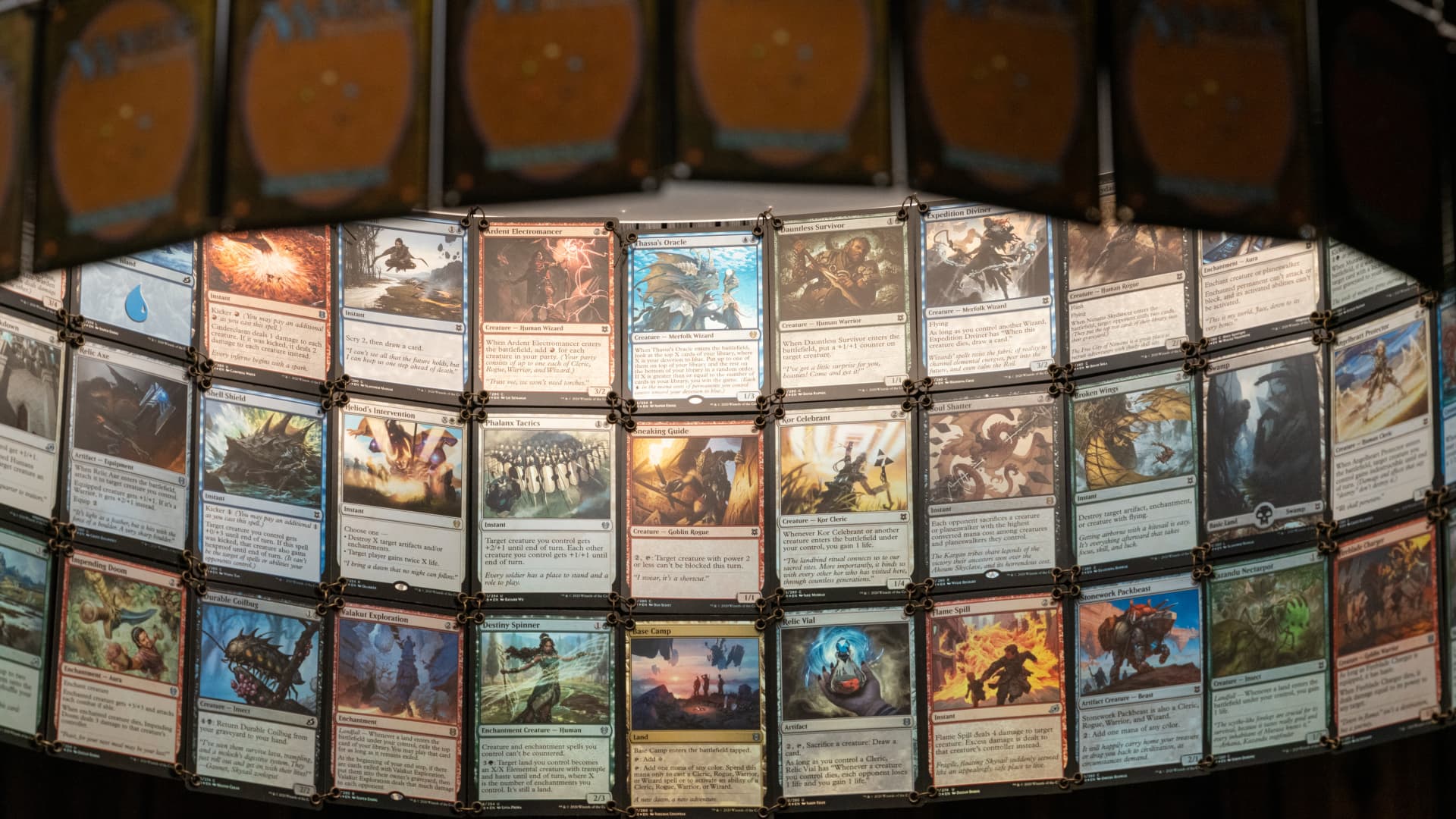
Magic: The Gathering playing cards form a light fixture at the Wizards of the Coast headquarters in Renton, Washington, Sept. 11, 2025. With traditional toy and game sales lagging, Hasbro has found a growth engine in role-playing games such as Dungeons and Dragons, trading card games like Magic: The Gathering and a growing portfolio of digital and video games.
Bloomberg | Bloomberg | Getty Images
The strategic trading card game Magic, which was created in 1993, typically features two players going head-to-head using custom decks of collectible cards to cast spells, unleash creatures or use artifacts to defeat their opponent.
In the last five years, Hasbro has expanded beyond the lore of the initial game to launch card sets based on intellectual property from third parties, including “Avatar: The Last Airbender,” Marvel’s “Spider-Man”…
Read More: Toy industry pressures make digital the star
