
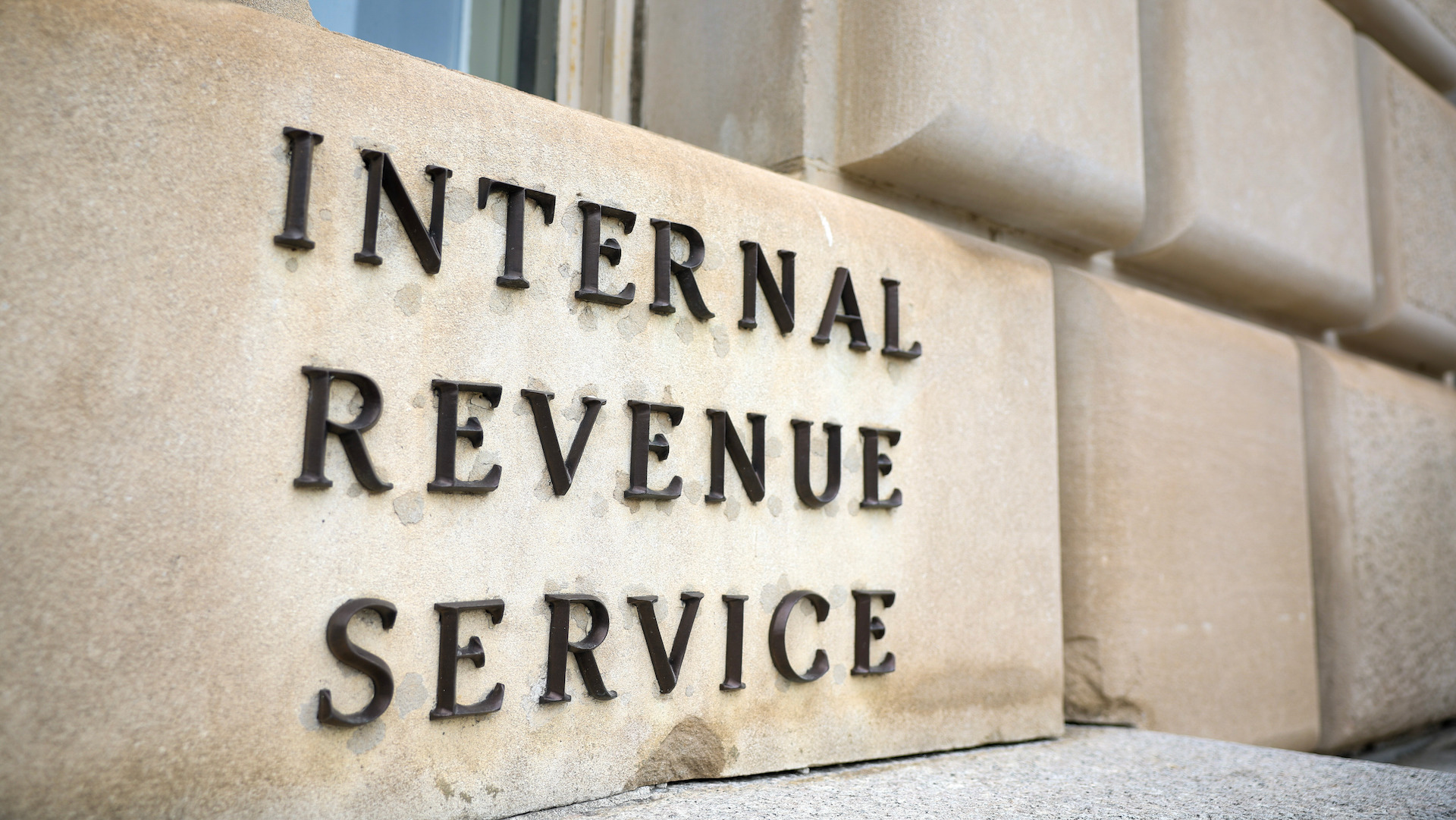

As cryptocurrency use in the United States surges, the number of federal investigators assigned to review safeguards against dirty money in the industry plummeted last year to the lowest level since at least 2017, according to federal data obtained by the International Consortium of Investigative Journalists.
The cuts weaken the anti-money laundering watchdog’s office within the U.S. Internal Revenue Service, which is tasked with overseeing protections against dirty money in crypto exchanges and other firms registered as so-called money service businesses. Even before the recent reductions, the IRS struggled to oversee dirty money in the fast-growing crypto sector, according to experts. The cuts come amid the Trump administration’s broader easing of oversight of crypto exchanges that now move trillions of dollars in value annually.
“The reduction in supervisory staff at the IRS matches a trend we’ve seen across [anti-money laundering] enforcement agencies,” said Erica Hanichak, deputy director at the FACT Coalition, a Washington-based nonprofit group that advocates for strong safeguards against illicit financial flows. “This sends the signal that the US is open to dirty money. It undermines our national security and market integrity.”
The IRS did not respond to requests for comment.
Even as the industry has sought mainstream acceptance, cryptocurrency has played a key role in recent money laundering scandals.
Last November, ICIJ collaborated with 37 media partners in 35 countries to publish The Coin Laundry, an investigation into dirty money in the cryptocurrency industry. The investigation revealed that as recently as July 2025, Huione Group, a Cambodian financial institution flagged by US authorities in May as a “primary money laundering concern,” sent large sums of cryptocurrency to accounts at some of the world’s largest cryptocurrency exchanges, including Binance and OKX. These fund flows continued even after US authorities found major problems relating to the firms’ anti-money laundering protocols.
Cryptocurrency exchanges allow users to set up accounts to buy, trade and deposit cryptocurrency. They also offer a fast offramp for converting crypto assets into standard currency, a key goal of many crypto-reliant money launderers.
U.S. regulators classify crypto exchanges in the same category as so-called money services businesses (MSBs) like Western Union. Even before last year’s cuts, the IRS office tasked with overseeing these businesses struggled to adequately supervise cryptocurrency operations, according to the agency’s inspector general.
In 2021, then-IRS commissioner Charles Rettig told Congress in a letter that the agency needed more staff to address the “rapidly evolving and expanding” cryptocurrency industry. That year, the IRS had 193 agents tasked with examining the anti-money laundering protocols of crypto exchanges and other MSBs, significantly more than in 2025,…
Read More: As crypto industry expands, U.S. slashes office examining dirty money
