
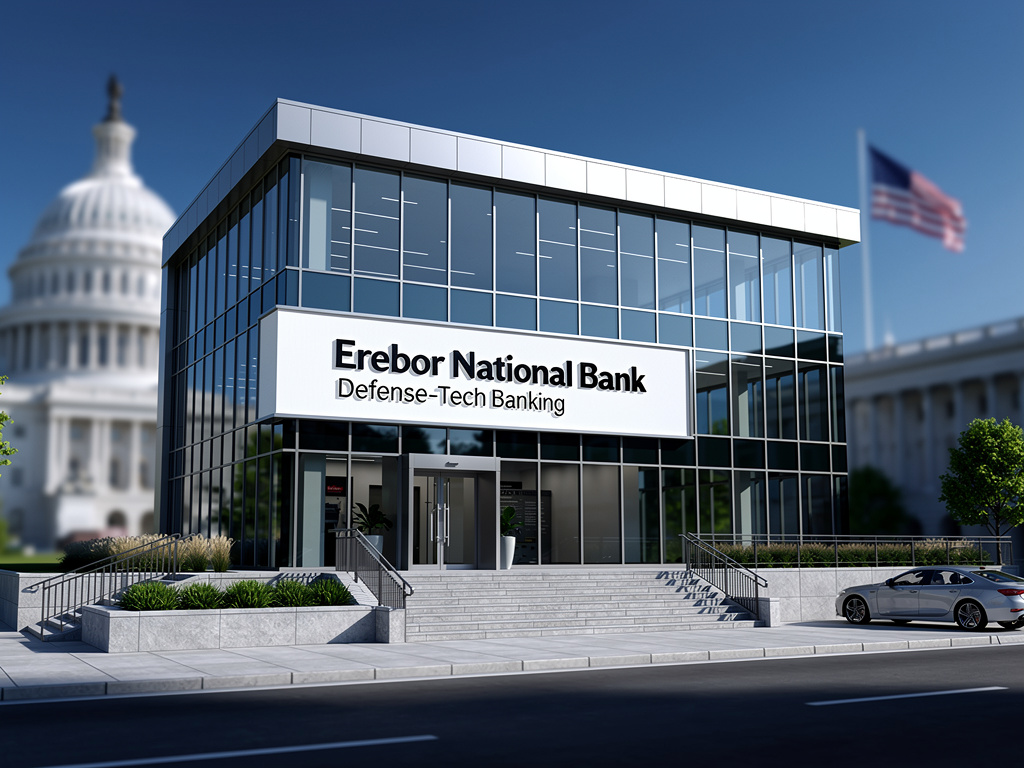

Palmer Luckey, the sandal-wearing, Hawaiian-shirt-clad tech maverick who sold Oculus VR to Facebook for $2 billion a decade ago, has now conquered an entirely different frontier: banking. His startup bank, Erebor — named after the Lonely Mountain fortress in J.R.R. Tolkien’s The Hobbit — has become the first newly created bank to receive a national charter under the second Trump administration, launching with a staggering $635 million in capital. The milestone marks a dramatic shift in the regulatory environment for new bank formation, which had ground to a near-halt over the past fifteen years, and signals that the defense-tech billionaire’s ambitions extend far beyond virtual reality headsets and autonomous weapons systems.
The Office of the Comptroller of the Currency granted Erebor its preliminary conditional approval, making it the first de novo national bank charter issued since the current administration took office. The achievement is notable not just for Luckey personally, but for the broader financial sector: new bank charters have been exceedingly rare since the 2008 financial crisis, with regulators under both Obama and Biden administrations maintaining what many in the industry characterized as a near-freeze on approvals. According to The Wall Street Journal, Erebor’s approval represents a tangible sign that the Trump administration is following through on its promises to ease the path for new financial institutions.
A Defense-Tech Billionaire Turns His Gaze to Finance
Luckey, 32, is no stranger to disruption. After founding Oculus VR in his parents’ garage as a teenager and selling it to Meta Platforms (then Facebook) in 2014, he was ousted from the company in 2017 amid political controversies. He rebounded by founding Anduril Industries, a defense technology company now valued at over $28 billion that builds autonomous surveillance towers, counter-drone systems, and AI-powered military hardware for the Pentagon and allied governments. His decision to enter banking might seem like a sharp left turn, but those who know Luckey say it reflects his conviction that the defense industrial base needs financial infrastructure purpose-built to serve it.
Erebor is designed to cater specifically to the defense and technology sectors — industries that have often found themselves underserved or actively shunned by traditional banks wary of reputational risk and regulatory scrutiny. The bank’s name itself is a statement of intent: in Tolkien’s mythology, Erebor is the Dwarf kingdom under the Lonely Mountain, a vast repository of wealth and craftsmanship. Luckey has leaned into the literary reference with characteristic irreverence, but the underlying business thesis is deadly serious. Defense contractors, particularly smaller and mid-sized firms, have long complained about difficulty accessing banking services, with some reporting that major banks have closed their accounts or refused to do business with companies…
Read More: How Palmer Luckey Built a $635 Million Bank Named After a Tolkien Fortress
