
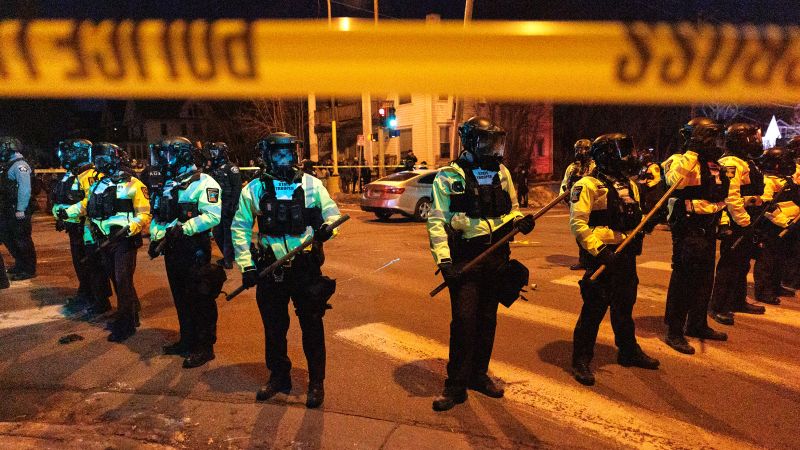

Minneapolis has seen tense demonstrations against the Trump administration’s deployment of federal agents to the city for an immigration crackdown, raising questions about what these officers can do on the ground and how President Donald Trump can respond.
As protests escalated following the fatal shooting of 37-year-old Renee Good by an Immigration and Customs Enforcement agent, the Trump administration defended the agent and doubled down on its efforts in the Minneapolis area, sending in more resources.
Trump has also threatened to the extreme step of invoking the Insurrection Act to clamp down on the protests and Department of Homeland Security Secretary Kristi Noem has suggested people may be asked to “validate their identity” in some cases.
Here are some of the most common questions, answered.
The law that Trump is threatening to invoke would allow him to deploy active-duty US troops to Minnesota as “necessary to enforce (US) laws or to suppress the rebellion.”
The law says the president can send troops to control situations they consider to be “unlawful obstructions, combinations, or assemblages, or rebellion against the authority of the United States.”
A state governor or legislature can also request troops — as was the case the last time the law was invoked in 1992 — but Minnesota Gov. Tim Walz has openly rebuked the surge of federal activity in Minneapolis.
There is precedent of a president invoking the act without the support of a governor.

Presidents Dwight Eisenhower and John F. Kennedy both invoked the Insurrection Act against the wishes of governors in order to facilitate school integration after the Supreme Court’s landmark Brown v. Board of Education ruling.
On Friday, Trump said there’s no reason to use the Insurrection Act “right now,” but that he’d invoke the law if he felt it were necessary.
“I don’t think there’s any reason right now to use it, but if I needed it, I’d use it. It’s very powerful,” the president told reporters.
Read CNN’s Zachary B. Wolf’s analysis of the Insurrection Act here.
Immigration agents can use deadly force against someone who poses an imminent threat of death or serious bodily injury, according to a DHS policy. Historically, federal law enforcement agencies have spent weeks or even months conducting exhaustive investigations before deciding whether an agent’s use of force was appropriate.
But Trump administration officials have rushed to offer full-throated defenses of immigration agents after high-profile use of force, raising questions about whether mechanisms meant…
Read More: Your biggest legal questions about ICE and the Minneapolis shooting,
