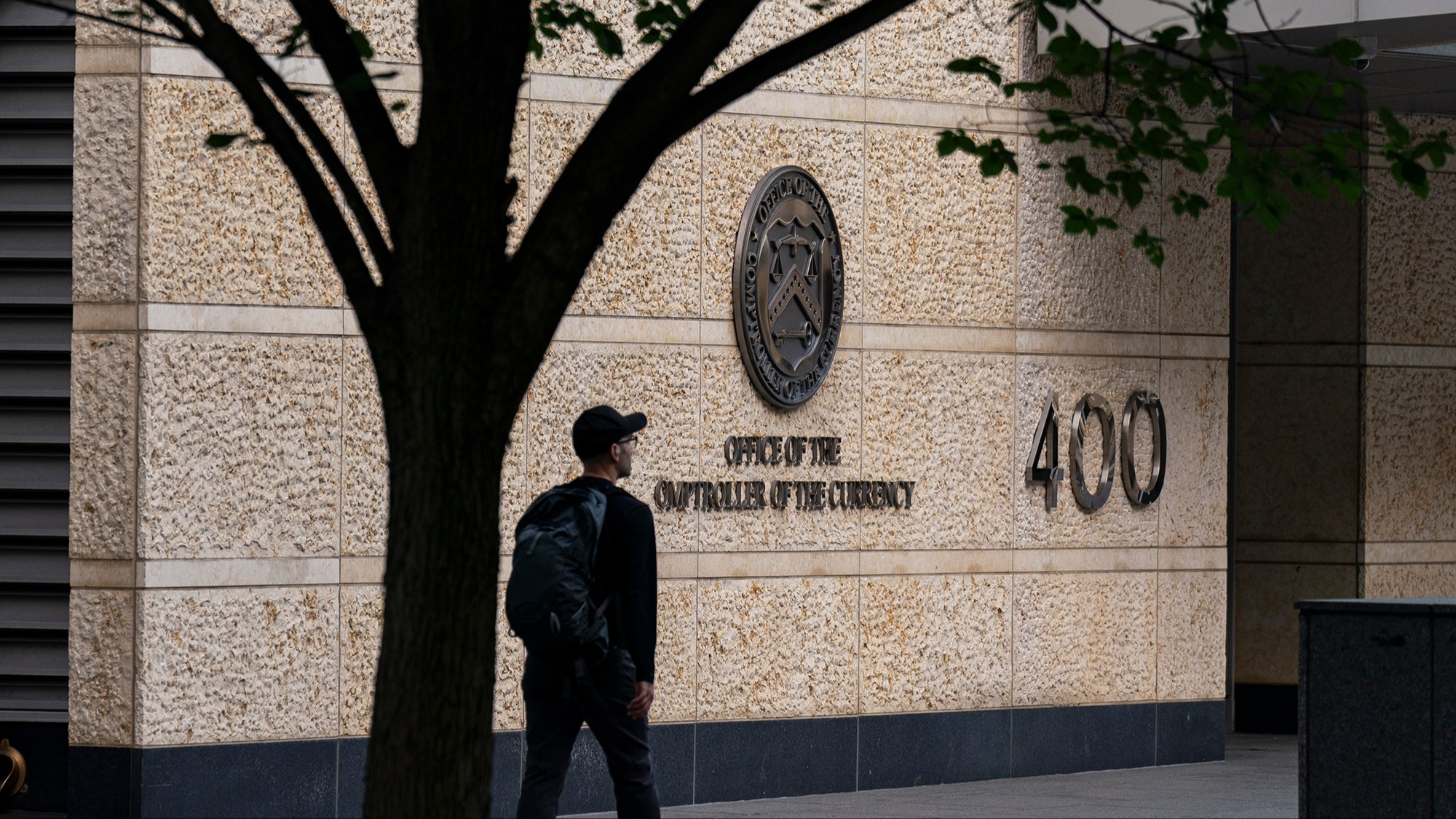

The conditional approval of national trust bank charters to crypto firms has stoked concern about the encroachment of digital assets into the financial mainstream in the US.
The Office of the Comptroller of the Currency on December 12 conditionally approved new national trust bank charters for Circle and Ripple. The regulator also conditionally approved the conversion of state trust bank charters to national charters for BitGo, Paxos and Fidelity.
Unlike federally insured lenders, trust banks focus on fiduciary, custody and investment management services, rather than taking on deposits and granting loans, with oversight provided by the OCC rather than the Federal Deposit Insurance Corporation.
Yet banking associations have expressed dismay at the approvals, claiming that they create an erroneous belief that such institutions enjoy mainstream, bank-like protections.
“We are concerned that customers will see institutions that are given a national trust bank charter and supervised by the OCC as offering depositor protections equivalent to those of insured banks, but this is simply not the case,” said Rebeca Romero Rainey, president and chief executive of the Independent Community Bankers of America.
In the event of an insolvency, customers of a national trust bank are not fully guaranteed up to $250,000 by the FDIC and may not receive the full value of their deposits, depending on the OCC’s ability to sell the failed bank’s assets, she told The Banker.
The approvals from the OCC are the latest milestones in the mainstreaming of digital asset firms under Donald Trump’s second presidency, in stark contrast with the more cautious approach taken by the administration of Joe Biden.
Trump in July signed the GENIUS Act into law (see Provision Tracker), creating a regulatory regime for payment stablecoins. The FDIC, this month, rolled out a regulatory framework for banks applying to issue stablecoins under the act.
Rainey also highlighted the OCC’s lack of recent experience in resolving banks in comparison with the FDIC, claiming that the former “lacks the institutional expertise to wind down a complex financial institution in a timely manner and at the least cost”.
“The OCC has not appointed a receiver for an uninsured bank since shortly after the US Congress established the FDIC in response to the banking panics of 1930-33,” she added.
Such concerns are largely overblown, however, given the constraints placed on companies by the trust bank charter structure, according to J.W. Verret, a former advisory committee member of the US Securities and Exchange Commission.
“None of these companies are going to be taking short-term deposits and then lending them long term,” he told The Banker.
“So they’re not engaging in this highly risky activity that traditional banks do. So I’m not worried about them at all in terms of resolution or supervision.”
The banking industry has expressed alarm at the prospect of deeper…
Read More: OCC trust bank approvals for crypto firms stir industry unease