
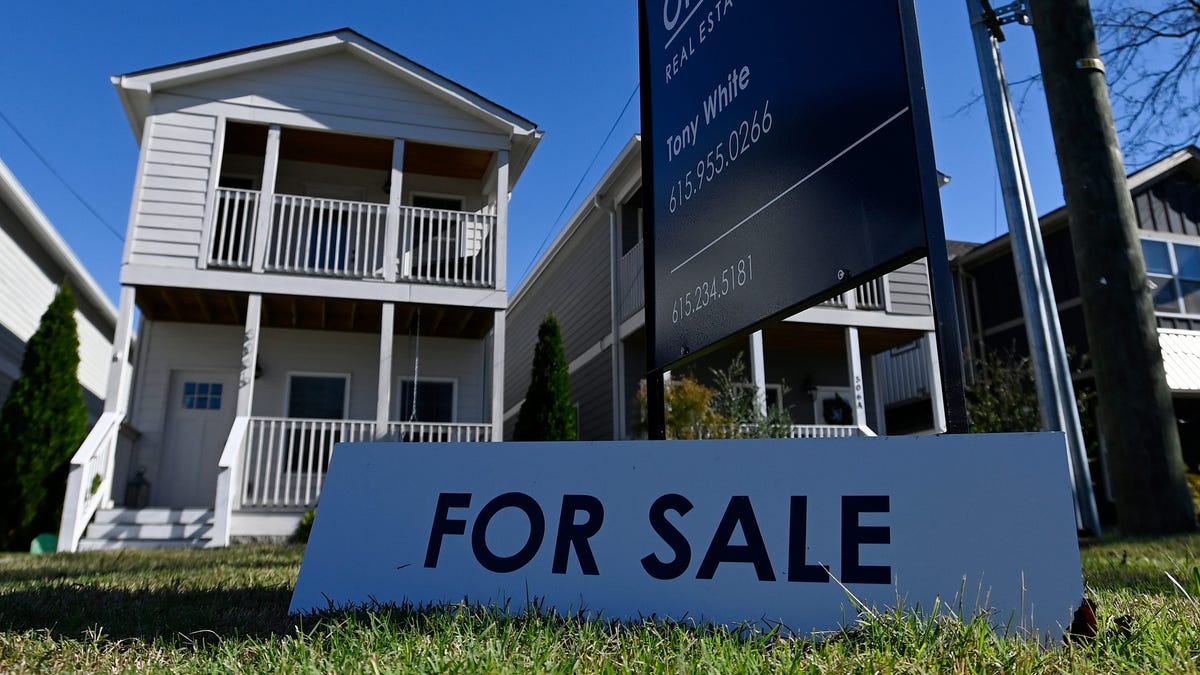



Which is the better investment: buying a home or investing in stocks?
Stocks have outpaced home prices by four times since 1995, but which is actually the better investment for building wealth?
Soaring home prices in recent years may have you convinced real estate rises in value at the same rate as stocks.
You may be in for a surprise. Over the past 30 years, stock prices have risen at four times the pace of home prices, according to a Motley Fool analysis.
Since 1995, home prices have risen by about 310%. In the same span, the S&P 500 index has risen by about 1,200%. Add in dividends, and total S&P returns exceed 2,200%.
“By and large, stocks are your best-returning asset class. Nothing really comes close,” said Matthew Argersinger, a senior investment analyst at The Motley Fool.
Here’s another way to compare the two investments: Between 1992 and 2024, the S&P yielded an average return of 10.4% a year, according to the financial journalism site Investopedia. In the same years, home prices grew by about 5.5% annually.
“If your objective is to invest either in a home or the stock market to generate long-term wealth that will help you retire, the stock market is unquestionably the better performer,” said Caleb Silver, editor in chief of Investopedia.
“But you need a place to live.”
A home is more than an investment
And therein lies the enduring appeal of the American home. It is an asset. It is an investment. It is also your castle.
“I would encourage people to think of a home as two things,” said Brian Kearns, a CPA and certified financial planner in the Chicago area. “One, it’s shelter. And two, it’s the place where you live your life.”
Nothing, perhaps, can boost your quality of life like a nice home. It’s your setting, your base, the place where you’ll likely spend most of your time.
Kearns and other experts say it’s a mistake to think of a home as a mere investment. And it’s probably not quite fair to compare homes and stocks: They are very different assets.
Home vs stocks: Which is the better investment?
Still, many Americans wrestle with the question of how to invest their limited funds.
Option A: Buy a home, a transaction that locks you into potentially burdensome monthly mortgage payments and seemingly endless maintenance expenses.
Option B: Rent a home or apartment, a choice that could free up extra cash for investing in stocks.
Given the historic performance of stocks, Option B “might be a quicker and more efficient way to build wealth,” Silver said.
Between mortgage costs, insurance, property taxes and maintenance costs, a home can be an exceedingly expensive asset.
“And it doesn’t generate anywhere near the returns that investing in the stock market has generated, historically,” Silver said.
Homeownership and the American dream
But there are distinct advantages to Option A. When you buy a home with a mortgage, you enter a years-long cycle of building equity, with yourmortgage payments and the gradual appreciation of the home’s value.
“It’s basically forced savings,” Argersinger said.
Homeownership has helped millions of Americans achieve the American dream, building wealth that parents can pass on to children.
“I think for people who grew up in poverty, having that kind of forced savings can be a way of lifting yourself up out of poverty,” said Amy Arnott, a portfolio strategist at Morningstar.
If you choose Option B, to rent a home and invest in stocks, you must have the discipline to follow through. No one will be forcing you to buy the stocks.
The myth of soaring home values
Many consumers wrongly assume home prices rise as dramatically as stocks, experts say.
One reason is that homes have been on a tear lately, increasing in value by about two-fifths over the first half of the decade.
Another reason is that homes are exceedingly valuable assets. The average home sale price in mid-2025 was $512,800, federal data shows.
Five years earlier, the average home price was $371,100.
That sounds like a massive increase. And it is, in dollar terms. But in percentage terms, home prices are up only about 38% in five years.
By contrast, the S&P 500 is up about 86% percent in five years.
“If you own a house over a couple of decades, the house should keep pace with inflation,” Arnott said. “But it’s typically not going to create the kind of growth that you could get with a stock.”
If you’re considering whether to invest in stocks or a home, here are some points of comparison, drawn from Investopedia, Motley Fool and Morningstar.
Volatility
Home prices rise and fall — but not like stock prices.
Over the past decade, Investopedia reports, home prices have never really declined. The S&P, by contrast, has lost as much as 18% in a single year.
Utility
A home is a physical asset. A stock is not. You can live in your home, solving that “shelter” problem. You can allow other people to live in it, yielding rental income.
Homes are considered more stable investments than stocks partly because they are physical assets. A home can lose value, experts say, but it generally can’t lose all of its value. Homes don’t go bankrupt.
Leveraging
When you buy a home with a fractional downpayment, you are making a leveraged investment. Leverage multiplies your returns.
Let’s say you have 20% equity in the home: “If your house goes up 2% to 3% a year,” Argersinger said, “because you have the leverage, your return can be 10% to 15% a year.”
Some armchair investors dabble in leveraged stock investments, but leveraging stocks can be risky.
Liquidity
Your home may be worth half a million dollars, but that’s not money you can easily spend. Homes are considered less liquid than stocks, which are more easily bought and sold.
Maintenance costs
Homeownership is expensive, and not just because of the mortgage. A recent analysis by Zillow and Thumbtack shows the “hidden costs” of homeownership, including maintenance, insurance and taxes, now total nearly $16,000 a year.
Stock ownership, by contrast, engenders relatively small management costs. A stock mutual fund typically charges less than 1% in management fees.
Tax breaks
Homeowners reap sweet tax benefits. You’re generally allowed to deduct both mortgage interest and property taxes, assuming you itemize.
If you sell your primary residence, you may be able to avoid taxes on up to $250,000 in capital gains, or $500,000 for married couples.
Investors who sell stocks at a profit, by comparison, generally face capital gains taxes.
Read More: Should I invest in stocks or a home? Answers here.
