
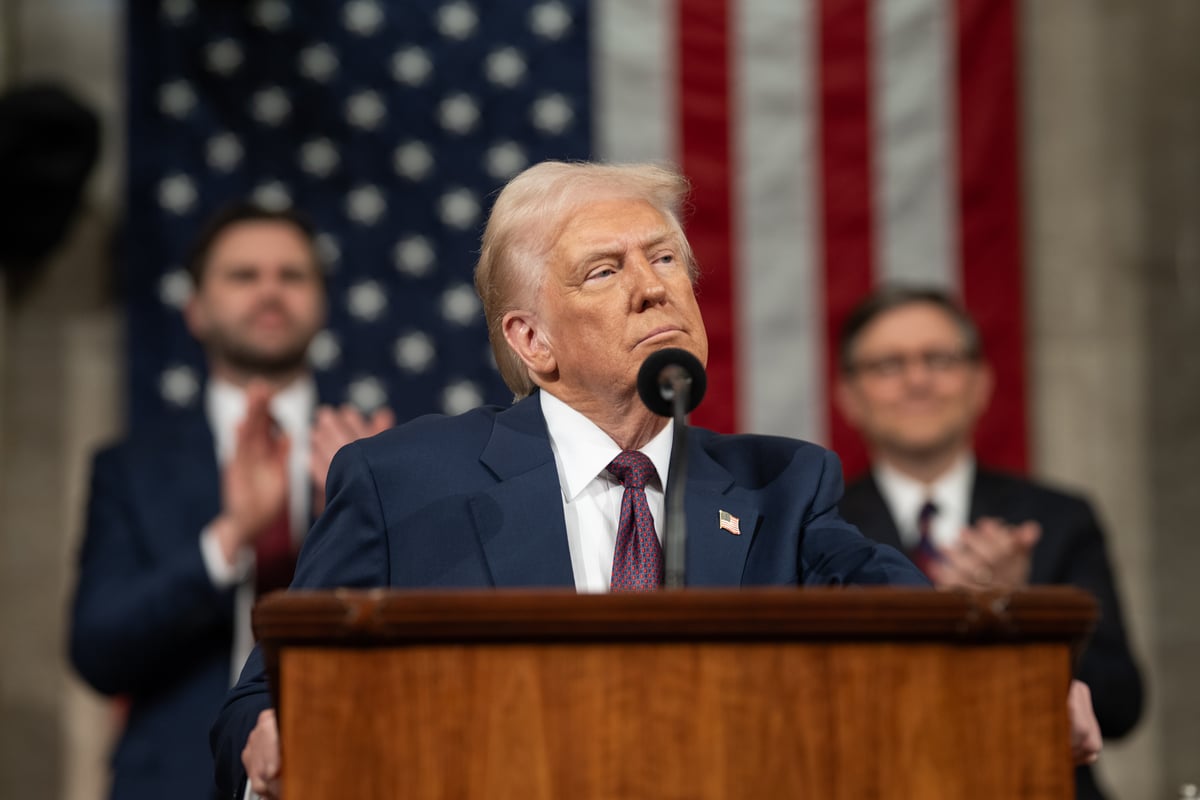

President Trump says the U.S. could suffer a depression if the Supreme Court determines that his signature tariffs are illegal.
The S&P 500 (^GSPC +0.19%), the best barometer for the entire U.S. stock market, has advanced 17% in 2025 despite economic uncertainty created by President Trump’s tariffs. Duties imposed to date have raised the average tax rate on U.S. imports to 16.8%, up from 2.5% last year, according to the Budget Lab at Yale.
The average tariff rate has not been so high in 90 years, and it has never increased so quickly. Trump justified most duties with the International Emergency Economic Powers Act (IEEPA), a 1977 law that never explicitly affords the president the power to levy tariffs. In fact, the law never mentions the word “tariffs.”
Consequently, the Court of International Trade determined the IEEPA tariffs were illegal in May, and the U.S. Court of Appeals upheld the decision in August. The Supreme Court heard arguments in November, and most of the nine justices reportedly expressed doubts about legality. A final decision is likely in the coming weeks.
President Trump has warned of an “economic disaster” if the Supreme Court rejects his authority to impose tariffs under IEEPA. He wrote on social media, “It would be 1929 all over again, a GREAT DEPRESSION!” Does that mean the stock market could crash? Here’s what investors should know.
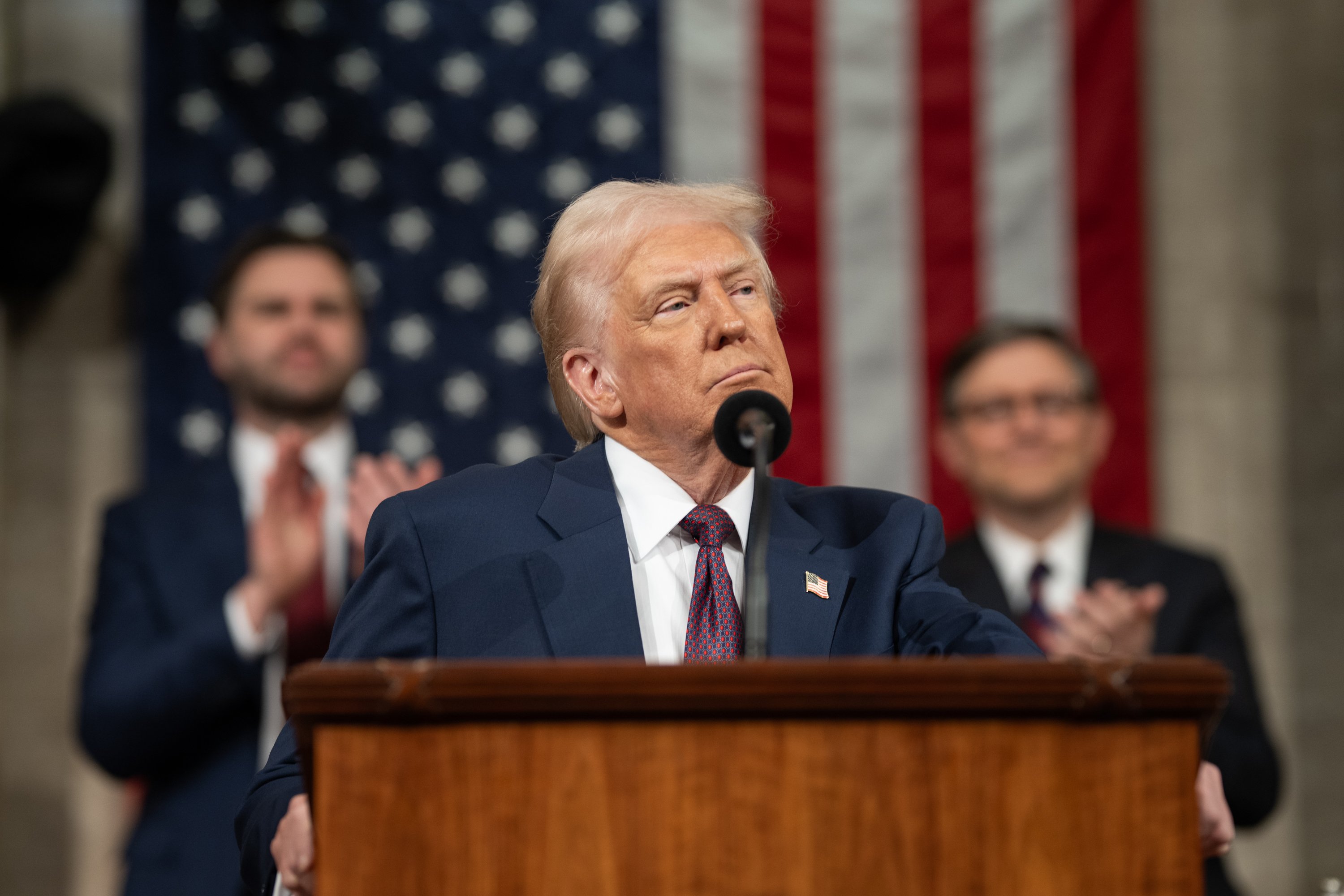
Image source: Official White House Photo.
The Trump administration’s views on tariffs appear disconnected from economic realities
The U.S. Constitution affords Congress (not the president) the power to impose and collect taxes. So, the Trump administration has attempted to split hairs. Treasury Secretary Scott Bessent recently said, “I don’t believe tariffs are a tax.” Most economists disagree. So do the New Oxford English Dictionary and the Merriam-Webster Dictionary, both of which define tariffs as taxes or duties on imported goods.
Treasury Secretary Bessent also argued the tariffs were “good for labor,” echoing President Trump’s assertion that his trade policies will bring manufacturing jobs back to the U.S., thereby strengthening national security. But recent economic data suggests his tariffs have had the opposite effect.
- Hiring has dropped to its slowest pace in over a decade (excluding the pandemic).
- The unemployment rate measured 4.4% in October, the highest level in four years.
- The U.S. manufacturing sector has contracted in nine consecutive months.
Additionally, Bessent recently said the Supreme Court rejecting President Trump’s tariffs would be a “loss for the American people.” But that comment is at odds with recent data. The University of Michigan’s Index of Consumer Sentiment has averaged 57.6 in 2025, the lowest annual average in history.
To summarize, since Trump began imposing tariffs earlier this year, hiring has slowed, unemployment has increased, manufacturing activity has declined, and consumer sentiment has plunged. Meanwhile, inflation has worsened in every month since the baseline tariff took effect in April.
Those trends would likely reverse if the Supreme Court rules against the tariffs. Of course, any improvement in the economic climate would be good news for stocks, especially an uptick in consumer sentiment. Consumer spending accounts for about two-thirds of GDP, making it the primary engine of economic growth. However, the S&P 500 could still decline if the Supreme Court rejects Trump’s tariffs, but not because it would cause a depression.
Why the stock market could drop if the Supreme Court rejects Trump’s tariffs
The case before the Supreme Court only challenges President Trump’s authority to impose tariffs under the International Emergency Economic Powers Act (IEEPA). Revenue collected under that statute totaled about $90 billion in fiscal 2025 (which ended in September), according to U.S. Customs and Border Protection.
If the Supreme Court determines the president exceeded his authority, revenue collected under IEEPA tariffs would likely have to be repaid. Indeed, a growing list of U.S. companies (including Costco Wholesale) have filed lawsuits or submitted claims to ensure they are reimbursed, according to The New York Times.
That could be a problem for the stock market. The government didn’t plan for that expense, so it would borrow money by issuing Treasury bonds. But bond investors concerned by growing federal debt — a problem tariffs were supposed to alleviate — would want higher interest rates to offset the risk. And higher yields typically hurt the stock market by making Treasuries more attractive.
In that scenario, the S&P 500 could decline (perhaps sharply) if the Supreme Court rules against the Trump administration. However, no matter what happens in the coming weeks, investors should focus on long-term returns. The S&P 500 returned 10.4% annually over the last three decades and similar results are likely over long periods in the future.
Read More: Will the Stock Market Crash if Trump’s Tariffs Are Rejected by the Supreme
