
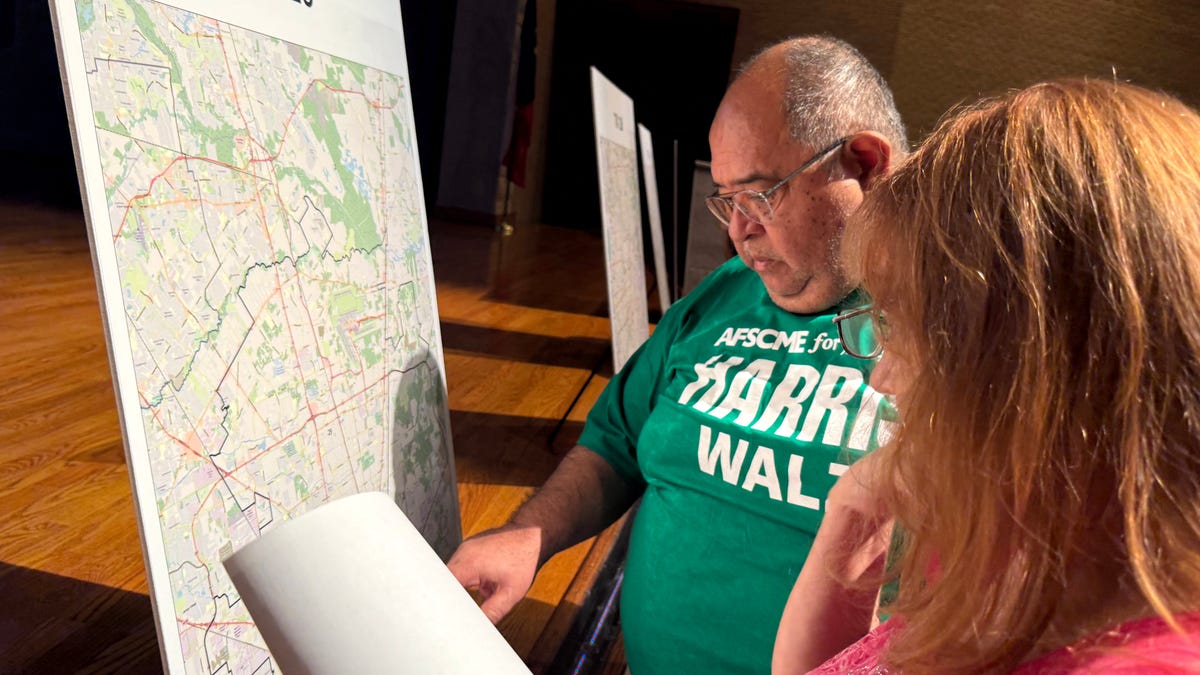

As states jockey for partisan advantage from redistricting, political observers find it difficult to gauge who holds an advantage heading into the 2026 mid-term elections.


Will redistricting efforts favor Republicans or Democrats?
The question many are asking is whether 2025’s redistricting efforts are about upholding democracy or diluting representation?
WASHINGTON – At President Donald Trump’s urging, Texas is trying to send even more Republicans to represent it in the U.S. Congress.
To pull that off, the country’s most populous Republican state is going to need the U.S. Supreme Court to take its side in a dispute that has fast evolved to include more than a half dozen other states that are also seeking to change who voters can vote for when they pick their representatives in the 2026 mid-term elections.
The clock is ticking for the justices to act before an important Dec. 8 deadline for any Texas congressional candidates to declare what House race they’re hoping to compete in next November. Nationwide, the stakes are high for both the GOP and Democrats because a change in control of just a few seats could tip the balance of power inside the House during Trump’s final two years in the White House. Republicans currently hold a narrow 219 to 213 majority.
What’s unusual about this Supreme Court case is that states usually review their congressional maps after counting the population in the once-a-decade U.S. census. But the flurry of states like Texas that are conducting mid-decade redistricting is one of the biggest such undertakings since the 1800s, according to the National Conference of State Legislatures.
Here is what you need to know about where redistricting stands in states nationwide:
Which states are redistricting?
Six states have already adopted new congressional maps: California, Missouri, North Carolina, Ohio, Texas and Utah.
In addition, Virginia Democrats are edging toward redistricting in Richmond, while GOP leaders in the Florida state legislature are gearing up for action in December. Pressure is also building on Democratic leaders in Maryland. Four other states might take steps depending on how courts respond: Alabama, Louisiana, New York and North Dakota.
Combined, the range of potential changes for the 2026 election is great enough that political observers find it difficult to gauge which party has the upper hand in a campaign where the president’s party has historically not performed well.
“The story of the race for the House has been dominated by mid-cycle redistricting to such a degree that it has been challenging to assess the overall state of play, with new developments popping up almost daily,” said Kyle Kondik, managing editor of Sabato’s Crystal Ball at the Center for Politics at the University of Virginia.
What happened with Texas?
The Texas legislature led by Republicans adopted an electoral map in August that could flip as many as five seats held by Democrats to Republicans.
Federal courts last week blocked the map….
Read More: Supreme Court to review Trump redistricting push before 2026 elections
