
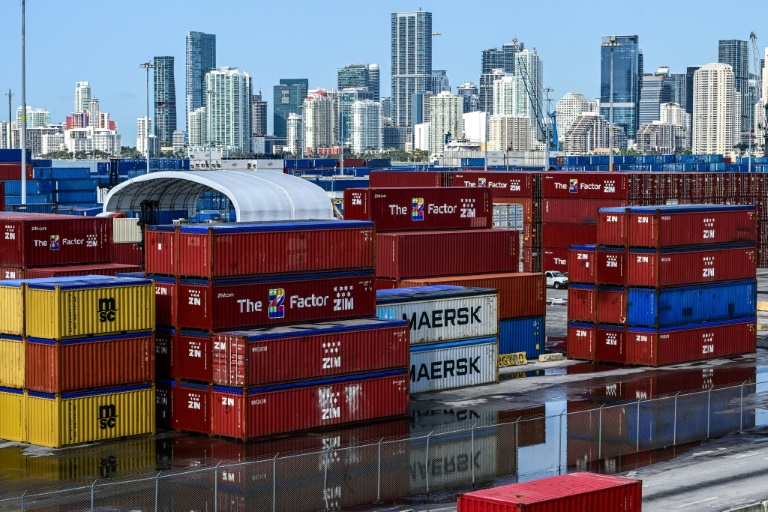

Some firms started shipping more goods to the United States even before Donald Trump’s tariffs announcements – Copyright AFP Giorgio VIERA
For most of 2025, financial markets have been marked by persistent volatility driven by a mix of tariff concerns, geopolitical tensions and uncertain monetary policy. Meanwhile, the Federal Reserve has found itself with a dilemma. On one hand, inflation has remained stubbornly above the 2% target. This stubborn inflation, when combined with fears that tariffs and other policies will raise inflation further, makes the argument for keeping interest rates steady. On the other hand, signs that the labour market is weakening and concerns about slower economic growth overall make the argument for lowering rates.
So far, the ‘Fed’ has held rates steady through mid-year, but expectations for two rate cuts later in 2025 have fluctuated amid evolving data and policy signals, with the soonest potentially coming mid-September. With all of this in mind, we’re now turning our attention to the trends and signals that could shape the final stretch of the year, from rate decisions and consumer sentiment to sector-specific momentum.
To gain an expert insight into the U.S. economy, Digital Journal spoke with David Stratton, Regional Banking Executive, BOK Financial on the state of the economy and what we should expect to see for the remainder of the year.
Digital Journal: What banking industry trends are you expecting to see in the remainder of the year?
David Stratton: This year has definitely been a volatile one for the U.S. markets, but there are a few trends we expect to see as we approach the final stretch of 2025.
We expect to see improved loan growth, particularly in our markets in the Southwestern region of the country, which remain among the most vibrant in the U.S. economy. A clearer outlook on tax policy, most notably the passage of the One Big Beautiful Bill Act, removes a significant source of uncertainty and supports continued expansion. Likewise, as company earnings have remained relatively strong for the first two quarters, expectations around tariff-related impacts have eased.
DJ: Are you seeing any credit challenges as a result of increased tariffs?
Stratton: Due in part to our geographic footprint and the diversity of industries represented, our clients continue to be resilient, and our credit quality remains very strong. Certainly, there are clients who have greater exposure to the tariffs but, to date, impacts have been tempered for the most part. However, I think it’s probably still a little too early to tell how tariffs will impact those companies who have a heavy reliance on importing. I think many companies are just looking for clarity so they can adapt and run their businesses based on the new set of rules. Uncertainty creates headwinds.
DJ: What is your outlook for loan growth for the rest of 2025, particularly for C&I lending?
Stratton: We think…
Read More: Q&A: Regional banking executive on state of US economy
